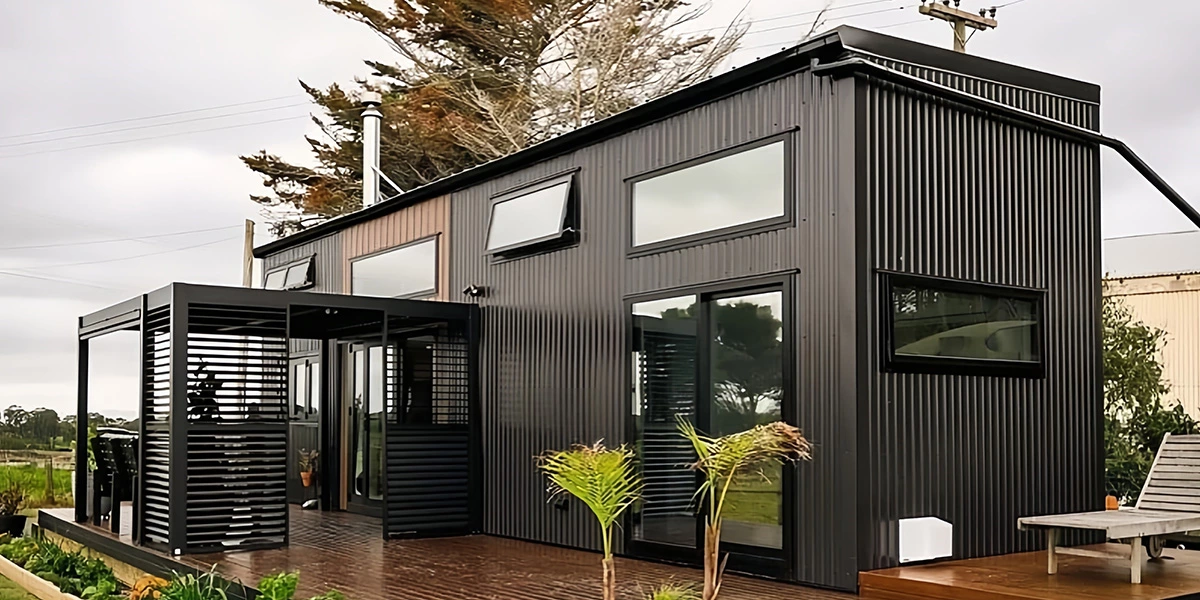
Expandable Container House Installation & Maintenance Guide: Complete Lifecycle Manual (20ft, 30ft & 40ft)
Unfolding a factory-built modular home is one of the fastest ways to deploy permanent or commercial living space. In under three to four hours, a folded steel shipping module expands into a complete 38.5 m² to 74 m² residence—whether you are setting up a compact 20ft expandable container house (~3,500 kg) or a flagship 40ft expandable container house (~6,200–6,500 kg).
However, treating an expandable container house installation like setting up an oversized backyard tent—or neglecting routine expandable container house maintenance afterward—is a recipe for structural binding, water ingress, and voided equipment warranties. Because an expandable dwelling relies on precision-engineered concealed hinges, folding wing joints, and EPDM weather seals, long-term performance depends on following strict leveling tolerances during setup and a structured preventive care schedule after occupancy.
Below is UVO’s complete, end-to-end engineering playbook covering site preparation, crane rigging, the five-step unfolding sequence, post-delivery commissioning, scheduled maintenance, troubleshooting, and recommended spare parts.
Part 1: Pre-Installation Site Prep, Foundation & Crane Rigging
The structural longevity of your modular home is decided before the delivery truck arrives on site.
1. Site Clearance & Safety Exclusion Zone
-
Firm, Well-Drained Ground: Never place an expandable house permanently on soft topsoil, low-lying flood pockets, or muddy, poorly drained ground. Ensure rainwater drains freely away from the base frame.
-
Clear Swing Radius: Keep the deployment zone completely clear of overhanging trees, overhead power lines, fences, vehicles, and stored materials. Establish a strict safety exclusion zone around the crane lift and wing swing radius—personnel must never stand beneath a raised roof panel or folding floor wing during operation.
2. Foundation Point Loads & The ±5mm (3/16") Leveling Rule
Because an expandable structure consists of a rigid 2.2-meter central core flanked by cantilevered folding wings, weight distribution is concentrated along the center spine:
-
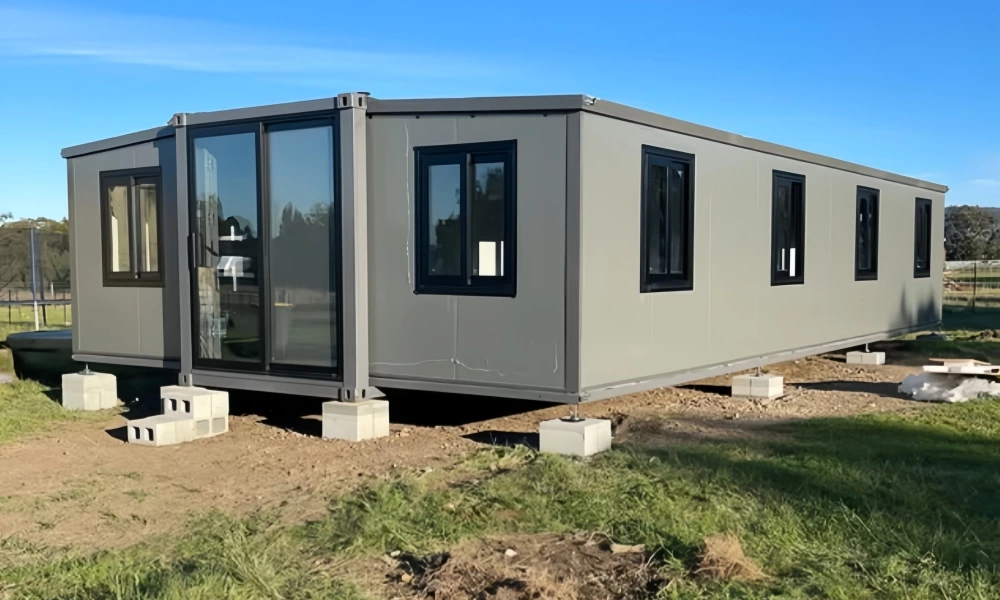
Center Chassis Spine (~65% of Dead Load): Carries the integrated bathroom, kitchen plumbing wall, water heater, and heavy roof headers. Requires 6 main bearing piers (for 30ft/40ft units) or 4 to 6 piers (for 20ft units) placed directly beneath the longitudinal steel beams.
-
Perimeter Outrigger Supports: Carries live occupant loads and the weight of the exterior wing walls and eaves. Requires 4 to 6 level support pads beneath the fold-down wing outrigger jacks. (Compare concrete slabs, Sonotube piers, and helical screw piles in our expandable house foundation guide.)
The ±5mm Leveling Mandate: Verify every foundation pier with a rotary laser level or optical transit. Across the entire chassis length, the maximum allowable out-of-level tolerance is ±5mm (3/16 inch). If the center spine is twisted, roof panels will not seat flush and structural bolts will cross-thread. Use heavy-duty galvanized steel shim plates (minimum 100mm × 100mm) under the corner castings to dial in dead-level accuracy.
3. Crane Sizing, Rigging & Offloading Specifications
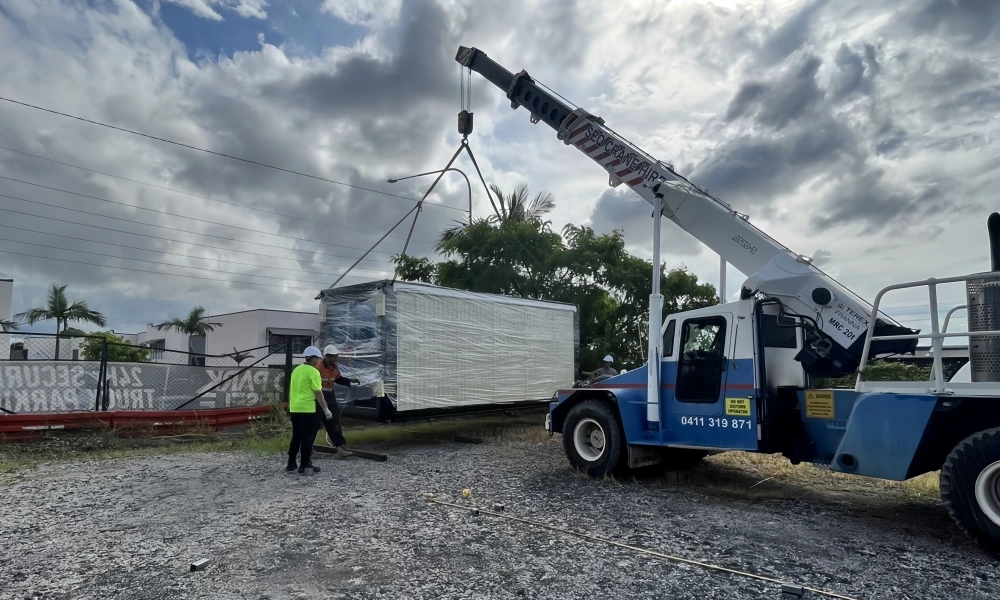
Never allow a local crane dispatcher to size a lift based solely on net cabin weight—boom reach and site radius dictate required capacity:
| Lift Parameter | Engineering Requirement | Critical Field Precaution |
| Gross Load Weight | ~3.5 Metric Tons (20ft) to 6.5 Metric Tons (40ft) | Add 1,000 lbs (450 kg) allowance for rigging gear, hook block & wind load. |
| Minimum Crane Capacity | 20-Ton to 35-Ton All-Terrain Mobile Crane | Undersized 15-ton cranes often fail due to required outrigger reach. |
| Rigging Sling Angle | Minimum 60° angle from horizontal | Never use short chains that pull inward across the top roof rails. |
| Spreader Bar / Frame | Mandatory when using standard wire rope slings | Prevents inward crushing forces on top aluminum roof trims. |
| Approved Pick Points | Factory cast-iron lifting heads / ISO 1161 corner castings | Inspect for cracks or corrosion before lifting; use certified twist-lock lugs. |
Part 2: Step-by-Step Unfolding, Sealing & Commissioning
Before releasing transport locks, inspect all latches, concealed hinges, door/window frames, and wing edges to clear away shipping debris or foreign objects. Maintain balanced loads throughout the sequence and stop immediately if you encounter jamming, tilting, or abnormal friction.
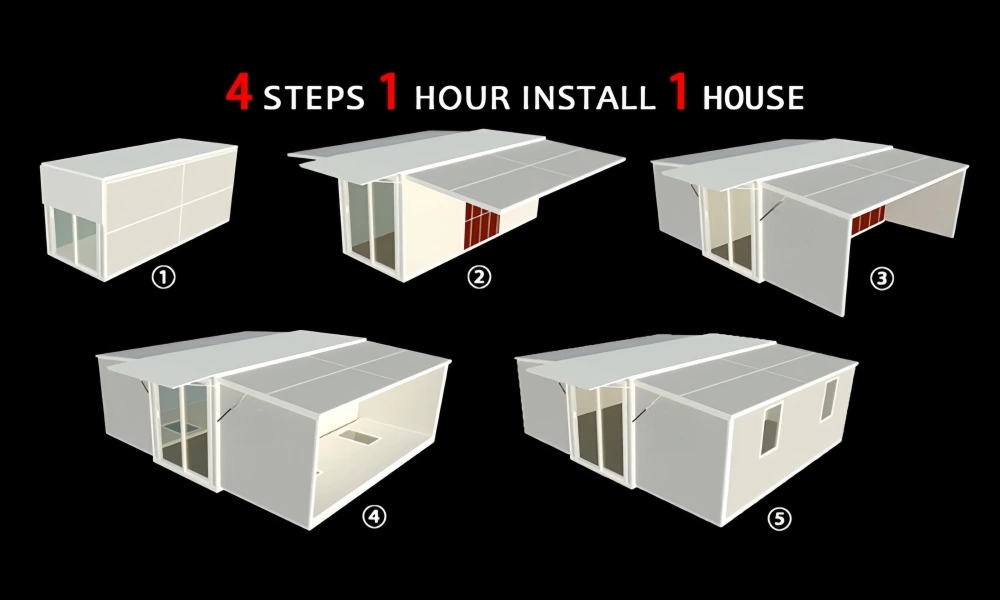
The 5-Step Unfolding & Structural Locking Sequence
-
Anchor the Center Spine: Secure the central stationary chassis to your foundation piers using hurricane hold-down brackets or embedded anchor bolts before opening either wing.
-
Raise and Brace the Roof Panels: Release the exterior roof transport latches. Using the factory hand-crank winches or an assisting telehandler, lift the left roof panel to a 95° angle and immediately insert the steel safety support prop rods into the chassis receivers. Never work beneath an unpinned roof panel.
-
Lower the Fold-Down Floor Wings: Unlatch the bottom floor restraints and smoothly lower the outer floor wing until horizontal. Wind down the adjustable exterior outrigger jacks onto pre-poured concrete pads or structural timber dunnage, using a 4-foot spirit level to ensure the wing floor sits completely flush with the central core.
-
Swing Out the Gable End Walls: Unlatch the hinged front and rear walls, swing them outward 90°, and seat the bottom wall track firmly into the floor receiver groove using a rubber mallet.
-
Lower the Roof & Torque Structural Bolts: Lower the roof panel onto the top tracks of the side walls. Install all M12 structural through-bolts from the interior and tighten with an impact wrench so the EPDM weather gaskets compress evenly. Repeat the identical process on the opposite wing.
Critical Weatherproofing & Sealing Zones
Factory EPDM seals provide primary weather protection, but permanent rain defense requires meticulous exterior flashing and caulking. Never use cheap acetic-acid bathroom silicone on galvanized steel (acetic acid corrodes zinc coatings). Use exclusively neutral-cure polyurethane or MS-polymer sealants (such as Sikaflex 11FC) or neutral anti-mold silicone:
-
Central Ridge Hinge Flashing: Install the continuous exterior aluminum ridge cap cover over the central pivot line, applying a continuous heavy bead of neutral sealant beneath the overlap and fastening with EPDM-washered hex screws.
-
Vertical Gable Butt Joints: Seal all exterior vertical seams where swinging gable walls meet the central corner posts from roofline to base skirt.
-
Window Drainage Holes (Crucial Warning): Double-glazed insulated windows feature built-in perimeter weep/drainage slots. Never cover or clog window drainage holes with sealant, or rainwater will back up into the interior window tracks.
Post-Delivery Initial Inspection & MEP Commissioning Checklist
Before occupying the unit or handing it over to guests, a licensed electrician and plumber must complete final utility tie-ins and verify the following:
-
Electrical System: Confirm site voltage and frequency match equipment nameplates (US NEC 120/240V, AU AS/NZS 3000 230–240V, or EU CE 230V); verify main distribution board, grounding continuity, and residual-current device (RCD/GFCI) trip protection.
-
Plumbing & Rapid Water Heater: Connect supply lines to the PEX manifold and perform a 30-minute air pressure test at 60 PSI before charging with water; connect centralized PVC waste drains using flexible Fernco couplings; check water-heater inlet/outlet valves, safety relief valve, and freeze protection (heat trace cable + foam insulation in sub-zero regions).
-
Envelope & Flooring: Verify smooth locking of all doors and windows, intact 75 mm insulated wall/roof panels, and zero standing water beneath the base frame.
Part 3: Preventive Expandable Container House Maintenance Schedule
Consistent expandable container house maintenance prevents minor seal wear or debris buildup from turning into costly structural repairs—and preserves your 3-year manufacturer warranty (keep dated service logs, photos, and opening-cycle records).
| Inspection Interval | Target Systems & Components | Required Preventive Maintenance Actions |
| Weekly / After Guest Check-Out (Resorts, Airbnb & Camps) | Roof drains, wing joints, HVAC, wet areas & locks | • Clear leaves, mud, and debris from roof drains, entrance thresholds, and base supports. • Check wing joints, ridge line, and window perimeters for water marks. • Clean bathroom floor drains, hair filters, kitchen sink grease, and AC condensate drain. • Test smart door locks, window rollers, and insect screens. |
| Monthly | Hinges, latches, AC filters, exterior sealants & under-sink plumbing | • Inspect folding wing edges, latches, and concealed hinges for stones, sand, or debris. • Clean air-conditioner mesh filters (shorten interval in dusty or high-occupancy sites). • Check exposed galvanized steel frames and lifting points for scratches or coating chips. • Inspect under kitchen sink, toilet, and rapid water heater for concealed drips. |
| Quarterly | Concealed hinge gap (~9 mm), foundation level, window weep holes & spare parts | • Clean the ~9 mm concealed hinge floor gap: Remove accumulated sand, grit, and metal filings so hinges articulate without friction. • Check foundation piers, outrigger supports, and anchor bolts for settling. • Clear dust/debris from window frame drainage holes and check glazing seals. • Audit on-hand spare parts inventory and replenish consumables. |
| Semi-Annual | Electrical board, RCD, water heater safety valve & AC deep clean | • Have a licensed electrician inspect distribution terminals, grounding, and RCD protection. • Deep-clean indoor/outdoor AC coils and verify outdoor unit bracket stability. • Test water-heater safety valve, thermostat, and drain line. • Re-verify level, seals, and MEP joints immediately after any relocation or re-folding. |
| Annual | Full structural envelope, concealed insulation & warranty audit | • Inspect roof and exterior panels for concealed moisture, damp insulation, or pest entry. • Re-seal aged exterior polyurethane/EPDM joints exposed to intense UV. • Record annual maintenance photos, service invoices, and opening cycles for warranty records. |
Climate-Specific Maintenance Priorities (Coastal, Tropical & High-UV Sites)
-
Coastal & Salt-Spray Environments: Shorten metal inspection intervals. If scratches or rust spots appear on the galvanized frame, hinges, or bolts, clean and dry the metal immediately and apply a compatible zinc-rich anti-corrosion primer and matching topcoat. Never mix dissimilar untreated metals (such as bare steel and aluminum) without isolation washers to prevent galvanic corrosion.
-
Heavy Rain & Thunderstorms: Clear downpipes and ground drainage channels before storm fronts arrive. If water intrusion or circuit tripping occurs during a storm, shut off the main breaker and call a licensed electrician—never repeatedly force-reset a tripped breaker.
-
Cleaning & UV Protection Rules: Clean exterior panels, glass, and PVC/SPC flooring exclusively with neutral pH cleaners. Never aim a high-pressure washer directly at concealed hinges, window weather seals, ventilation louvers, electrical boxes, or wall-panel joints, and never use strong acids, alkalis, concentrated chlorine, or abrasive pads.
Part 4: Troubleshooting Guide, Spare Parts & Safety Prohibitions
Common Field Troubleshooting Matrix
| Symptom / Problem | Immediate On-Site Check | Strict "Do Not" Rule (Avoid Damage) |
| Expansion wing is jammed | Halt operation immediately; inspect concealed hinges and wing tracks for stones, tools, or debris. | DO NOT pull a jammed wing or hinge forcibly with a crane, winch, or vehicle. |
| Expansion wing is not level | Check ground bearing firmness, outrigger jack pads, and center chassis laser level. | DO NOT prop up wings with unstable bricks, loose rocks, or unapproved shims. |
| Ridge or wing joint leaks | Inspect ridge flashing cap, EPDM compression seals, sealant continuity, and roof drain flow. | DO NOT block roof or wall drainage channels with excessive caulk globs. |
| Door or window water leak | Clear exterior window weep/drainage holes, check threshold seals, and adjust eccentric hinge cams. | DO NOT seal over exterior window drainage slots. |
| Hinge makes grinding noise | Stop opening/closing; clear sand or grit from the 9 mm floor gap and contact your UVO distributor. | DO NOT dismantle, cut, or weld load-bearing concealed hinges yourself. |
| Circuit breaker trips repeatedly | Unplug high-wattage appliances, leave breaker OFF, and have an electrician inspect circuits. | DO NOT repeatedly force a tripped breaker back on. |
| House tilts or feels unstable | Evacuate occupants immediately and have an engineer inspect foundation piers and anchors. | DO NOT cut, weld, or modify load-bearing steel columns or base beams. |
Recommended Spare Parts Kit (For Distributors, Resorts & End Users)
Keeping a compact spare-parts kit on site ensures zero operational downtime for hospitality operators and overseas distributors:
-
Structural & Sealing: Matching hinge fasteners/washers (1 set), wing latch components (1 set), leveling support hardware (1 set), neutral anti-mold silicone sealant (2–4 tubes), replacement EPDM wing/window weather strips (1 set), and color-matched touch-up primer & topcoat paint.
-
Electrical & Hardware: Matching LED ceiling light panels (2–4 pcs), smart door lock batteries & mechanical override keys (2 sets).
-
Plumbing & HVAC: Air-conditioner mesh filters (1–2 sets), faucet aerators (2–4 pcs), plumbing hose O-rings/washers (1 set), floor-drain hair traps (2 pcs), and handheld shower hose.
-
Interior Finishes: Extra matching PVC/SPC flooring (3%–5% of floor area) and spare skirting/corner trim profiles (5–10 meters) stored from the original production batch.
Non-Negotiable Safety & Structural Prohibitions
To protect occupants and maintain structural certification, never perform the following:
-
Never occupy or furnish the expanded wings before all supports, leveling jacks, and foundation anchors are fully installed.
-
Never drill, cut, or weld structural steel columns, base beams, lifting heads, or concealed load-bearing hinges without written engineering approval.
-
Never use the roof or cantilevered expansion wings as storage platforms or place heavy rooftop water tanks/solar arrays without confirming structural load ratings and waterproofing details.
-
Never block the air-conditioner outdoor unit airflow, wall ventilation openings, or hinge service access.
Frequently Asked Questions (FAQ)
How many workers and hours are needed for an expandable container house installation?
With a level foundation ready, a crew of 3 to 4 workers can offload, unfold, level, bolt, and weather-seal a 20ft, 30ft, or 40ft unit in 3 to 4 hours (excluding external utility trenching).
How do I maintain the concealed folding hinges over time?
Every quarter, sweep or vacuum sand, leaves, and grit out of the ~9 mm floor gap along the folding wing hinge lines, check that hinge fasteners remain tight, and avoid spraying high-pressure water directly into the hinge cavities.
Can I relocate an expandable container house after it has been installed?
Yes. Clear all loose interior furniture, disconnect external water and power manifolds, unbolt the structural corner brackets, close doors and windows in sequence, and fold the wings back to the 2.2-meter transport width. After relocating, you must re-verify foundation level (±5mm), replace compromised EPDM/polyurethane seals, and re-test all MEP connections.
Need Technical Drawings, Spare Parts, or Project Support?
Whether you are preparing a site for your first expandable container house or managing a multi-unit glamping resort, UVO’s engineering team provides detailed foundation drawings, packing diagrams, and OEM spare parts support. Contact UVO’s technical support team today for model-specific installation manuals and quotes.