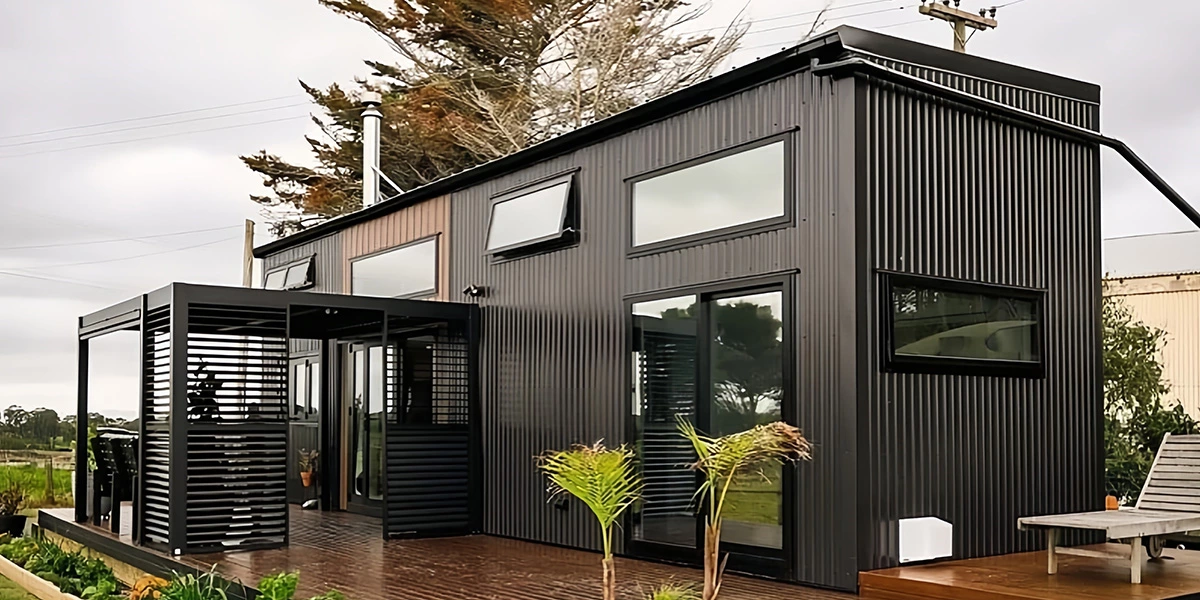
Is Your Expandable Container Home NCC Compliant in Australia?
One of the most common questions Australian buyers ask before purchasing an expandable container home is simple but critical: is it actually NCC compliant? The answer determines whether you can get council approval, legally occupy it, connect utilities, and ultimately protect your investment. This guide explains exactly what NCC compliance means for expandable homes in Australia, what certifications to demand from any supplier, how to spot non-compliant imports, and why Australian-standard expandable homes are in a different class from generic overseas products.
Why NCC Compliance Is the First Question to Ask?
Australia's National Construction Code (NCC) is the mandatory performance standard for all habitable buildings in the country — including expandable container homes. The NCC does not ban expandable homes. What it requires is that the structure performs to the same standard as any traditionally-built house.
When an expandable container home is used as a permanent dwelling, granny flat, backyard studio, or short-term rental in Australia, it must meet NCC Class 1a building standards. This is the same classification as a standard residential house — and the compliance requirements are identical.
Failing NCC compliance means:
- Council will reject your Development Application (DA) or Complying Development Certificate (CDC)
- You cannot legally occupy the structure as a habitable dwelling
- Utility connections (water, electricity, gas) cannot be formally approved
- Home and building insurance may be void
- Significant financial and legal risk if the non-compliant structure is discovered
The problem: a significant proportion of imported expandable container homes sold in Australia were never designed to meet NCC requirements. Australian buyers have unknowingly purchased units that fail structural, electrical, plumbing, or energy efficiency standards — resulting in rejected permits, forced removal, and total loss of investment.
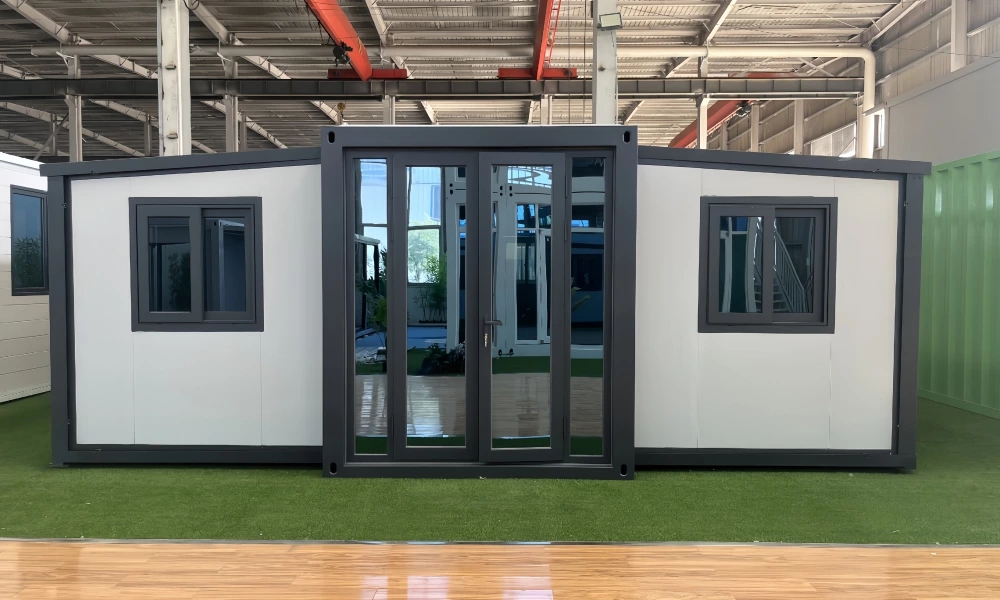
What Is an Australian Standard Expandable Container Home?
An Australian standard expandable container home is one specifically engineered, tested, and documented to meet the full suite of Australian regulatory requirements — not just basic structural integrity, but every dimension that NCC Class 1a compliance demands.
The key distinction from a generic imported expandable house:
| Dimension | Australian Standard | Generic Import |
| Standard orientation | Built to AS/NZS and NCC requirements, specifically adapted for Australian climate zones | Built to basic functionality; no regional adaptation |
| Structural grade | G550 galvanised steel (AS/NZS 1397), yield strength ≥550 MPa | Typically Q235 grade, yield strength ~235 MPa |
| Electrical system | SAA certified (AS/NZS 3000), Australian standard plugs and circuit breakers | Generic wiring; cannot be legally connected to Australian mains |
| Plumbing | WaterMark certified (AS/NZS 3500) | Uncertified; fails Australian plumbing inspections |
| Energy efficiency | Enhanced insulation for NCC climate zone compliance | Standard specification; fails NatHERS assessment |
| Fire safety | Wall panels meet Australian fire rating requirements | Typically fails AS/NZS 1530 fire assessment |
| Documentation | Engineering certificate, NCC compliance statement, NATA asbestos-free report | No formal compliance documents |
| Council approval | DA/CDC applications supported with full documentation | Permit rejection likely |
The Full NCC Compliance Checklist for Expandable Container Homes
If you are sourcing an NCC compliant expandable home Australia wide, demand written confirmation that your supplier meets all of the following:
1. Structural Compliance (AS 1170, AS 4100, AS 4600)
- AS 1170: The structure must satisfy wind load and seismic load design requirements for the specific Australian climate zone and geographic location. Coastal Queensland faces very different wind load requirements to inland Victoria.
- AS 4100: Steel structural design and material grades must comply with Australian standards for steel structures.
- AS 4600: Cold-formed steel must meet minimum yield strength requirements and galvanisation standards.
- Practical requirement: The supplier must provide a structural engineering certificate stamped by an engineer registered in Australia (or with recognition in Australia), confirming compliance with these standards for your specific installation location.
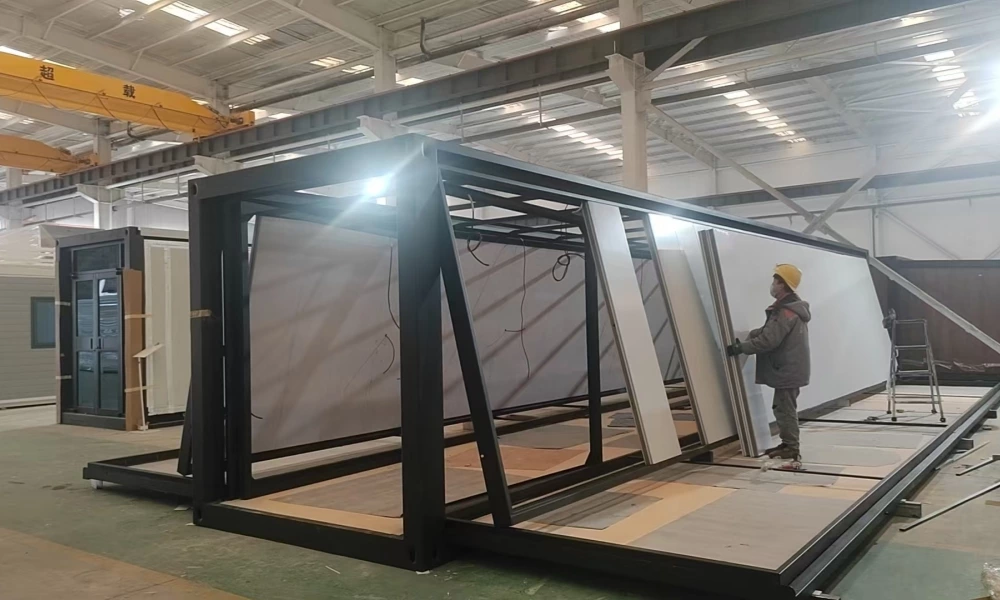
What UVO provides: Cold-formed G550 grade galvanised steel (AS/NZS 1397) with yield strength 2.3× greater than standard Q235 steel; galvanisation layer ≥180g/㎡ (≥275g/㎡ for coastal installations). 316 stainless steel connectors (AS/NZS 2329) tested to ≥1,000 hours salt spray resistance.
2. Electrical Compliance (SAA — AS/NZS 3000)
Any expandable container home connected to Australian mains electricity must have its electrical system certified to SAA (Standards Australia) standards under AS/NZS 3000 (the Wiring Rules).
Non-SAA electrical systems cannot be legally connected to the Australian grid. A licensed Australian electrician must be able to verify the system and issue an electrical safety certificate — this is impossible with non-compliant wiring.
What to check:
- SAA certification certificate covering the electrical system
- Australian standard plugs (Type I, three flat pins) pre-installed
- Australian-standard circuit breakers and switchboard
- PVC-U conduit pipes with XLPE insulated cables (temperature resistance 105°C, V0 flame retardant)
What UVO provides: Full SAA certification; Australian standard plugs, switchboard, and circuit breakers installed at factory; compliant cable specification tested to AS/NZS 3000 requirements.
3. Plumbing Compliance (WaterMark — AS/NZS 3500)
All plumbing products and systems in an Australian habitable dwelling must carry WaterMark certification under AS/NZS 3500. WaterMark is Australia's mandatory plumbing product certification scheme — non-WaterMark plumbing cannot be legally installed or connected to Australian water supply or drainage systems.
What to check:
- WaterMark certification certificate for plumbing fixtures and connection points
- Compliance with AS/NZS 3500 for water supply, drainage, and stormwater
What UVO provides: Full WaterMark certification on all plumbing components; pre-plumbed to AS/NZS 3500 standards with compliant fixtures.
4. Energy Efficiency Compliance (NCC Section J / NatHERS)
From NCC 2022, all new Class 1a dwellings in Australia must achieve a 7-star NatHERS energy efficiency rating (previously 6 stars). This applies to expandable container homes used as permanent dwellings, granny flats, and long-term rentals.
Meeting the 7-star requirement demands:
- Wall insulation: R-value appropriate for the specific climate zone
- Roof insulation: R-value appropriate for climate zone
- Double-glazed windows with appropriate U-values (AS/NZS 4666)
- Air sealing to limit uncontrolled infiltration
- Potentially mechanical ventilation for tight envelopes
What UVO provides: Enhanced insulation specification available in 75mm and 100mm options (EPS, PU, or Rock Wool core); PVDF-coated aluminium-magnesium-manganese alloy cladding (≤0.024 W/m·K thermal conductivity); double-glazed Low-E glass (AS/NZS 4666) delivering 60% improvement in thermal insulation vs standard glazing.
5. Fire Safety Compliance
Wall panels, insulation materials, and interior finishes must meet Australian fire resistance ratings under AS/NZS 1530 (methods for fire tests on building materials). The NCC specifies minimum fire hazard properties for wall linings, ceiling linings, and insulation materials used in Class 1a buildings.
What UVO provides: Formaldehyde-free centrifugal glass wool insulation (AS/NZS 4859.1) meeting A1 fire resistance standards; bamboo fibre wall panels with formaldehyde emission ≤0.05mg/m³ (AS-compliant); electrical system with flame-retardant cabling.
6. NATA Asbestos-Free Certification
Australia has a complete ban on asbestos in any form. All building products used in Australia must be asbestos-free, and for imported products, this must be verified by testing through a NATA (National Association of Testing Authorities) accredited laboratory.
Any imported expandable container home without a NATA asbestos-free report is a serious legal and health risk — and will fail the council approval process.
What UVO provides: NATA-accredited asbestos-free testing report included with all Australian-standard units.
How to Get Council Approval for an NCC Compliant Expandable Home
Having an NCC compliant expandable home is necessary but not sufficient — you also need to navigate the council approval process correctly.
Step 1: Confirm your land zoning
Check whether your property's zoning permits the intended use (residential dwelling, granny flat, secondary dwelling, or tourist accommodation). A Section 10.7 Planning Certificate from your council (~$53–$133) confirms this in NSW; equivalent certificates exist in other states.
Step 2: Identify your approval pathway
- Complying Development Certificate (CDC) — NSW fast-track; 10–20 business days; available for secondary dwellings up to 60m² on lots 450m²+ with no overlays
- Development Application (DA) — full council assessment; 40–80+ business days; required for complex sites or uses outside CDC criteria
- QLD Accepted Development — building permit only for secondary dwellings under 80m² in most residential zones
- WA Exempt Development — ancillary dwellings up to 70m² on 450m²+ lots may be exempt from planning approval
Step 3: Assemble your documentation package
For any council approval expandable home Australia application, you need:
- Structural engineering certificate (Australian-registered engineer)
- NCC Class 1a compliance statement
- SAA electrical certification
- WaterMark plumbing certification
- NATA asbestos-free report
- Energy efficiency report (NatHERS 7-star assessment)
- Scaled floor plans and elevation drawings
- Site plan showing setbacks and existing structures
UVO provides the complete documentation package — all of the above documents are included with every Australian-standard expandable container home order.
Step 4: Lodge and respond
Submit via your state portal (NSW Planning Portal, MyDAS2 in QLD, SA Planning Portal, etc.). Respond promptly to any requests for additional information. Your council may request a site inspection during and after installation before issuing an Occupation Certificate (OC).
Common Mistakes That Lead to NCC Rejection
Buying on price without checking certification: The cheapest expandable container homes on the market are almost always non-compliant with Australian standards. A $15,000 unit that fails council approval costs you everything — the unit purchase, freight, site preparation, and the DA fees. A properly Australian-standard certified unit at $25,000–$50,000 all-in is dramatically cheaper than a failed non-compliant import.
Assuming "NCC-ready" means the same as "NCC-certified": Some suppliers claim their units are "NCC-ready" or "built to NCC standards" without providing formal certification documents. Always demand the actual certificates — SAA, WaterMark, NATA asbestos-free, and a structural engineering certificate — before committing to purchase.
Frequently Asked Questions
Is an expandable container home legal in Australia?
Yes — when it meets NCC Class 1a requirements and receives council approval (DA or CDC). An NCC compliant expandable home with SAA electrical and WaterMark plumbing certification can be legally occupied, connected to utilities, and insured in any Australian state.
What is the difference between Australian standard and non-standard expandable homes?
An Australian standard expandable container house is built to AS/NZS specifications for structural steel, electrical systems, plumbing, energy efficiency, and fire safety — and comes with the certification documents councils require for approval. A non-standard unit typically meets only basic structural requirements, lacks SAA and WaterMark certification, and will fail the council approval process.
Does an expandable home need a 7-star NatHERS rating in Australia?
Yes — from NCC 2022, all new Class 1a dwellings (including expandable homes used as permanent dwellings or granny flats) must achieve 7-star NatHERS energy efficiency. The insulation specification and glazing type directly determine whether this rating is achievable. UVO's enhanced insulation options are designed to meet this requirement in all Australian climate zones.
Can I use an expandable container home as a granny flat in Australia?
Yes. An expandable house granny flat in Australia follows the same approval pathway as any secondary dwelling — CDC or DA depending on your state, lot size, and whether overlays apply. The unit must meet NCC Class 1a standards with full certification documentation. UVO's Australian-standard expandable homes are regularly used as granny flats across NSW, QLD, VIC, WA, and SA.
Does UVO provide all the documents needed for council approval?
Yes. Every UVO Australian-standard expandable container home order includes: structural engineering certificate, NCC Class 1a compliance statement, SAA electrical certification, WaterMark plumbing certification, NATA asbestos-free report, energy efficiency specification data, and scaled floor plans and elevation drawings — the complete documentation set required for DA and CDC applications in any Australian state.
Ready to Order an NCC Compliant Expandable Home in Australia?
UVO's Australian-standard expandable container homes are engineered, tested, and certified to meet NCC, SAA, WaterMark, and NATA requirements — with the complete documentation package included to support council approval in every Australian state.