A-Frame Cabin vs Container Home: Which Is Right for You?
Two of the most talked-about alternative housing categories in the world right now are going head to head. The A frame house vs container home debate is one that thousands of buyers, investors, and resort developers are working through in 2026 — and the answer genuinely depends on your land, your budget, your use case, and your local planning environment.
What Are We Actually Comparing?
Before diving in, let's define what we mean by each category — because both terms get used loosely.
A-Frame Cabin (Triangle Tiny House)
A prefab A-frame cabin features a steeply pitched triangular roofline that extends from a central apex all the way down to near ground level, forming the iconic "A" shape. Modern factory-built versions are constructed on a galvanised light steel frame with insulated sandwich panels, double-glazed windows, and optional interior fit-out. They are delivered largely pre-built and installed in a day.
Expandable Container Home
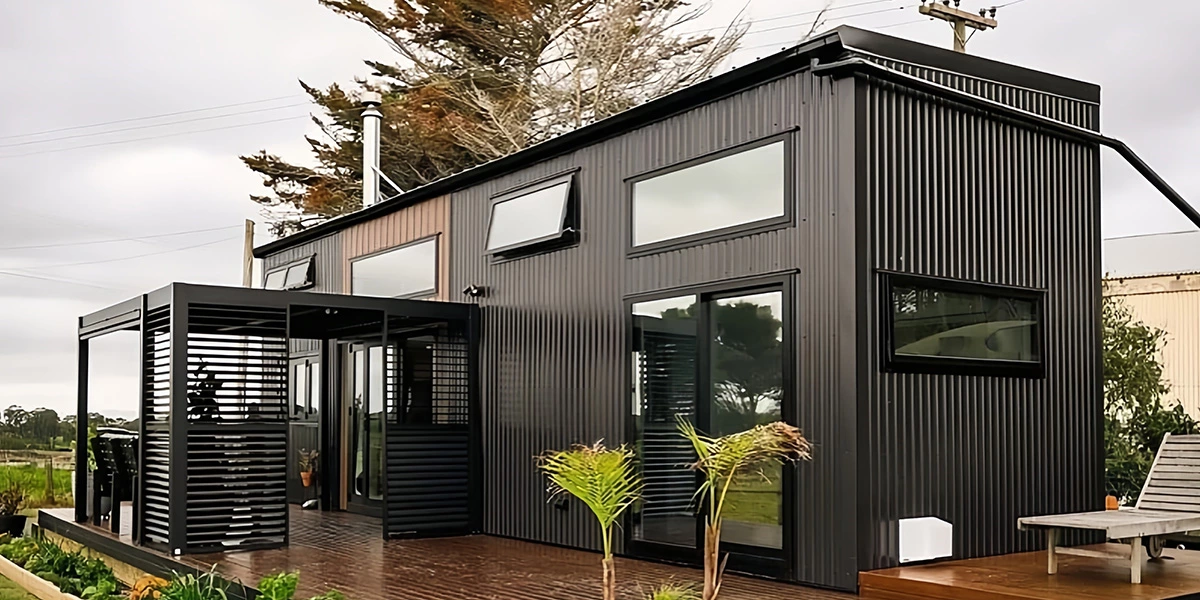
A factory-built expandable container home starts as a compact steel-framed unit that unfolds on-site to reveal expanded living wings — typically doubling or tripling the usable floor area. Expandable unit range includes 20ft (approx. 37m²), 30ft (approx. 55m²), and 40ft (approx. 75m²) models, all built on a structural steel frame with insulated panels, compliant electrics and plumbing, and full documentation packages for US, Australian, and European markets.
Both are factory-built. Both use steel-frame construction. Both can be permitted as permanent dwellings in most markets. But they serve meaningfully different purposes — and choosing the wrong one is an expensive mistake.

Design and Architecture
A-Frame Cabin
The A frame house design is its biggest competitive advantage and its biggest constraint, simultaneously.
Advantages:
- Instantly recognisable, highly photogenic silhouette — the single most-shared cabin aesthetic on Instagram, Pinterest, and Airbnb
- Soaring vaulted ceilings 4.0m-4.6m create a sense of spaciousness far beyond the footprint
- Panoramic floor-to-ceiling glass gable end creates a direct visual connection to the surrounding landscape — forest, mountain, lake, or coast
- Naturally dramatic interior character — the sloping walls create cozy, nest-like sleeping lofts in two-story variants
Constraints:
- Usable floor area is lower than the overall footprint suggests — sloping walls reduce standing headroom toward the edges
- Less design flexibility than a rectangular floor plan — furniture placement requires thought
- Less scalable for large families who need separate rooms with full ceiling height throughout
Winner for design appeal: A-Frame Cabin — by a wide margin for emotional, lifestyle, and short-term rental appeal.
Container Home
The expandable container home's design strength is its versatility and scalability.
Advantages:
- Flat roof and rectangular floor plan offer maximum usable floor area per square metre
- Easier to furnish — standard furniture fits without height constraints
- Highly scalable — multiple units can be combined side by side or stacked for larger floor areas
- More neutral aesthetic that can be customised with cladding, colours, and facade treatments
Constraints:
- Less visually distinctive than an A-frame — standard container aesthetic requires more exterior design investment to stand out
- Flat roof requires more maintenance attention (drainage, waterproofing) in high-rainfall areas
- The "industrial" look polarises some buyers and planning authorities
Winner for design versatility: Container Home — more practical for larger families and permanent living.
Cost Comparison — A Frame House vs Container Home
This is where the a frame house vs container home debate gets most heated online — and where real data matters more than opinions.
Unit Cost Ex-Factory(Take our own products as an example)
| Product | Floor Area | Price |
| UVO A-Frame single-story | 52 ㎡ | From $21,000 |
| UVO A-Frame two-story | 29.4 ㎡ | From $19,800 |
| UVO 20ft Expandable Container Home | 37 ㎡ | From$6999-$12000 |
| UVO 30ft Expandable Container Home | 55 ㎡ | $10800-$15000 |
| UVO 40ft Expandable Container Home | 75 ㎡ | $13000-$20000 |
Project Cost (Including Delivery, Foundation, Permits, Utilities)
| Cost Component | A-Frame Cabin(52㎡) | Expandable Container Home (40ft, 75 ㎡) |
| Unit price | $21,000 | $13000-$20000 |
| Shipping (US market) | $4,000–$8,000 | $5,000–$9,000 |
| Foundation | $4,000–$10,000 | $4,000–$10,000 |
| Permits and engineering | $2,000–$8,000 | $2,000–$8,000 |
| Utility connections | $3,000–$15,000 | $3,000–$15,000 |
| Interior fit-out (optional) | $4,000–$8,000 | $3,000–$7,000 |
| Total All-In | $38,000–$70,000 | $30,000–$60,000 |
Cost Analysis: The overall costs of both are roughly the same. However, the 40-foot expandable container house offers a larger living area (75 square meters vs. 52 square meters). For buyers prioritizing maximum living space per dollar, the expandable container house is the better choice. For buyers prioritizing the lowest entry cost, the A-frame cabin is the better option.
Climate Performance
A-Frame Cabin in Different Climates
The steeply pitched A-frame roof is one of the most naturally efficient roof designs for extreme weather environments — and this is not a marketing claim but a structural engineering reality.
Snow: The steep pitch (typically 45–60 degrees) causes snow to slide off naturally, preventing dangerous accumulation and structural overload. This is why A-frame architecture has been the traditional vernacular style in Alpine Europe, Scandinavia, and the mountainous US Pacific Northwest for centuries. UVO's A-frame cabin structures are engineered for Wind Load 11–12 (130–150 mph) and designed to exceed standard snow load requirements in high-altitude markets.
Rain: The continuous triangular roof surface, with no flat sections or complex valley junctions, offers fewer leak points than most other roof forms. Rainwater sheds cleanly in all directions from the apex.
Heat: The primary challenge for an A-frame in hot climates is solar gain through the large glass gable end. UVO addresses this with double-glazed low-E glass, adjustable shading options, and ventilation positioning at the apex to promote thermal stack effect. In Australia's tropical north or the US Southwest, appropriate shading and insulation specification are important considerations.
Container Home in Different Climates
Snow and wind: Modern expandable container homes from UVO are rated for Wind Load 11–12 and carry structural engineering certification for high-wind environments. The flat roof, however, requires robust waterproofing and drainage design in heavy snowfall areas — snow must be cleared or the roof drainage system must be capable of handling meltwater without pooling.
Rain: Flat-roof container homes require higher-quality waterproofing membranes and properly designed drainage to prevent water ingress over time. UVO uses high-grade EPDM and TPO waterproofing systems on all expandable units.
Heat: Steel walls and roofs can act as radiators in direct sun without adequate insulation. UVO's 75–100mm insulated sandwich panels address this effectively, but in very hot climates (Darwin, Phoenix, Dubai), roof shading or reflective cladding is a recommended addition.
Climate winner: The A-frame cabin has a natural structural advantage in cold and snowy climates. The container home performs equally well in mild climates with proper specification.

Planning, Permits and Zoning
A-Frame Cabin
In most markets, the A-frame cabin's greatest planning advantage is its visual compatibility with rural and scenic landscapes. Planning authorities in national parks, green belt areas, and coastal zones that would reject a flat-roofed container structure often accept a well-designed triangular cabin far more readily.
United States: A-frame cabins are accepted in most residential and rural zones as ADUs or primary dwellings. In California, the ADU pathway (ministerial approval, 60-day decision) applies to compliant units. In Colorado mountain counties, engineering certification for snow and wind loads is the key requirement.
Australia: A-frame cabins are assessed as Class 1a buildings under the NCC, identical to expandable container homes. Both require DA or CDC approval for habitable use.
Europe: Both structure types require CE certification under CPR 305/2011. A-frame cabins often face less aesthetic resistance from planning committees in rural and tourism zones.
Planning verdict: The A-frame cabin has a softer landing with planning authorities in scenic, rural, and heritage-sensitive environments. The expandable container home faces more aesthetic scrutiny in some jurisdictions but is equally permittable where planning is performance-based.
Container Home
The expandable container home's planning profile is increasingly strong. As prefab and modular construction has matured, most US, Australian, and European planning systems have adapted their frameworks to accommodate compliant factory-built structures.
Airbnb and Short-Term Rental ROI
This is the category that most investors care about most — and the a frame house vs container home comparison produces a clear winner here.
A-Frame Cabin Airbnb Performance
A-frame cabins are the single highest-performing aesthetic category on Airbnb globally by booking rate and average nightly price relative to floor area. Their photogenic triangular profile generates exceptional social media organic marketing — guests share their stays without prompting.
US market benchmarks (2026):
- Average nightly rate for A-frame cabins: $180–$350/night in scenic rural locations
- Average occupancy: 65–75% in strong markets (Smoky Mountains, Colorado Rockies, Pacific Northwest)
- Annual gross revenue per unit: $40,000–$80,000
Example ROI (all-in $60,000, Colorado):
- 70% occupancy × $220/night × 365 days = $56,210 gross revenue
- Less 30% operating expenses = $39,347 net income
- Payback period: Under 18 months
Container Home Airbnb Performance
Expandable container homes are also strong performers on Airbnb — particularly those with distinctive exterior design or premium interior fit-out. However, they face greater competition from other property types and typically command lower nightly rates than A-frame cabins of equivalent floor area.
US market benchmarks (2026):
- Average nightly rate for container homes: $130–$240/night
- Average occupancy: 55–65% in competitive markets
- Annual gross revenue per unit: $25,000–$50,000
Example ROI (40ft Expandable, all-in $85,000, rural Texas):
- 60% occupancy × $170/night × 365 days = $37,230 gross revenue
- Less 30% operating expenses = $26,061 net income
- Payback period: Under 3.3 years
Airbnb ROI verdict: The A-frame cabin delivers higher nightly rates and occupancy in scenic tourism markets, producing faster payback on a lower initial investment. For short-term rental investment, the A-frame cabin is the stronger choice.
Long-Term Living and Practicality
A-Frame Cabin for Permanent Living
A-frame cabins are fully engineered for year-round permanent residence — However, practical considerations include:
- Storage: The sloping walls significantly reduce usable wall space and limit upper-floor storage options
- Furniture: Standard-sized sofas, beds, and wardrobes fit on the ground floor; upper loft spaces require custom or low-profile furniture
- Families: A 52 ㎡ A-frame works well for couples or small families of 2–3; larger families will find the space limiting
- Privacy: Open-plan loft designs mean limited acoustic separation between sleeping and living areas
Best permanent living use case: Couples, remote workers, retirees, or individuals seeking a compact, design-led permanent home.
Container Home for Permanent Living
The expandable container home's rectangular floor plan makes it significantly more practical for full-time family living:
- Full ceiling height throughout: No sloping walls, no constraints on furniture size or room layout
- Scalable: 40ft model comfortably accommodates 2 bedrooms, 1 bathroom, full kitchen, and living area — a complete family home
- Standard furniture: Any off-the-shelf furniture fits without modification
- Privacy: Proper room separation with full-height walls between bedroom and living areas
Best permanent living use case: Families of 2–4, anyone requiring a full-specification home with standard room layouts and practical daily functionality.
Permanent living verdict: The expandable container home wins on practicality for full-time family living. The A-frame cabin wins on character and lifestyle appeal for couples and individuals.
The Decision Matrix: Which Is Right for You?
Use this quick reference to identify which structure best fits your specific situation.
| Situation | Recommended Choice | Reason |
| Airbnb / short-term rental in scenic location | A-Frame Cabin | Higher nightly rates, superior visual appeal, faster ROI |
| Full-time family home | Expandable Container Home | More usable floor area, standard room layouts, practical |
| Glamping resort (multiple units) | A-Frame Cabin | Higher occupancy, stronger guest experience, better photography |
| Rural off-grid primary dwelling | Both | Cold/snowy climate → A-frame; Flat/arid → Container |
| US /Australian Backyard ADU / granny flat | Expandable Container Home | More floor area for budget, better room separation |
| Mountain / alpine location | A-Frame Cabin | Natural snow-shedding design, superior cold-climate engineering |
| Coastal / tropical location | Expandable Container Home | Better flat-roof sealing, easier hurricane-clip foundation |
Frequently Asked Questions
Which makes more money on Airbnb — an A-frame cabin or a container home?
A-frame cabins consistently achieve higher nightly rates and occupancy in scenic tourism markets due to their visual appeal. In the US, A-frame cabins average $180–$350/night vs $130–$240/night for container homes of comparable size. For pure short-term rental ROI, the A-frame cabin is the stronger choice.
Which is better for permanent living — an A-frame cabin or a container home?
For couples and individuals, the A-frame cabin's design character and compact livability are genuine advantages. For families requiring full-height rooms, multiple bedrooms, and practical room separation, the expandable container home's rectangular layout is significantly more functional.
Can I combine both on the same property?
Absolutely — and this is an increasingly popular strategy for glamping resort and multi-use property development. A flagship A-frame cabin as the premium Airbnb unit, combined with one or two expandable container homes as staff quarters, storage, or additional guest accommodation, creates a highly efficient mixed-use property layout.
Which is easier to get planning permission for?
Both are equally permittable when properly documented and CE or NCC certified. The A-frame cabin generally faces less aesthetic resistance in scenic rural zones and heritage-sensitive areas. The expandable container home has more established DA precedent in Australian suburban markets. In the US, both are permitted through the same ADU or residential dwelling pathways.
Ready to Choose?
The a frame house vs container home decision ultimately comes down to three questions: What is it for? Who will use it? Where is it going?
- For Airbnb, glamping, and scenic retreats → Explore UVO A-Frame Cabin →
- For family living, granny flats, and practical ADUs → Explore UVO Expandable Container Homes →