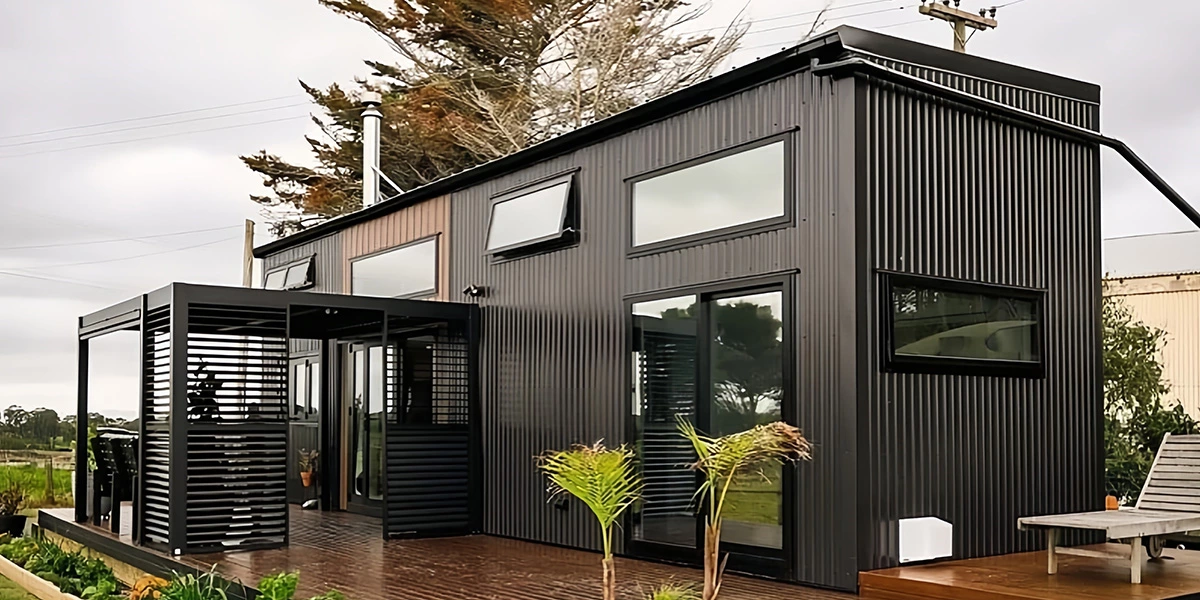
Australian Prefabricated Homes Market: NCC and OC Building Permit Guidelines
With the advancement of global industrialized construction, prefabricated houses are becoming the preferred solution for Australia to address its housing crisis and pursue an efficient lifestyle. Whether it's a expandable house, an apple cabin, or a modular tiny house, legally establishing and renting or selling them in Australia requires overcoming two major hurdles: NCC building permits and OC residence permits.
2026 Australian Prefabricated Housing Market Trends Analysis
The Australian prefabricated housing market is experiencing explosive growth. It is projected that by 2026, over 65% of new housing will integrate advanced modular systems.
Urgent Need Amid the Housing Crisis: Traditional construction cycles take 12-18 months, while prefabricated housing can shorten construction time by over 40%, allowing for move-in in as little as 8 weeks.
Diversified Product Forms: Market demand for capsule houses, apple cabins, and expandable container houses is significantly increasing, primarily for granny flats, mining accommodations, and tourist rentals.
Sustainability and Smart Technology: In 2026, consumers will be more focused on off-grid living and 7-star energy efficiency standards, with modular homes integrating solar power and smart home technology gaining popularity.

What is an Australian NCC building permit?
The NCC (National Construction Code) is Australia's national building code, a mandatory technical standard that all building projects must adhere to.
Core Compliance Levels
Class 1a (Detached House Class): This standard is required if your prefabricated house is intended for permanent residential use. It has strict requirements for structural safety, fire resistance, waterproofing, and energy efficiency.
Class 10a (Non-Residential Building Class): This applies only to garages or tool sheds. Many low-quality container houses only reach this level and are not legally habitable.
OC (Occupation Certificate) Residence Permit: Key to Legal Occupation and Asset Liquidation
An OC is a residence permit issued by a certification body, proving that the building has been completed according to approved plans and complies with NCC standards.
Why is an OC crucial?
Without an OC, a property cannot be legally occupied, cannot generate rental income, and cannot be sold on the resale market. Furthermore, insurance companies typically refuse to insure buildings without an OC.
How do clients apply for an OC locally?
- Obtaining Building Approval: An application must be submitted to the local council or a private certification officer before the property arrives.
- Installation and Connection: Electrical and plumbing connections are completed by licensed Australian electricians and plumbers.
- Final Inspection: The certification officer will conduct an on-site inspection to ensure the installation is secure and the waterproofing is up to standard.
- Issuance of OC: Once approved, a residence permit is obtained.
What are some common technical documents required for project applications?
While overseas manufacturers do not directly participate in Australian local certification, they can provide key technical support documents upfront to help clients smoothly advance the approval process. These include, but are not limited to:
- CodeMark certified product information
- WaterMark certified component information
- Complete structural drawings (CAD) and bill of materials (BOM)
- Product configuration instructions
- Technical parameter documents
- English version installation guide and user manual
It is important to note that different state governments, project purpose (residential/commercial), and the compliance path adopted (DTS or performance-based approach) will affect specific document requirements. Therefore, document preparation should be flexible and tailored to individual needs.
UVO's One-Stop Compliance Support Process from Order Placement to Delivery
In actual export projects, UVO not only provides the products themselves, but also ensures an efficient and controllable entire process from production to delivery through standardized procedures, aligning as closely as possible with Australian NCC compliance logic:
Phase 1: Needs Confirmation and Solution Matching
Based on the client's project purpose (residential, holiday, commercial, etc.) and target market requirements, UVO quickly matches suitable product models and structural solutions, simultaneously providing basic technical parameters to facilitate preliminary feasibility assessments.
Phase 2: Technical Documentation Preparation and Optimization
After order confirmation, UVO simultaneously outputs a complete technical documentation package, including structural drawings, a bill of materials, configuration specifications, and an English installation manual, which can be supplemented or optimized based on feedback from local consultants.
Phase 3: Factory Production and Quality Control
Modular production is carried out using a standardized manufacturing system, with strict quality inspections at key points. Remote acceptance via photos or videos is supported to ensure products meet established standards before leaving the factory.
Phase 4: Packaging Reinforcement and International Transportation
Professional packaging and structural reinforcement are performed according to shipping requirements, optimizing container loading schemes to reduce risks during transportation and ensure the product arrives at its destination intact and safely.
Phase Five: On-site Installation Support and Delivery Coordination
Provide basic installation drawings, layout plans, and technical guidance materials to assist clients or local construction teams in completing the installation. Simultaneously, assist in submitting relevant documents for approval or acceptance.
Through this entire process, UVO achieves a seamless transition from "factory manufacturing" to "project implementation," ensuring product quality while providing strong support for clients to navigate Australia's complex compliance system.
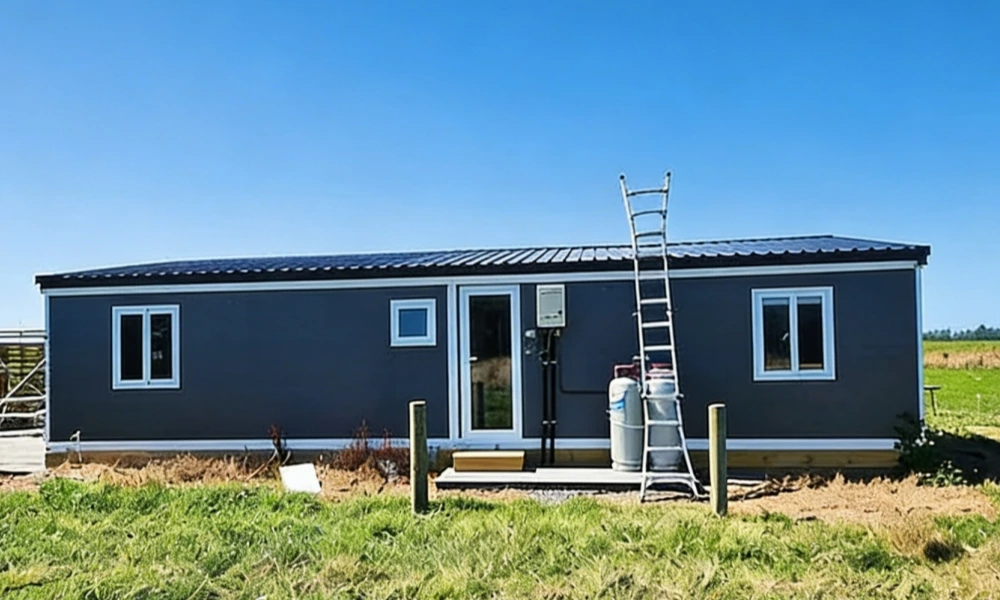
UVO Australian Standard Building Compliance System Overview
Core Compliance Capabilities
- Full NCC Compatibility: Fully compliant with NCC 2022 standards, supporting both Class 1a (residential) and Class 10a (non-residential) applications.
- RPEQ Engineering Certification Support: All key structural and compliance documents are reviewed and signed by Australian registered engineers.
- Multi-Standard Collaboration: Strictly aligns with AS/NZS series standards (structural, materials, electrical, fire protection, etc.) to ensure technical compliance.
Complete Technical Documentation Output
UVO provides a standardized document package covering the entire project approval process, including:
- Complete set of English construction drawings (structural/electrical/plumbing/fire protection)
- Structural calculation reports (wind resistance, seismic resistance, hoisting and anchoring)
- Material certification documents (steel, glass, doors and windows, etc.)
- Electrical and system compliance documents (SAA, AS/NZS 3000)
- Installation and maintenance manual (English version)
- Manufacturer's compliance declaration (stamped and signed)
For residential projects (Class...) 1a), additional support may be provided for:
- Energy efficiency and thermal performance reports;
- Sound insulation and waterproofing certification documents;
- WaterMark water supply and drainage system certification;
- Product-specific compliance support.
UVO offers more targeted certification documentation for different product types:
Expandable container house: Anti-corrosion coating report, foundation and anchoring system design certification;
Capsule house: Modular structure certification, HVAC system compliance documents, and overall bathroom waterproofing testing; Full support for the OC (Occupancy Permit) process.
UVO can assist clients in preparing a complete OC (Occupancy Permit) submission package, including:
- RPEQ final compliance certificate;
- Complete engineering drawings and calculations;
- Various material and system certifications (SAA / WaterMark / AS);
- Installation compliance declaration and manufacturer's declaration.
Through standardized documentation output and engineering certification support, UVO helps clients successfully complete approvals, enabling the legal use, rental, and sale of their projects.
The Success Path to Prefabricated Housing in Australia
Choosing products that meet expandable house NCC Australia standards is the first step. Complete compliance documentation provided by UVO (such as CodeMark or engineering calculation sheets) greatly simplifies the review process for local certification officials. Whether renting out as investment property or selling as owner-occupied housing, ensuring NCC compliance and ultimately obtaining an OC certificate is crucial for protecting asset value.