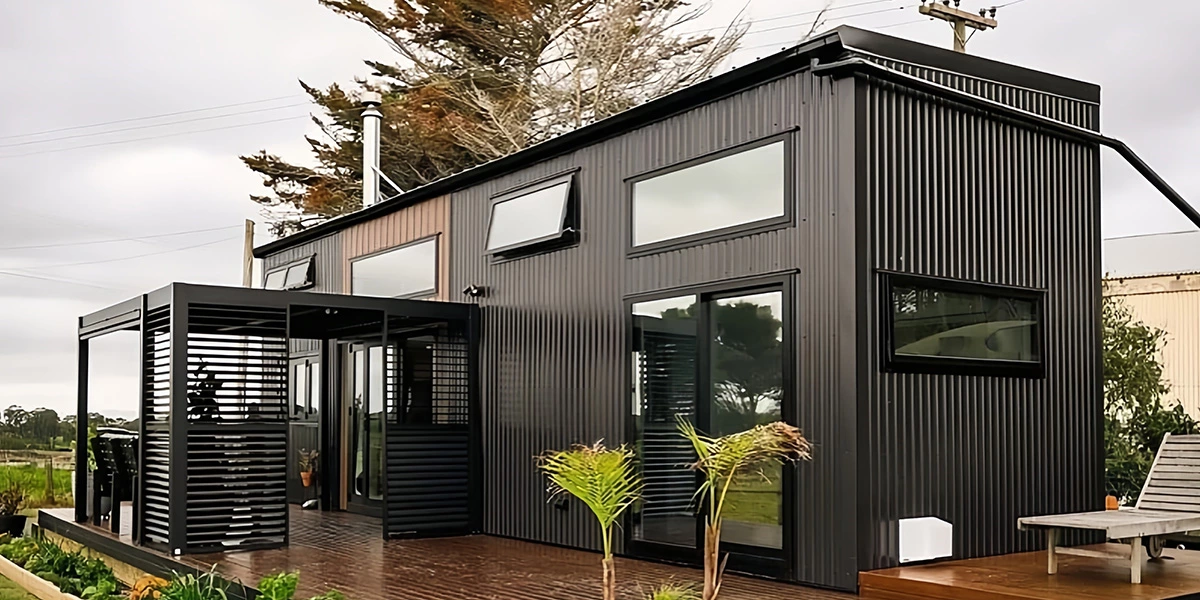
Built for the Cold: Expandable Container Homes Redefining Winter Living
Globally, from Canada and Northern Europe to the frigid regions of Australia, expandable container houses are emerging as a new housing solution.
But many people ask:
- Can they really be lived in comfortably in cold climates?
- The answer is: Yes, and they perform excellently—provided they are designed properly.
This article will comprehensively analyze their winter performance from four dimensions: structure, insulation, energy efficiency, and product technology.
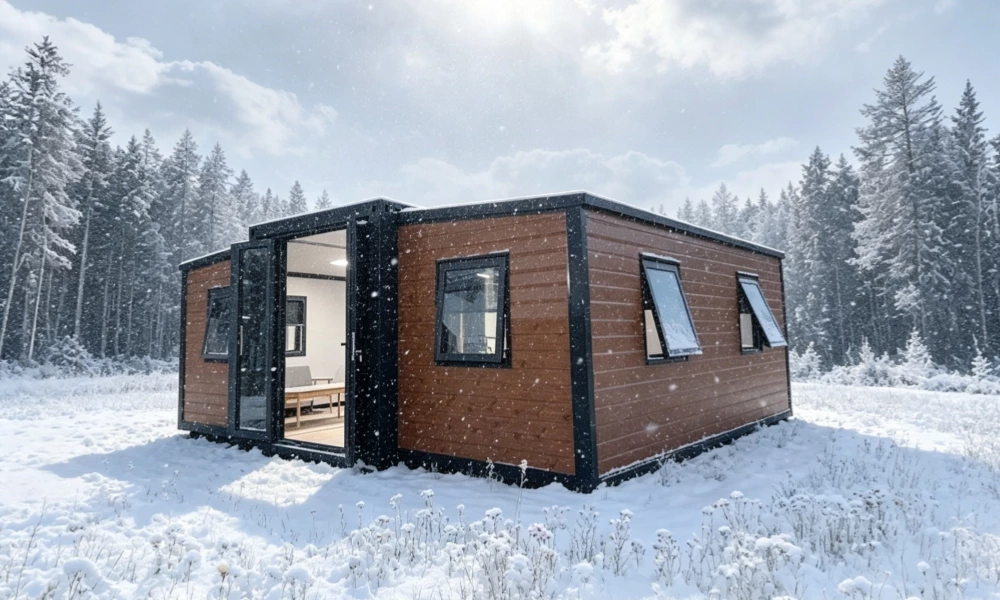
Why can expandable container houses adapt to cold climates?
Traditionally, galvanized steel structures were considered "cold in winter and hot in summer," but modern modular technology has completely changed this perception.
- Core Reasons: Structural and Material Upgrades
- Adopting a steel structure + composite insulation wall system
- Wall thermal conductivity as low as approximately 0.3 W/(㎡·K), effectively blocking heat exchange
- Roof with waterproof and snow load-bearing capabilities, adapting to extreme weather
Conclusion: Modern expandable housing is no longer a "container," but a high-performance prefabricated building system.
The Key to Winter Comfort: High-Performance Insulation Systems
The key to cold climates is not the "building materials," but the design of the wall panel insulation system.
1. High R-value Insulation Materials
Common configurations include:
- EPS / XPS / PU sandwich panels
- Closed-cell spray foam
- Multi-layer composite wall systems
High R-value materials significantly reduce heat loss.
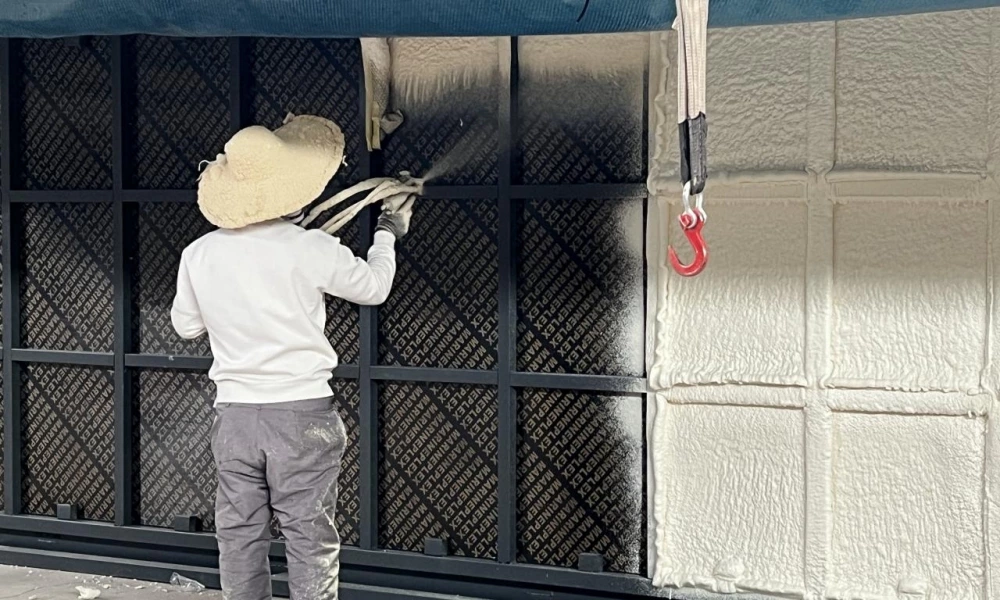
2. Solving the "Cold Bridge Problem" (Most Crucial)
Expandable building structures are most prone to cold bridges:
- Folding joints
- Door and window interfaces
- Structural splicing points
Solutions:
- Continuous insulation layer design
- Sealing strips + thermal break structure
- Modular integrated splicing
These measures prevent cold air penetration and improve winter stability.
3. Anti-condensation and Moisture-proof Systems
The biggest hidden danger in winter isn't the cold itself, but condensation and mold:
- Adding a vapor barrier
- Double-glazed windows
- Ventilation systems
These effectively prevent structural condensation caused by "internal heat and external cold."
Expanding the Energy Efficiency and Living Experience of Container Homes
High-performance insulation not only enhances comfort but also delivers significant energy savings:
- Reducing heating energy consumption by 30–40%
- More stable indoor temperature
- Lower noise levels, providing a living experience closer to traditional housing
In more extreme environments, modular homes can even achieve:
- Temperature resistance down to -60°C
- Three-layer composite insulation system
- Reducing heating needs by 70%
Note: In cold regions, this translates to lower long-term operating costs. With proper design, container homes can be used for long-term living in extremely cold regions.
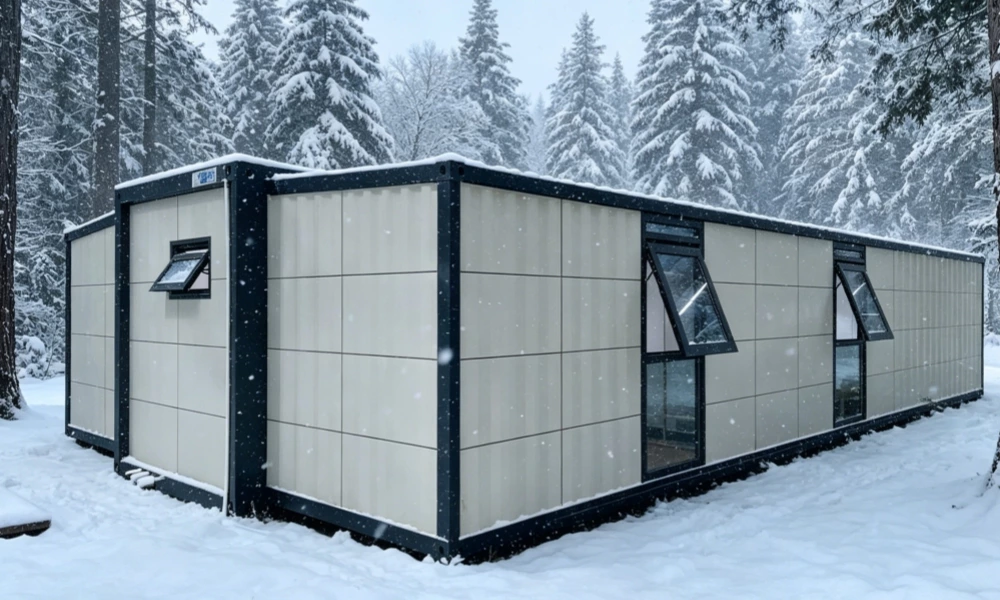
UVO Expandable Container House: Optimized for Cold Climates
Building upon standard technology, UVO products offer further upgrades in cold-resistance performance:
1. High-density polyurethane/composite sandwich panel system
Thermal conductivity as low as 0.02 W/(m·K) Insulation performance far superior to ordinary EPS Improved insulation in winter, reducing heat loss.
2. Integrated sealed structure (resistant to cold air penetration)
Factory integrated production Seamless splicing + high-strength sealing system Prevents air penetration Achieves "as airtight as a traditional house".
3. Double-glazed windows + thermal break system
Reduces heat loss by approximately 50% Anti-condensation and anti-frost.
4. Wind and snow resistant structural design
Resistant to level 12 winds Roof can withstand snow loads Suitable for Canada, Northern Europe, and high-altitude regions.
5. Expandable structure with "continuous insulation design"
UVO optimizes industry pain points: No cold bridges in the unfolded area Continuous and consistent insulation layer Maintains complete thermal performance after unfolding This is a core difference that ordinary products cannot achieve.
6. Suitable Applications
Best suited for cold regions. Expandable container homes are particularly suitable for cold climates: Mountain lodges/Glamping, temporary camps in polar or high-latitude regions, winter vacation homes, staff dormitories in remote areas, and outbuildings (ADUs).
Are expandable container houses suitable for cold climates?
The answer is: Absolutely, and even more so.
- Modular structure improves airtightness.
- High-performance insulation system ensures winter comfort.
- Energy efficiency surpasses traditional buildings.
- UVO products further optimize extreme cold adaptability.
If you are looking for a building solution that can cope with cold climates, the UVO Expandable Container House is an ideal choice.