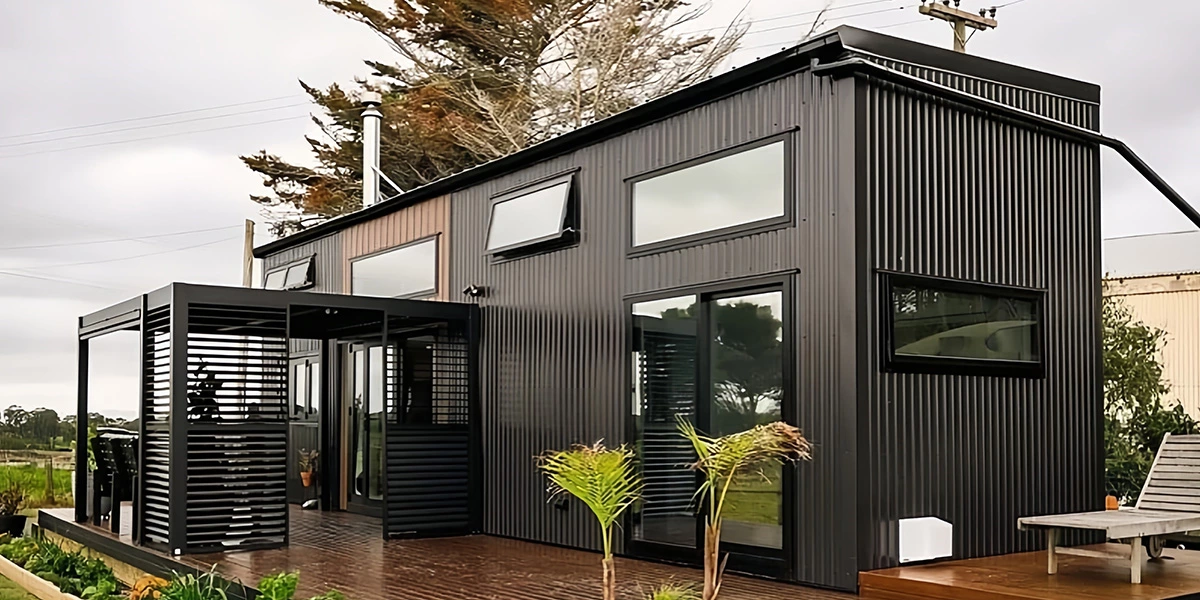
Does your apple cabin house require a building permit in Australia?
Apple Cabins are taking Australia by storm — used as backyard offices, granny flats, Airbnb pods, and glamping retreats. But before you order one, there's a question almost every buyer asks: do I need a building permit? The answer depends on your state, how you plan to use it, and whether it's fixed to the ground.
Where is Apple Cabin House typically used?
In Australia, Apple Cabins are typically used for:
- Granny flat / secondary dwelling — housing a family member on your property
- Backyard office or studio — working from home in a dedicated, separate space
- Short-term rental / Airbnb pod — earning income from your backyard
- Glamping and resort accommodation — tourism and hospitality businesses
- Primary dwelling — on rural land or for off-grid living
The type of use determines your approval pathway. An Apple Cabin used as a storage shed and an Apple Cabin used as a permanent home are treated very differently by Australian councils.

The Difference Between Residing and Not Residing
Before delving into the rules of each state, please understand this key difference:
| Use | Classification | Approval Required |
| Storage, art workshop, garden room | Non-habitable | Usually exempt if under size limits |
| Office | Habitable | Yes — always requires approval |
| Bedroom, living space, granny flat | Habitable | Yes — always requires approval |
| Short-term rental / Airbnb | Habitable | Yes — plus short-stay permit in some states |
| Glamping / tourism pod | Tourism use | Yes — planning and tourism permits |
Key rule: In Australia, any habitable building requires a building permit – regardless of size. In any state, you cannot legally use a building as residential space without some form of permit.
What Makes an Apple Cabin Approvable in Australia?
Regardless of state, an Apple Cabin used as a habitable space needs to demonstrate:
- Minimum ceiling height of 2.4m in all habitable rooms
- NCC Class 1a compliance (same classification as a standard house)
- Energy efficiency — NatHERS 6–7 star rating for your climate zone (7 stars from 2024 in most states)
- Structural engineering certificate from a registered Australian engineer
- Electrical compliance to AS/NZS 3000 Wiring Rules
- Plumbing compliance to AS/NZS 3500 (if wet areas included)
- Smoke alarms installed per NCC requirements
- Waterproofing in bathroom and wet areas
- Scaled drawings — floor plan, elevations, and site plan
Detailed information on each state in Australia
New South Wales (NSW)
NSW offers a well-structured, relatively fast approval system for Apple Cabins, especially as secondary dwellings.
As a Granny Flat / Secondary Dwelling
The most common Apple Cabin use in NSW. If your property and project meet the criteria under the State Environmental Planning Policy (Housing), you can use the Complying Development Certificate (CDC) pathway — approved by a private certifier without going to council.
CDC criteria for secondary dwellings in NSW:
Lot size 450m² or larger
Apple Cabin floor area up to 60m²
Setbacks from boundaries met (generally 900mm sides, 3m rear)
No flood, bushfire, or heritage overlays on the property
If CDC criteria aren't met, a full Development Application (DA) to council is required.
As a Backyard Office / Studio
If the Apple Cabin is genuinely non-habitable (used for limited periods, no sleeping or full-time occupancy), a small structure may qualify as exempt development in NSW — no approval needed — if it's under 20m² and meets height and setback rules.
As a Short-Term Rental / Airbnb
NSW has a short-term rental accommodation (STRA) registration scheme. You must register your property on the NSW STRA Register. Most properties in non-fire-prone areas can be rented short-term without additional planning approval, but local council LEPs may impose caps on days per year.
Queensland (QLD)
QLD's approval requirements depend heavily on how you use the Apple Cabin and the size of your lot.
As a Secondary Dwelling / Granny Flat
Under QLD planning rules, secondary dwellings are classified as Accepted Development in most residential zones — meaning no planning approval is needed, just a building permit. Size limits apply:
- Up to 80m² in metropolitan areas
- Up to 100m² in rural areas
Since September 2022, secondary dwellings in QLD can be rented to anyone (not just family members).
As a Backyard Office / Non-Habitable Use
Small non-habitable structures may be exempt from approval in QLD if they meet local council rules on size and setbacks. However, any Apple Cabin used regularly as a workspace needs building approval.
As a Glamping / Tourism Pod
Glamping use triggers tourism land use classification — separate from residential rules. A planning approval (development application) is required to operate Apple Cabins as paid accommodation on most land types. The specific requirements vary significantly by council.
QLD tip: QLD is one of Australia's most permissive states for secondary dwellings in 2026 — if your Apple Cabin is under 80m², in a residential zone, and used as a granny flat, you may only need a building permit with no planning approval at all.
Western Australia
WA made significant changes in 2024, making it the most straightforward state for Apple Cabin approvals as secondary dwellings.
As a Granny Flat / Secondary Dwelling
Under WA's updated Residential Design Codes (R-Codes), ancillary dwellings up to 70m² are now exempt from planning approval on lots 450m² and above — provided they meet setback, height, and privacy requirements. From January 2026, granny flats up to 70m² can also be built without a building consent in many cases, with streamlined certification instead.
This is a major advantage for Apple Cabin buyers in WA. A standard Apple Cabin under 70m² placed on a standard residential lot can potentially proceed with minimal council involvement.
WA introduced new short-term rental accommodation planning reforms effective January 2026. Properties used as short-term rentals now require planning approval in most local government areas. Check your specific local council's requirements.

Victoria
Victoria updated its rules for small secondary dwellings, making the process more accessible for Apple Cabin buyers.
As a Small Second Home / Secondary Dwelling
Under VIC's Small Second Dwellings policy (March 2026 update), dwellings of 60m² or less with a kitchen, bathroom, and toilet on the same lot as an existing home can proceed without a planning permit in General Residential Zones — provided they meet the relevant VPP (Victoria Planning Provisions) requirements on setbacks and design.
A building permit is still always required. This is issued by a registered building surveyor and confirms NCC compliance and structural safety.
As a Dependent Person's Unit
If the Apple Cabin is for a family member who is dependent on the main household occupants, it may be classified as a "dependent person's unit" — a slightly different approval category with its own rules.
As a Backyard Office / Non-Habitable Studio
Non-habitable structures in VIC may be exempt from a planning permit if they meet size and setback rules. A small Apple Cabin used purely as a non-habitable studio (no sleeping, no regular full-time occupancy) may proceed without planning approval, but a building permit may still be needed depending on size and local rules.
South Australia
SA uses a single planning portal for all development applications, making the process transparent and trackable.
As a Secondary Dwelling / Ancillary Accommodation
Apple Cabins used as secondary dwellings in residential zones are typically assessed as Code Assessed development under SA's Planning and Design Code. Both planning approval and building rules consent are required.
SA's planning policy for ancillary accommodation (secondary dwellings) requires:
- The Apple Cabin must be clearly ancillary to the main dwelling on the same allotment
- Maximum floor area of 60m²
- Must include a bathroom and kitchen facilities
- Setback rules apply (generally matching those of the main dwelling zone)
- Rainwater tank mandatory for all new residential buildings in SA
Temporary Placement on Rural Land
In many rural zones in SA, a portable dwelling can be temporarily placed on land for up to 60 days per year without planning approval. This is useful for Apple Cabins on farm properties for seasonal use or trial placements.
FAQ
Can I put an Apple Cabin in my backyard without any approval?
Only if it is genuinely non-habitable (storage, occasional use) and meets your state's exempt development size and setback rules. Any Apple Cabin used as a living space, workspace, or accommodation requires approval — no exceptions.
Can an Apple Cabin be approved as a permanent dwelling?
Yes — provided it meets NCC Class 1a requirements, including the 7-star energy rating, 2.4m ceiling height, and full structural compliance. UVO's Apple Cabins are built to meet these standards.
Do I need a permit to put an Apple Cabin on rural land?
In most states, yes — rural land still requires council approval for a habitable dwelling. Some states (QLD, SA) have limited exemptions for temporary or dependent-person use on rural acreage.
What if my Apple Cabin is on wheels?
If the Apple Cabin is on a registered trailer and classified as a caravan under vehicle legislation, it is treated differently from a fixed building — but it still cannot be permanently occupied as a residence on a standard lot without specific council approval.
Your Pre-Purchase Checklist
Before ordering your Apple Cabin, answer these five questions:
- What is my land zoned for? (Check your council's planning portal or get a planning certificate)
- Does my land have any overlays? (Bushfire, flood, heritage — these affect which approval pathway is available)
- How will I use the Apple Cabin? (Granny flat, office, Airbnb, glamping — use determines approval type)
- What size Apple Cabin do I need? (Size affects whether you qualify for fast-track approval)
- Can my supplier provide Australian compliance documents? (Engineering certificates, NCC statement, drawings — essential for any approval)
Getting approval for an Apple Cabin in Australia is straightforward when you start with the right information and the right supplier. Hundreds of Australian homeowners, investors, and resort developers are already using Apple Cabins legally and profitably — in backyards, on rural land, and in glamping parks.
UVO Apple Cabins are designed for the Australian market, with compliance documentation included to support your permit application in any state.