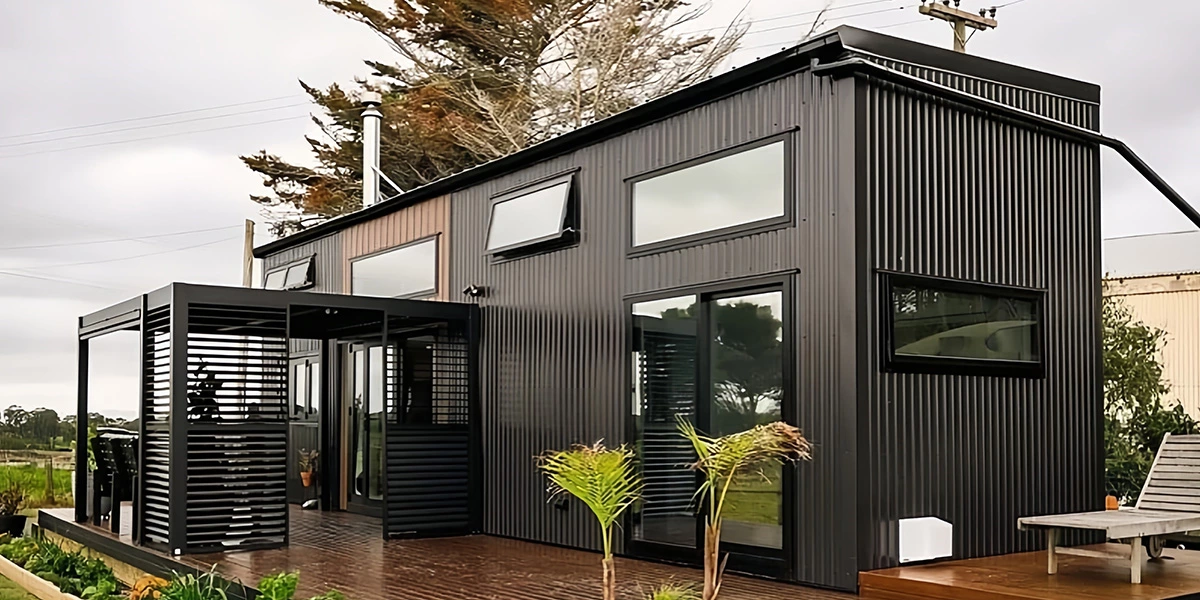
How to Choose a Foundation for an Expandable House? A Comprehensive Comparison Guide
Many buyers, having already selected their expandable house, only then realize that the foundation is, in fact, the critical first step determining the ultimate success or failure of the entire project. Choosing the wrong type of foundation can, at best, result in costly and time-consuming rework; at worst, it can compromise the structural integrity of the home and jeopardize government regulatory approval.
Why is the foundation particularly critical for a container house?
The fundamental difference between an expandable container house and traditional brick-and-mortar construction lies in how their weight is distributed: the load is highly concentrated at the four corner points (corner posts) rather than being distributed evenly across the entire base of the walls. This implies the following:
- The foundation must be precisely engineered to bear the concentrated loads transmitted by the corner posts.
- All four support points must remain perfectly level and aligned; failure to ensure this will lead to the deformation of doors and windows, as well as structural distortion.
- Selecting an unsuitable foundation type can accelerate building settlement, thereby compromising waterproofing seals and reducing the overall service life of the structure.
Furthermore, government authorities across Australia, Europe, and North America typically require a certified engineer to provide a foundation design certification before issuing a building permit. Consequently, selecting the appropriate foundation type is an essential prerequisite for successfully navigating the regulatory approval process.

Three major foundation types
| Foundation Type | Removability | Construction Duration | Suitable Applications |
| Screw Pile | Removable and Reinstallable | 0.5–1 Day | Sloped Terrain, Soft Soil, Rapid Installation Required |
| Concrete Slab | Non-removable | 3–7 Days | Level Ground, Permanent Residence |
| Strip Footing | Non-removable | 5–10 Days | Large Structures, Permanent Buildings on Slopes |
1. Screw Pile Foundation
Screw piles are steel posts fitted with helical blades that are mechanically rotated directly into the ground, requiring neither excavation nor concrete pouring. Adjustable steel brackets are installed at the top of the piles to support the corner posts or base frame beams of the expandable house.
Applicable Scenarios
- Sloping or uneven terrain (height differences are compensated for by adjusting pile depth, eliminating the need for extensive site leveling)
- Soft soil, clay, or sandy soil (the helical blades increase the load-bearing surface area)
- Projects requiring rapid installation (4–8 piles can be installed in half a day)
- Projects where relocation is a possibility (screw piles can be reversed and extracted, leaving virtually no trace on the ground)
- Flood-prone areas (allows the expandable house to be elevated)
- Rural or remote areas (eliminates the need to transport concrete)
- Holiday camps or Glamping sites (minimizes disruption to existing lawns and natural terrain)
Installation Process
- Soil Survey — Engineer issues soil report, determining pile diameter, pile length, and blade diameter.
- Location and Marking — Mark installation points on the ground corresponding to the corner posts of the expandable house.
- Mechanical Driving — Hydraulic drilling rig drives the pile to the designed depth, monitoring torque values in real time to confirm load-bearing capacity.
- Leveling Supports — Install adjustable steel supports, precisely leveling to within ±2mm error.
- Lifting and Positioning — House is positioned by crane; corner posts are lowered into the supports and bolted in place.
Cost Reference (Australian Market)
- Standard 20ft expandable house (4 piles): $1,200–$2,500
- Standard 40ft expandable house (6–8 piles): $2,000–$4,500
- Soil Report: $500–$1,500
- Engineer Certificate: $800–$2,000
The expandable house foundation Australia price range for a standard 20ft expandable house is between $2,500 and $6,000; the price range for a standard 40ft expandable house is between $3,300 and $8,000.

2. Concrete Slab Foundation
After laying a gravel base on level ground, a single, monolithic reinforced concrete slab is poured. Typically 100–150 mm thick, the slab features thickened edges to form perimeter beams. The extension structure sits directly upon this concrete slab and is secured via anchor bolts. This is the most common type of foundation for traditional residential homes and is the type most readily approved by Australian local councils.
Applicable Scenarios
- Sites that are level or have a gradient not exceeding 1:20
- Projects intended for permanent residential occupancy (preferred by government approval bodies)
- Regions with cold climates (concrete slabs possess excellent thermal mass properties, which—when combined with underfloor heating—enhance energy efficiency)
- Projects requiring a level floor surface and an aesthetic that closely matches that of traditional housing
Installation Process
- Site Leveling — Remove topsoil and compact the foundation.
- Edge Beam Trench Excavation — Depth of 300–600 mm, depending on soil bearing capacity.
- Base Layer Installation — 100 mm compacted crushed stone + moisture-proof membrane.
- Rebar Tying — Tie steel mesh and main reinforcement bars for the edge beams in accordance with the engineer's drawings.
- Embedded Utilities — Embed electrical, water supply, and drainage lines prior to pouring (retrofitting these later is extremely difficult).
- Concrete Pouring — Pour, vibrate, and finish the concrete surface; cure for a minimum of 7 days.
- Anchor Bolt Embedding — Position anchor bolts to align with the corner columns of the expandable unit, serving to secure the base frame.
Cost Reference (Australian Market)
- Standard 20ft expandable house: $2,500 – $5,000
- Standard 40ft expandable house: $5,000 – $10,000
- Site Leveling (depending on terrain): $500 – $5,000+
- Engineer's Certification: $800 – $2,000
The expandable house foundation Australia price range for a standard 20ft expandable house is between $3,800 and $12,000; the price range for a standard 40ft expandable house is between $6,300 and $17,000.

3. Strip Footing
Continuous trenches are excavated along the perimeter of the extension structure (as well as beneath internal load-bearing lines), into which reinforced concrete strip footings are poured. Subsequently, perimeter walls are constructed atop these footings up to the designated design elevation to support the extension's base frame. The key distinction from a slab foundation is that the central area is not poured as a solid slab; instead, it creates an elevated crawl space, facilitating convenient access for utility maintenance and ventilation.
Applicable Scenarios
- Large-scale extensions or multi-span modular structures (where loads are distributed and continuous load-bearing support is required)
- Situations requiring an elevated crawl space for maintenance access (allowing plumbing and electrical systems to be routed within the crawl space for easy servicing)
- Permanent structures situated on sloped terrain (where the height of the perimeter walls can be flexibly adjusted to accommodate the topography)
- Regions with a high prevalence of termites (as the ventilation provided by the crawl space prevents moisture accumulation)
- Cold regions with deep frost lines (where the foundation footings can be excavated to a depth below the frost line)
Installation Process
- Layout and Excavation — Excavate trenches along the perimeter and load-bearing lines, measuring 300–450 mm in width and 600–1000 mm in depth.
- Reinforcement Placement — Install main bars and stirrups in accordance with the engineer's drawings, incorporating bent reinforcement for strengthening at corners.
- Strip Footing Pouring — Pour concrete to the specified design height and cure until the required strength is attained.
- Construction of Skirt Wall — Laying brickwork or pouring a low concrete wall atop the strip foundation, extending up to the elevation of the extension unit's base frame.
- Moisture Protection — Applying a waterproof coating to the exterior of the skirt wall and installing a moisture-proof membrane on the interior; incorporating ventilation openings.
- Lifting and Installation of expandable Unit — Lowering the base frame onto the top surface of the skirt wall and securing it in place with bolts.
Cost Reference (Australian Market)
- Standard 20ft expandable house (approx. 30 linear meters): 6,000–12,000
- Standard 40ft expandable house (approx. 50 linear meters): 10,000–20,000
- Site Excavation: 1,000–5,000
- Engineer's Certification: 1,000–2,500
The expandable house foundation Australia price range for a standard 20ft expandable house is between $8,000 and $19,500; the price range for a standard 40ft expandable house is between $12,000 and $27,500.

A Comprehensive Comparison of Three Types of Foundations
| Comparison | Screw Pile | Concrete Slab | Strip Footing |
| Construction Duration | 0.5–1 day | 3–7 days | 5–10 days |
| Suitable Terrain | Slopes / Soft Soil / Complex Terrain | Flat Ground | Flat Ground / Gentle Slopes |
| Parliamentary Approval Acceptance | Medium | High | High |
| Plumbing Maintenance | Elevated base: Convenient | Buried beneath slab: Difficult | Access via crawl space: Convenient |
| Flood Adaptability | Elevatable | Low | Limited |
| Soil Requirements | Low; highly adaptable | Moderate | Moderate |
| Degree of Environmental Impact | Minimal (Almost Trace-free) | Significant | Maximum |
Which type of foundation should be selected for a given scenario?
- Backyard Granny Flats: Concrete slab—offers the highest likelihood of council approval.
- Rural / Remote Off-Grid Residences: Screw pile—eliminates the need to transport concrete and allows for rapid installation.
- Steeply Sloping Sites: Screw pile—requires no excavation or backfilling, keeping costs under control.
- Airbnb / Short-Term Rentals: Screw pile or concrete slab—choose screw piles if future relocation is a possibility; opt for a concrete slab for long-term operations.
- Holiday Camps / Glamping Sites: Screw pile—ensures quick installation and minimizes disruption to the natural terrain.
FAQ
Is a foundation absolutely necessary for an expandable house?
Yes. In Australia, any structure intended for residential use or long-term occupancy must be supported by a foundation that complies with engineering standards; this is a mandatory requirement for structural safety and a prerequisite for government approval.
Do screw piles settle over time?
When installed correctly, the risk of screw piles settling is extremely low. During installation, torque monitoring is used to verify that the load-bearing capacity meets the required standards. Their long-term stability is comparable to that of concrete foundations, and they perform even better in soft soil conditions.
How soon after the foundation work is completed can the expandable house be lifted into place?
Screw Piles: Lifting can commence on the very day of installation.
Concrete Slab: Requires a curing period of at least 7 days (14 days is recommended).
Strip Footings: Requires a curing period of at least 7 days; lifting can only proceed after the perimeter skirt walls have been completed.
Is an engineer's certification required for the foundation work?
Absolutely. When issuing building permits, government authorities across all Australian states require the submission of a foundation design report and certification issued by a registered engineer. UVO can assist in connecting you with local registered engineers in Australia.
Which of the three foundation types is the most cost-effective?
Screw piles typically have the lowest construction costs; however, for large-scale projects on level sites, a concrete slab foundation often offers better overall value. Strip footings involve the most complex construction process, resulting in the highest total cost in most cases. The final choice should be determined by factors such as soil conditions, intended use, and local approval requirements—rather than being based solely on price.
Before finalizing the foundation plan, it is essential to conduct soil testing, verify council requirements, and engage a registered engineer in the design process. UVO provides a comprehensive load specification sheet for the expandable container house solution to facilitate your communication with local engineers and the council.