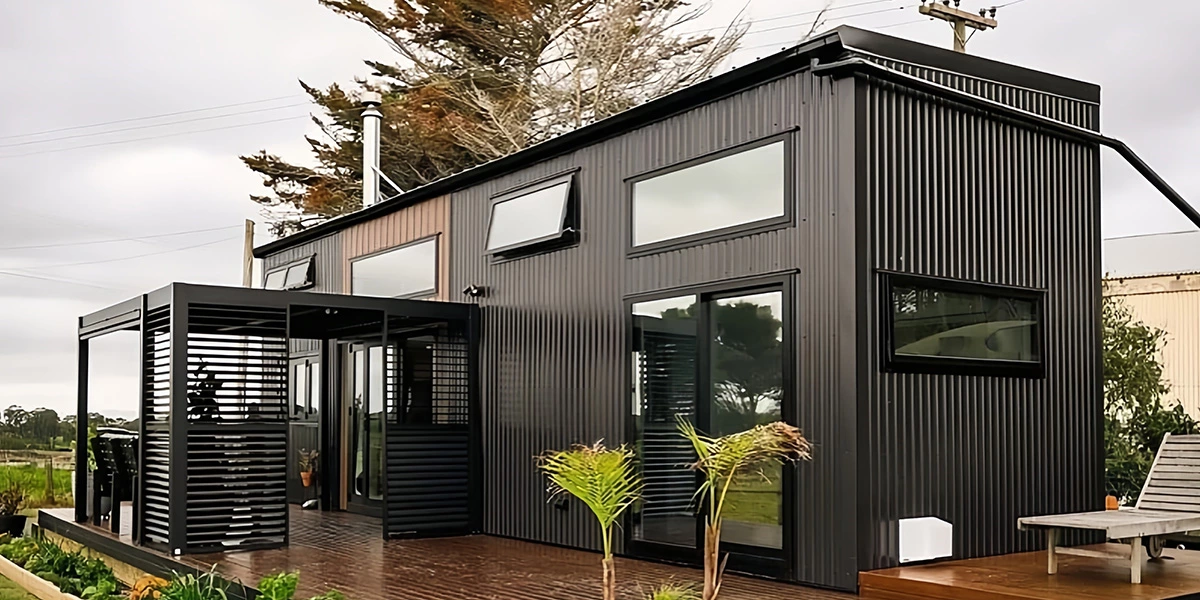
The Cost Benefits of Light Steel vs Wood for Tiny Houses
In the rapidly evolving landscape of modular micro-housing, the choice of structural materials directly impacts costs, durability, and long-term return on investment. The differences between light steel structures and traditional wood structures extend beyond mere construction methods, profoundly influencing overall lifecycle costs. This article analyzes why light steel structures are emerging as the mainstream trend, examining the subject from the perspectives of material properties, cost comparisons, and specialized manufacturing.
Light Steel vs. Wood: Understanding the Core Differences
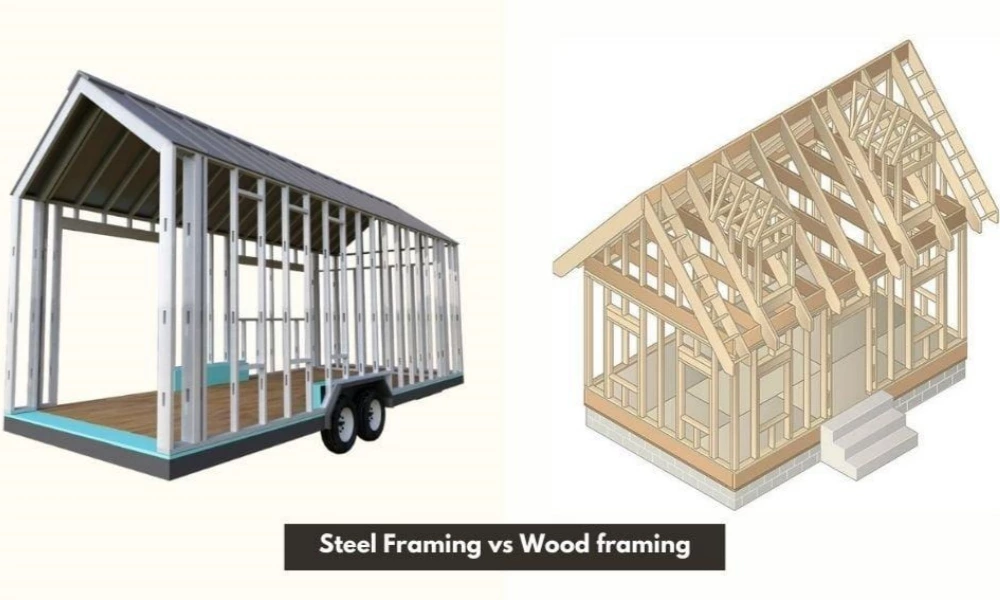
At the structural level, Light Gauge Steel and Timber Framing represent two fundamentally different architectural logics:
Light Steel Structures
Utilizing cold-formed galvanized steel, this system offers advantages such as high strength, resistance to deformation, and standardized production—making it frequently employed in modular and industrialized construction systems.
Wood Frame Structures
Primarily relying on natural timber, this method involves more traditional construction techniques that depend heavily on manual expertise; it is well-suited for low-rise residential buildings and custom-tailored projects.
In essence, Light Steel leans more toward being an "industrial product," whereas Wood Framing resembles "handcrafted construction"; this distinction directly determines the differences in their cost structures and structural stability.
Costs: Light Steel vs Wood Tiny Houses
In real-world projects, focusing solely on the "construction unit price" can often be misleading. The true factor influencing investment returns is the Total Cost of Ownership. The following comparison examines this from multiple dimensions:
1. Initial Construction Cost
Wood Structure: Lower material unit costs, but heavily reliant on on-site construction; labor costs are high and often unpredictable.
Wood Frame: $3 – $5 / sq. ft.
Light Steel Frame: $5 – $8 / sq. ft.
On the surface: Light steel materials appear to cost approximately 15%–25% more.
However, this represents only the "initial material cost" and does not reflect the final price.
Light Steel Structure: Material costs are slightly higher, but factory prefabrication reduces both labor expenses and time costs.
Prefab / Modular Tiny House:
$25,000 – $80,000
Overall Range for Wood-Structure Houses:
$12,000 – $60,000
Installation & Time Cost
Wood Structure: The construction cycle typically requires several weeks or even longer.
Light Steel Structure: Modular installation allows for complete deployment within 1–2 days.
Maintenance Cost
Wood Structure: Requires regular treatments for rot prevention, pest control, and moisture resistance; long-term maintenance costs are high.
Light Steel Structure: Features rust-resistant galvanized treatment; requires virtually no frequent maintenance.
Durability & Replacement Cost
Wood Structure: Prone to aging and deformation; has a relatively shorter service life.
Light Steel Structure: Structurally stable; service life can exceed 30 years.
Hidden Costs
Wood Structure:
- Risk of termites/pest infestation
- Rotting in humid environments
- Higher fire risk
Light Steel Structure:
- No pest-related issues
- Superior fire resistance
- Better adaptability to extreme climates
Initial Cost vs. Long-Term Value: Which Offers Greater Savings?
Many clients initially assume that wood structures are the more affordable option; however, when viewed through the lens of the entire lifecycle, light steel structures often prove to be the more cost-effective choice:
1. Construction Costs and Efficiency
Wood Structures: Highly labor-intensive, characterized by longer construction cycles, and subject to unpredictable on-site costs.
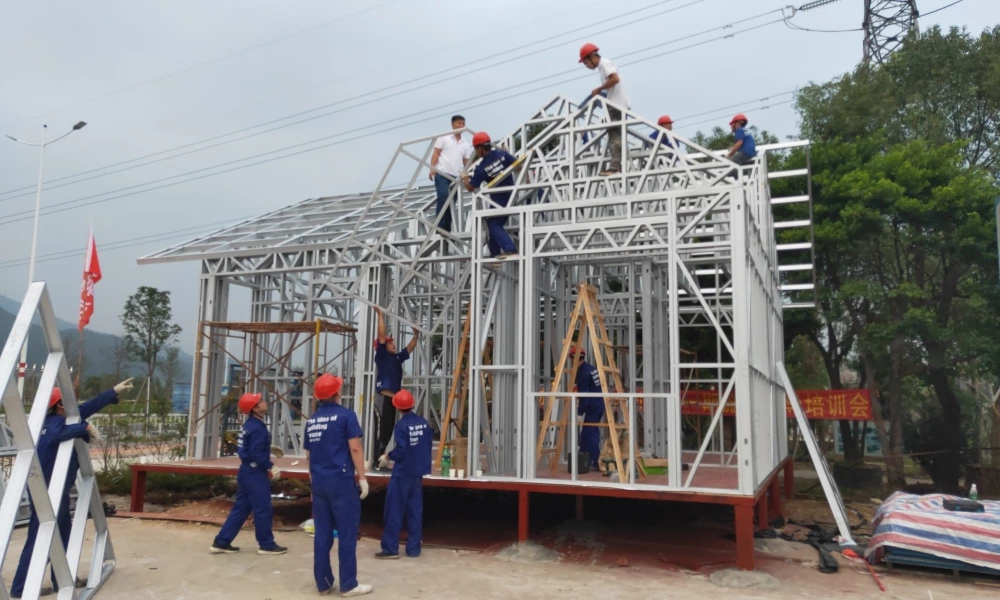
Light Steel Structures: Feature a high degree of factory prefabrication, requiring only on-site assembly—thereby significantly reducing both labor and time costs.
For modular projects—where time equates directly to cost—light steel solutions offer a distinct advantage.
2. Maintenance and Operational Costs
Wood Structures: Susceptible to moisture damage, pest infestations, and corrosion, resulting in higher long-term maintenance expenses.
Light Steel Structures: Treated with anti-corrosive galvanization to ensure superior structural stability and minimal maintenance requirements.
In humid or rainy regions, the long-term cost advantages of light steel become particularly pronounced.
3. Service Life and Residual Value
Wood Structures: Possess a relatively shorter service life and are prone to structural aging.
Light Steel Structures: Capable of achieving a service life of 30 years or more, while also retaining significant recyclable value.
From an investment perspective, light steel offers superior asset preservation capabilities.
Durability & Safety: A Hidden Cost Advantage
Many "hidden costs" are often overlooked, yet they are critical determinants of product quality:
- Fire Resistance: Light steel is a non-combustible material, whereas wood structures inherently carry a risk of combustion.
- Pest Resistance: Light steel completely eliminates issues related to termites.
- Structural Stability: Light steel offers superior resistance to both wind and seismic activity.
These factors signify that choosing light steel not only reduces maintenance costs but also mitigates potential risk-related costs.
Why Modular + Light Steel is the Future
The fusion of "modular construction" and "light steel structures" represents the core global trend in the development of micro-housing today:
- Standardized factory production ensures consistent, controllable quality.
- Rapid on-site assembly allows for adaptability to diverse and complex terrains.
- Units can be repeatedly dismantled and transported, making them ideal for commercial replication (e.g., vacation rentals, campsites, office spaces).
In contrast, timber structures face significant limitations regarding large-scale replication and global transportation.
UVO’s Expertise: Engineering Cost Efficiency into Every Unit
As a brand dedicated to modular architecture, UVO possesses extensive and proven experience in the application of light steel structures house.
- High-strength galvanized steel frame systems: Ensuring structural stability and long-term durability.
- Factory pre-integrated design: Plumbing, electrical systems, and interior finishes are completed in-house, thereby reducing on-site costs.
- Global adaptability: Structural designs are optimized to suit varying climates and market requirements worldwide.
- Precision cost control: Delivering superior pricing solutions without compromising on quality.
UVO offers more than just a product; we provide a comprehensive suite of "high-value spatial solutions."
Smart Investment Starts with the Right Structure
For anyone considering investing in or utilizing a tiny house, the choice of materials is not merely a technical matter—it is, fundamentally, a cost-driven decision.
While timber framing may appear more appealing initially, the long-term advantages of light steel framing—particularly regarding durability, maintenance costs, and safety performance—make it the more rational choice.
Especially amidst the growing trend toward modular construction, the combination of light steel and modular tiny houses is redefining what constitutes an efficient, sustainable, and high-return spatial solution.