20ft Expandable Container House in Minnesota, USA — Airbnb Investment
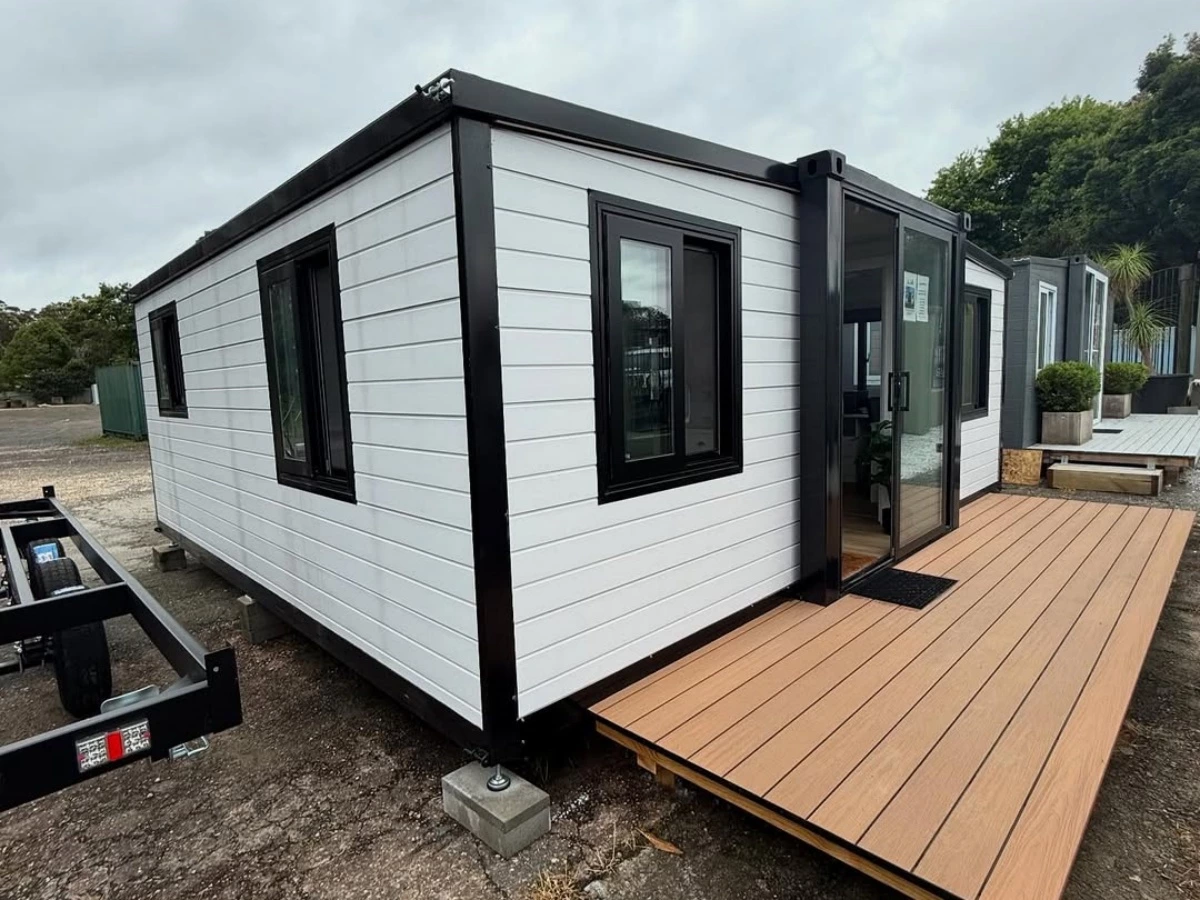
Two UVO 20ft expandable container houses installed in Minnesota as short-term rental (Airbnb) investments. This is a real project. This case study covers everything prospective buyers need to know: why Minnesota is a strong market for expandable container house for sale USA investment, what cold-climate technical upgrades are non-negotiable, how Minnesota building permits work for expandable homes, the complete cost breakdown, and actual Airbnb ROI projections based on Minnesota market data.
Project Overview
| Project Detail | Information |
|---|---|
| Location | Minnesota, USA (tourist area, specific county withheld for client privacy) |
| Units installed | 2 × UVO 20ft Expandable Container House |
| Client type | Short-term rental investor (asset-light Airbnb strategy) |
| Use case | Airbnb / short-term rental homestay |
| Expanded floor area per unit | ~37㎡ (398 sq ft) |
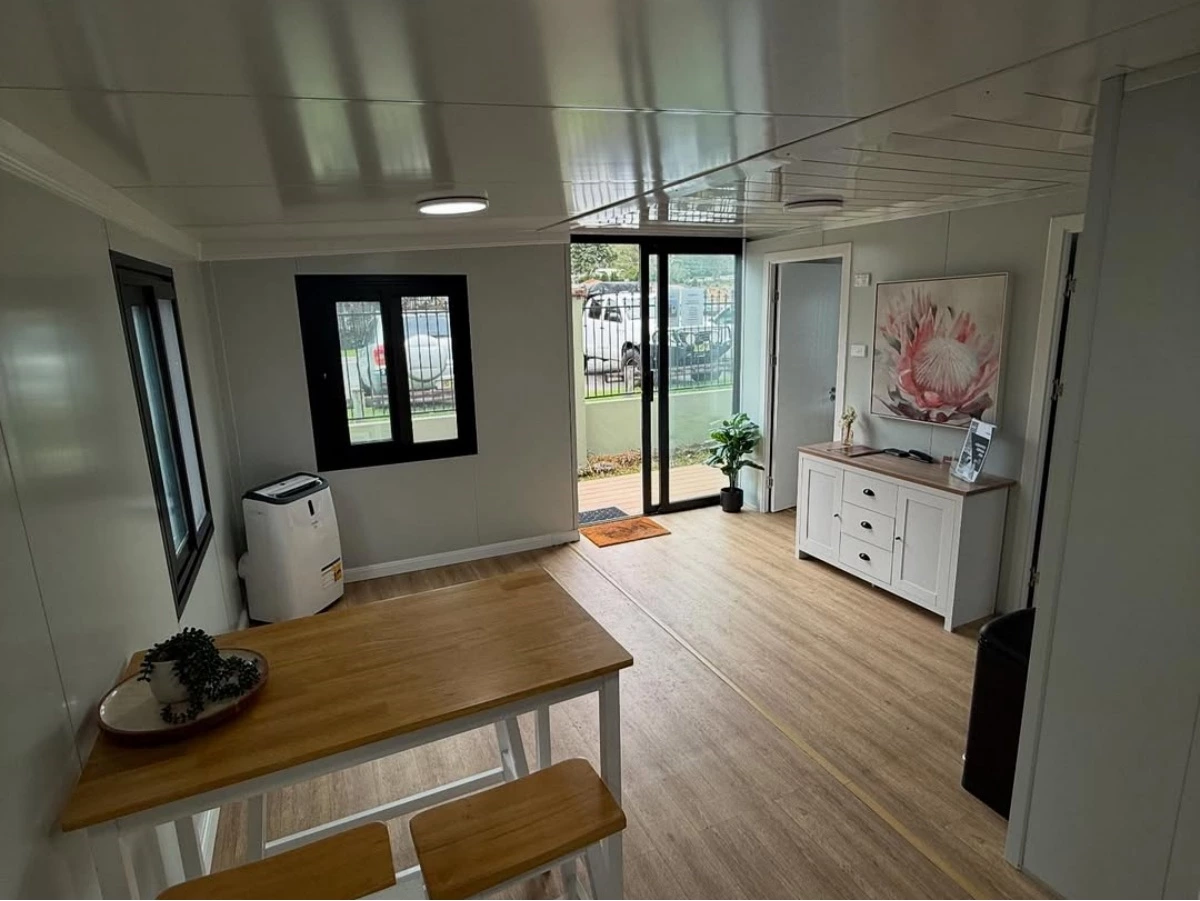
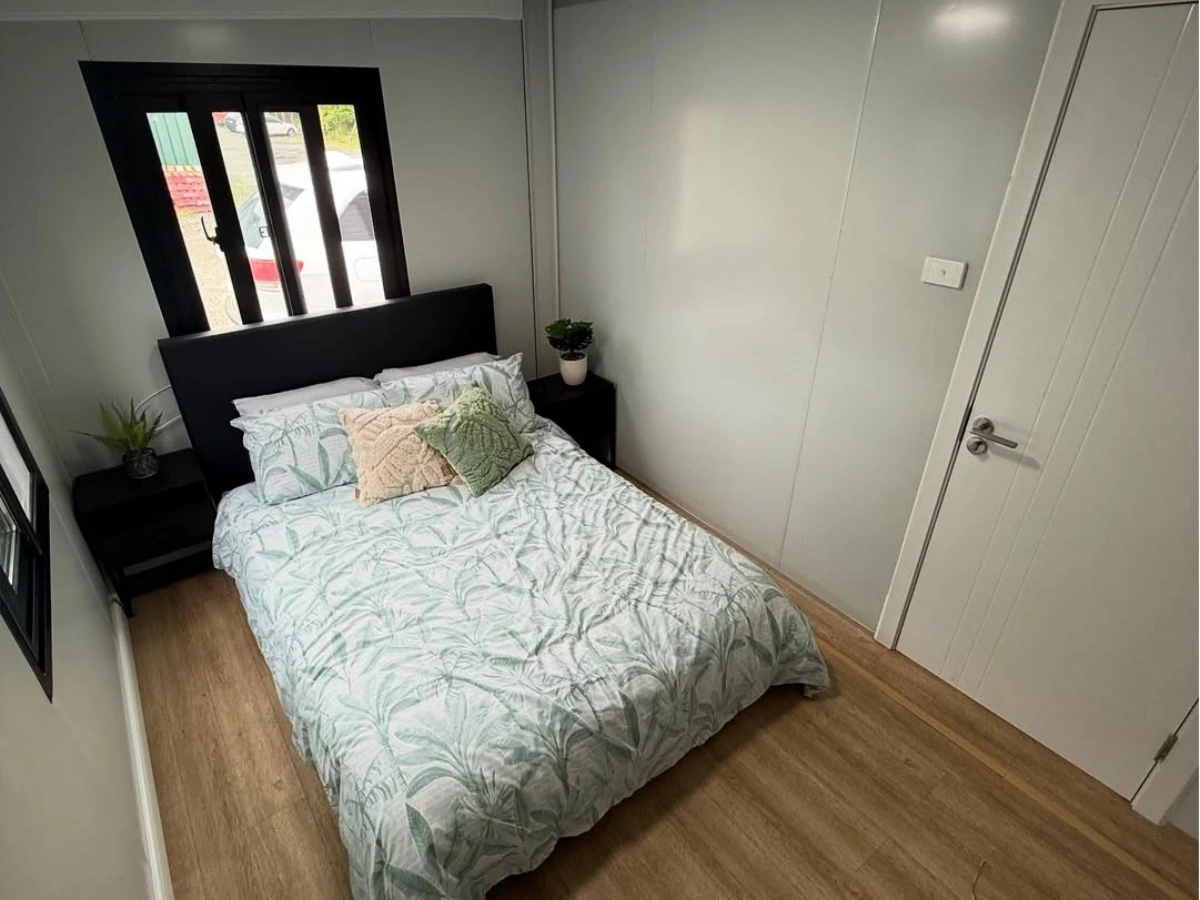
| Configuration | 2 bedrooms + 1 living room + 1 bathroom |
| Exterior spec | Nordic-style white panels, black frame, extended balcony |
| Key upgrades | Rock Wool insulation upgrade, double-glazed Low-E windows, glass sliding doors, SPC flooring |
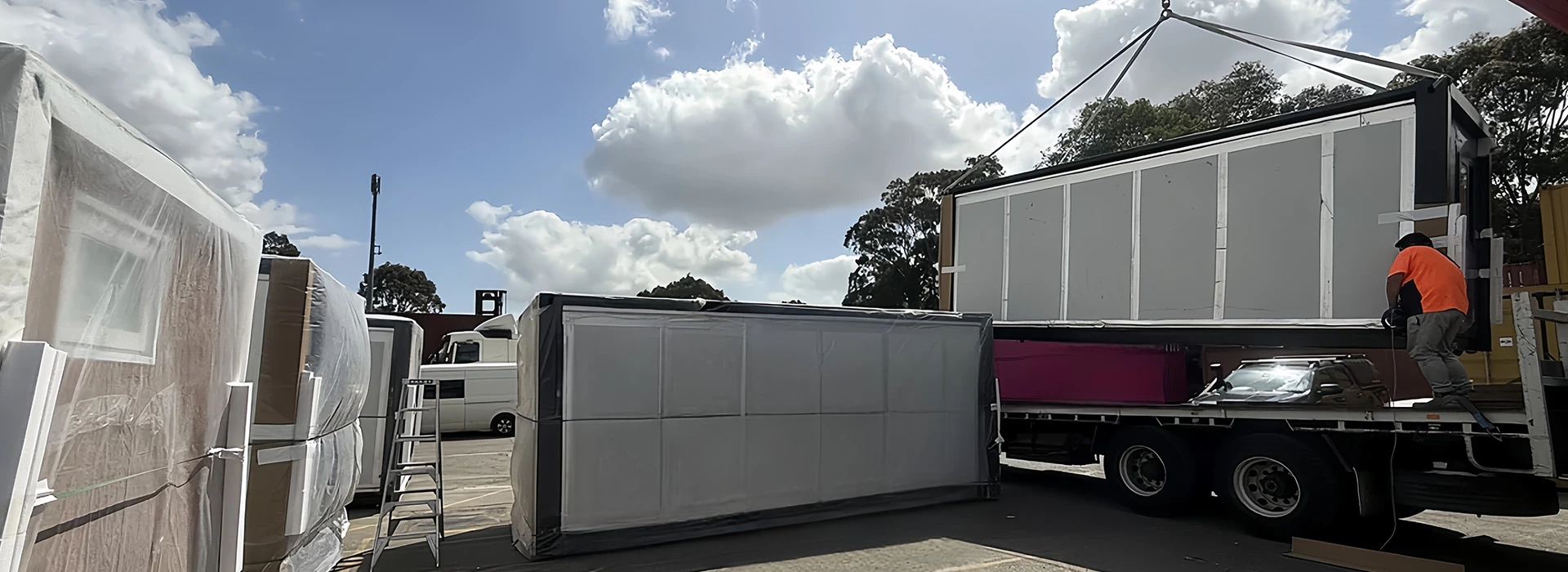
| Installation time | 3–6 hours per unit (crane placement + expansion) |
| Total on-site deployment | 1 day |
| Certification | IBC structural engineering certificate · US NEC-compatible electrical |
What Made This Project Stand Out on Airbnb
Nordic-Style Exterior — The Airbnb Listing Visual Advantage
The client specifically requested UVO's Nordic-style white panel exterior with black steel frame — a visual aesthetic that performs exceptionally well in Minnesota's lake landscape and stands out sharply on Airbnb listing thumbnails against the standard brown timber cabin competition.
The extended balcony (added as a custom option) has proven to be the most-photographed feature of both units. Every guest photos the morning lake view from the balcony — and virtually every photo is shared on social media without prompting. This organic guest-generated content has driven organic booking growth beyond what paid Airbnb promotion alone would achieve.
Floor-to-Ceiling Glass Sliding Doors — Transforming the Interior Experience
The large glass sliding doors create direct visual and physical connection between the interior living space and the outdoor balcony. In Minnesota's context, this means:
- Summer: Natural ventilation draws lake breezes through the unit; the indoor-outdoor transition is seamless
- Winter: Panoramic snow views from a warm interior create the "cozy cabin" experience that drives premium winter rates
SPC Flooring — Essential for Short-Term Rental Durability
With guests arriving in all weather conditions — muddy summer hiking boots, wet winter snow gear — the SPC waterproof flooring throughout both units was a deliberate choice for durability over aesthetics. SPC does not warp with moisture fluctuations (critical in Minnesota's seasonal humidity swing from 20% winter to 80% summer), cannot be scratched by pet claws, and cleans in seconds.
Why Minnesota for Expandable Container House Investment?
Minnesota might seem like a challenging market for expandable container house investment — and it is, if your unit isn't built for it. But for investors who get the spec right, Minnesota offers a combination of conditions that make it one of the stronger expandable container house USA investment markets.
Strong Airbnb Demand Year-Round
Minnesota's tourism economy runs on two distinct seasons:
Summer (May–September): The Land of 10,000 Lakes drives massive short-term rental demand. Lake cabin rentals are perennially oversubscribed, with occupancy rates in scenic lake areas regularly hitting 85–95% from June through August.
Winter (November–March): Ice fishing, snowmobiling, and winter sports generate significant off-season demand that prevents the occupancy collapse that hits purely seasonal markets.
The result: A well-located Minnesota expandable container home for sale as an Airbnb asset achieves year-round bookings rather than the 4-month seasonal window typical of beach or mountain markets.
The Minnesota Cold Climate Challenge: Technical Specs That Matter
When this client first contacted UVO about a 20ft expandable container house for Minnesota, cold climate performance was the first and most emphatic concern. Canberra (ACT) gets cold; Minnesota gets seriously cold.
Minnesota climate context:
- Average January low temperature (Minneapolis): -14°C (7°F)
- Extreme overnight lows: -35°C (-31°F) on record
- Average annual snowfall: 127cm (50 inches)
- Minnesota Energy Code: Requires R-38 wall assemblies — significantly stricter than the base IECC requirement
Standard expandable container house insulation specifications will not pass Minnesota's energy code requirements. The upgrades UVO implemented for this project were not optional — they were mandatory for permit approval.
Cold Climate Upgrade Package for Minnesota
| Component | Standard Spec | Minnesota Upgrade | Minnesota Energy Code Requirement |
|---|---|---|---|
| Wall insulation | 75mm EPS (R-15) | 100mm Rock Wool (R-23 per panel) | R-20 minimum for walls |
| Roof insulation | 50mm glass wool (R-11) | 100mm high-density glass wool (R-38) | R-38 minimum |
| Floor insulation | Standard subfloor | 75mm PIR under-floor board (R-30) | R-30 minimum for floors over unconditioned spaces |
| Window glazing | Standard double-glaze | Low-E double-glaze (U-0.30) | U-0.32 maximum |
| Air sealing | Standard factory EPDM seals | Enhanced spray foam at all joint lines | Required for energy code compliance |
| Snow load rating | Standard (Wind 11) | Enhanced roof structure (140 psf ground snow load) | Minnesota ground snow load: 40–60 psf (varies by county) |
Why Rock Wool Insulation for Minnesota?
This project used 100mm Rock Wool (mineral wool) for the wall panel upgrade rather than the standard EPS option. Rock Wool's advantages in cold Minnesota conditions are specific:
- No thermal bridging: Rock Wool maintains consistent R-value across the full panel width — EPS degrades in R-value below -15°C conditions
- Class A fire rating: Minnesota's State Building Code requires Class A fire resistance for wall assemblies in residential occupancies
- Moisture resistance: Rock Wool does not absorb moisture — critical in Minnesota's spring freeze-thaw cycle where moisture infiltration is a primary cause of insulation failure
- Sound insulation: Secondary benefit for short-term rental use — guest noise between adjacent units is reduced
Minnesota Building Permit: What You Need to Know
Minnesota does not have a blanket ban on container or expandable homes — but it has one of the most structured building permit requirements for residential structures in the Midwest.
Minnesota State Building Code (MSBC)
All residential structures in Minnesota must comply with:
- Minnesota State Building Code Chapter 1300–1370: Based on IBC, with Minnesota-specific amendments
- Minnesota Energy Code (Chapter 1322): Minnesota adopted an enhanced version of IECC 2021 with stricter insulation requirements
- Minnesota Plumbing Code: Licensed plumber required for all plumbing connections
- Minnesota Electrical Code: Licensed electrician required for all electrical work
County-Level Permit Process
Minnesota's building permits are issued at the county level (not state level). Process:
Step 1: Contact your county's building department to confirm whether expandable container structures are permitted in your zoning district. Most rural counties (particularly northern lake counties like Itasca, Cass, and Crow Wing) accept expandable container homes under the same residential building code as any modular structure.
Step 2: Submit a building permit application with:
- Structural engineering certificate (IBC-compliant, confirming snow and wind load compliance for your specific county)
- Floor plans and elevations
- Energy compliance documentation (Minnesota Energy Code Chapter 1322)
- Site plan showing setbacks from property lines and water bodies
- Electrical and plumbing plans
Step 3: County review and permit issuance. Typical timeline: 4–10 weeks depending on county workload.
Step 4: Foundation preparation and unit installation. In Minnesota, concrete footings must extend below the frost line — typically 42–48 inches deep in northern Minnesota. This is a critical difference from warmer states where surface foundations or screw piles at shallow depths are sufficient.
Two 20ft Expandable Container Houses in Minnesota Cost Breakdown
| Cost Component | Per Unit | 2-Unit Total |
|---|---|---|
| UVO 20ft expandable unit (cold climate spec, ex-factory) | $12,000–$18,000 | $24,000–$36,000 |
| Ocean freight (China → US West Coast port) | $3,500–$5,500 | $7,000–$11,000 |
| Inland trucking (port → Minnesota) | $2,500–$4,500 | $5,000–$9,000 |
| Deep frost foundation (Minnesota requirement) | $5,000–$12,000 | $10,000–$24,000 |
| Building permits + engineering (per county) | $2,500–$6,000 | $2,500–$6,000 (one permit for 2 units on same parcel) |
| Electrical connection (licensed MN electrician) | $2,000–$4,500 | $4,000–$9,000 |
| Plumbing connection (licensed MN plumber) | $2,000–$4,500 | $4,000–$9,000 |
| HVAC (mini-split installation) | $1,800–$3,500 | $3,600–$7,000 |
| Landscaping + balcony finishing | $2,000–$5,000 | $4,000–$10,000 |
| STR licensing and setup | $500–$1,500 | $500–$1,500 |
| Total all-in (2 units) | $64,600–$122,500 | |
| $32,300–$61,250 |
Airbnb ROI Analysis: Minnesota Short-Term Rental Returns
Net Income After Operating Costs
| Cost Category | Annual Estimate |
|---|---|
| Airbnb platform fees (3%) | $700–$1,700 |
| Cleaning fees (offset by guests, net) | $500–$1,500 |
| Utilities | $2,400–$4,800 |
| Property maintenance | $1,200–$2,400 |
| Insurance | $1,500–$3,000 |
| STR license and taxes | $800–$2,000 |
| Total annual operating costs | $7,100–$15,400 |
Net Annual Income and Payback Period
| Scenario | Gross Revenue | Operating Costs | Net Income | Payback (on $50,000 all-in) |
|---|---|---|---|---|
| Conservative | $23,790 | $15,400 | $8,390 | 5.9 years |
| Moderate | $38,325 | $11,000 | $27,325 | 1.8 years |
| Strong | $56,320 | $8,000 | $48,320 | 1.0 year |
Frequently Asked Questions
Can an expandable container house be legally permitted in Minnesota?
Yes — Minnesota does not prohibit expandable or modular container structures. All residential structures must comply with the Minnesota State Building Code (MSBC) and Minnesota Energy Code. The most important requirement is snow load engineering certification for your specific county. UVO provides an IBC-compliant structural engineering certificate confirming snow and wind load compliance. Building permits are issued at the county level — contact your county's building department to confirm specific requirements.
What foundation does a 20ft expandable container house need?
Minnesota's frost depth requires foundations extending 42–48 inches below grade in most of the state — significantly deeper than warmer states. Options include: deep concrete perimeter footings (most commonly accepted by Minnesota county building departments), helical screw piles driven to 48+ inch depth, and concrete piers with frost protection. Standard shallow screw pile installations will not meet Minnesota frost line requirements. UVO provides foundation load specifications to share with your local engineer.
What insulation does an expandable container house need for Minnesota winters?
Minnesota's Energy Code requires R-38 roof, R-20 walls, and R-30 floor assemblies for residential buildings. UVO's Minnesota cold climate upgrade package — 100mm Rock Wool walls, 100mm high-density glass wool roof, 75mm PIR floor boards, and Low-E double-glazed windows — is designed to meet these requirements. Confirm compliance with your county's building inspector.
How much does a 20ft expandable container house cost in Minnesota all-in?
This project landed between $32,300–$61,250 per unit all-in — including NEC-compliant unit, ocean freight, inland transport from port to Minnesota, deep frost foundation, building permits, electrical, plumbing, and HVAC. The two-unit total ran $64,600–$122,500. Compare to $120,000–$250,000 per unit for traditional cabin construction.
What Airbnb income can a 20ft expandable container house generate in Minnesota?
In a prime Minnesota lake tourist area, a well-designed 20ft expandable container home with distinctive aesthetics achieves $130–$220/night with 50–70% annual occupancy. Net annual income per unit typically runs $8,000–$48,000 depending on location quality and occupancy rate. The moderate scenario ($175/night, 60% occupancy) delivers a payback period of approximately 1.8 years on a $50,000 all-in investment.
Why order two units instead of one?
Two units in a 40HQ container cuts per-unit ocean freight cost by approximately 50%. Combined building permit reduces fixed costs. Two units generate double the income while sharing operational overhead — making the two-unit model the strongest ROI structure for the expandable container house for sale USA Airbnb investment case.
Build Your USA Expandable Container House Investment
This Minnesota project demonstrates that a compliant, cold-climate-ready 20ft expandable container house Airbnb investment is achievable — at a fraction of traditional cabin construction cost, with a deployment timeline measured in weeks rather than years.
UVO's cold climate expandable container house for sale USA configurations are engineered for Minnesota, Wisconsin, Michigan, Montana, Wyoming, and other northern US states — with Rock Wool insulation upgrades, enhanced snow load structural certification, and deep frost foundation specifications available as standard project options.