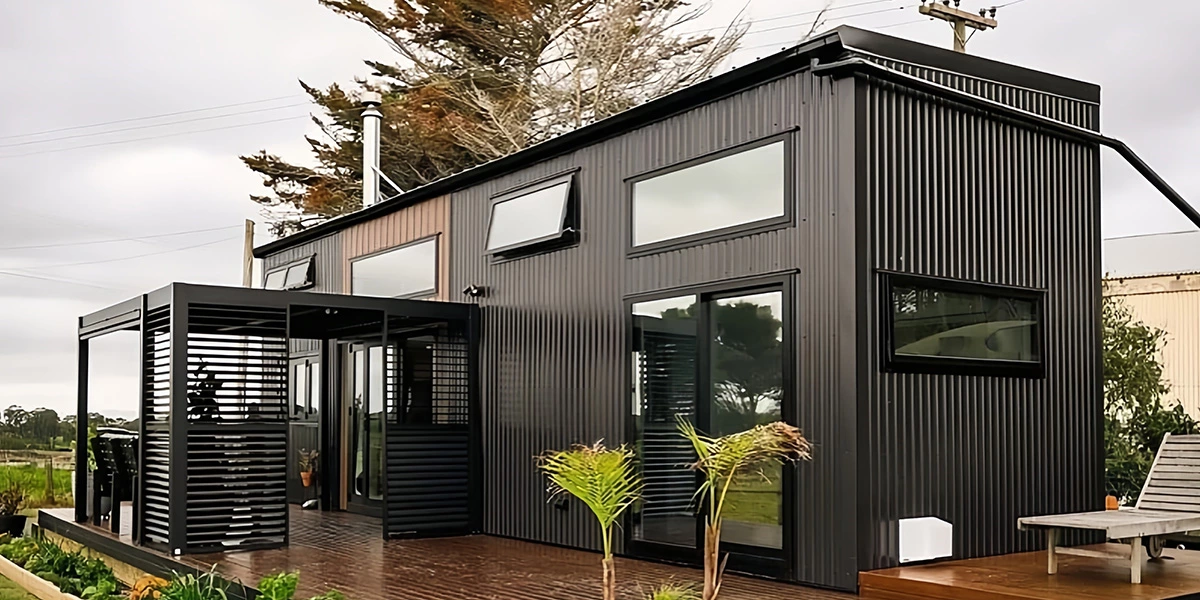
How Much Does a Container Home Cost in Australia? 2026 Complete Price Guide
Container homes are gaining popularity in Australia, with more and more people opting for this quick-to-build, robust, environmentally friendly, sustainable, and cost-effective housing solution. Whether you need a granny flat, office, rental home, or full-time family housing, container homes offer compliant, modular, and flexible living space at a fraction of the cost of traditional construction.
How Much Does a Container Home Cost in Australia? (2026 Complete Guide)
Most price guides stop at the factory quote. That is not the real number. The total landed cost of a container home in Australia — from the Chinese factory to move-in ready on your land — includes freight, GST, customs clearance, inland transport, foundation, DA approval, and utility connections. Each of those line items has a real dollar figure, and buyers who don't know them get expensive surprises.
This guide breaks down every cost component with real figures, so you can budget accurately before you buy.
Quick answer: A fully move-in-ready UVO container home in Australia typically costs between AUD 34,000 and AUD 126,000+, depending on size, specification, location, and site conditions. Here is exactly where that money goes.
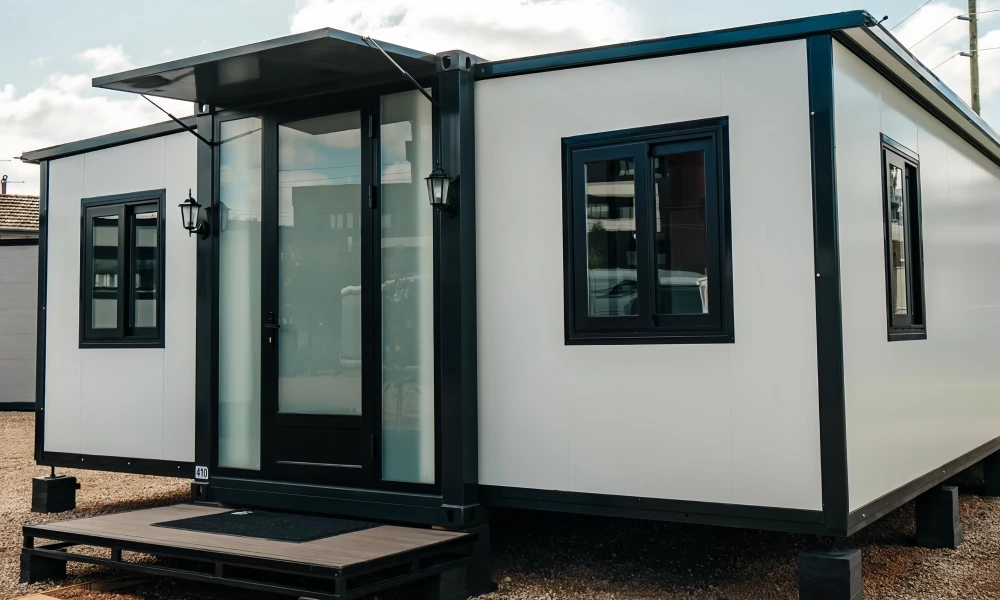
The Two Numbers Every Australian Buyer Needs to Understand
Before getting into the breakdown, there is a critical distinction that most container home listings do not make clear — and that causes the biggest budget shocks:
Factory price (FOB China): The cost of the unit at the Chinese factory gate, before shipping. This is the number most suppliers advertise. A 20ft expandable unit might be quoted at AUD 10,000–10,000–25,000 at this stage.
Landed/turnkey price (in Australia): The factory price plus every cost required to get the home positioned, connected, and legally habitable on your Australian land. This is the number that matters. For the same 20ft unit, the turnkey price in Australia ranges from AUD 34,000 to AUD111,000 depending on site conditions, location, and specification level.
The difference — AUD 11,000 to 11,000 to 86,000 — is the cost of getting it from China to compliant and liveable in Australia. Understanding every line item in that gap is what this guide is for.
Complete Cost Breakdown: Factory to Move-In Ready
Factory Unit Price (FOB China)
Compact 20ft (approx. 37 sqm)
- Suitable for: Studios, granny rooms, home offices, temporary guest rooms
- Price range: AUD 10,000 - 25,000
- Advantages: Less material usage, faster installation, lower transportation costs
Medium 30ft (approx. 55 sqm)
- Suitable for: One-bedroom homes, one-bedroom + study rooms, small family units
- Price range: AUD 15,000 - 30,000
- Advantages: Balances space and budget, making it the most popular choice
Large 40ft Expandable (approx. 74 sqm)
- Suitable for: Two- to three-bedroom homes, open-plan living spaces, family homes
- Price range: AUD 20,000 - 40,000 and above
- Advantages: Requires more steel, insulation, windows, plumbing, and electrical equipment
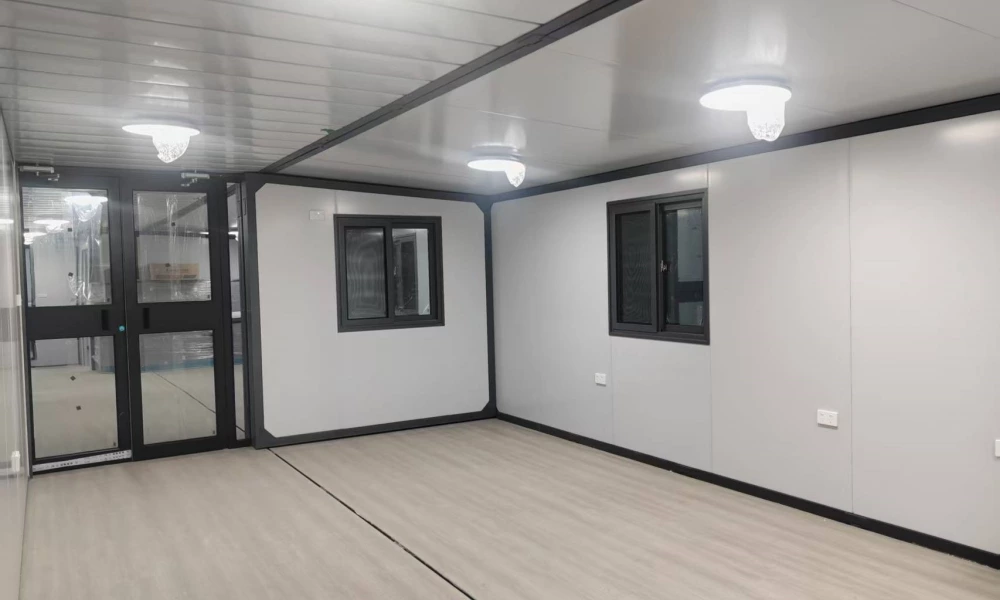
These prices reflect a standard fit-out (insulation, windows, internal linings, pre-wired electrical, pre-plumbed bathroom). Customisation — upgraded insulation, premium cladding, solar pre-wiring, stone benchtops — adds cost proportionally.
Ocean Freight to Australia
The cost of shipping the folded unit from the Chinese port to your nearest Australian port. Freight rates fluctuate with global shipping demand; the figures below reflect 2025–2026 market rates.
| Destination Port | Typical Freight Cost (AUD) |
| Port of Fremantle (Perth, WA) | 2,500–4,500 |
| Port Adelaide (Adelaide, SA) | 2,800–4,800 |
| Port of Melbourne | 3,000–5,000 |
| Port Botany (Sydney, NSW) | 3,000–5,200 |
| Port of Brisbane | 3,200–5,500 |
UVO provides a fixed freight quote before order confirmation. Rates are locked at the time of booking — no post-shipment adjustments.
3. Australian Import Duty and GST — The Number Most Guides Get Wrong
This is the most misunderstood cost in importing a container home to Australia. Here is the accurate breakdown:
Import Duty (Customs Tariff): Prefabricated buildings and expandable container homes are classified under HS Code 9406 in the Australian customs tariff. The current import duty rate for this classification from China is 0% — there is no customs tariff on container homes imported into Australia.
GST (Goods and Services Tax): GST of 10% applies to all imported goods entering Australia, regardless of the zero-duty rate. GST is calculated on the taxable value of the importation, which equals:
Example calculation:
- Factory price: AUD $18,000
- Ocean freight: AUD $3,500
- Insurance: AUD $300
- Customs duty: $0
- Taxable value: AUD $21,800
- GST (10%): AUD $2,180
This GST amount is paid to the Australian Border Force at customs clearance — typically handled by your freight forwarder or customs broker and invoiced to you. If you are GST-registered (i.e., using the home for a business or investment purpose), this amount is recoverable as an input tax credit.
Asbestos compliance: The Australian Border Force strictly prohibits the importation of any goods containing asbestos (Australian Customs Notice 2024/32). All UVO units are manufactured asbestos-free, and we provide NATA-approved laboratory test reports confirming this. Penalties for importing asbestos-containing goods can reach AUD $275,000 or three times the value of the goods, whichever is greater. Always confirm your supplier provides this documentation.
4. Customs Clearance and Port Handling
Professional customs clearance by a licensed Australian customs broker is required for all container home imports. Typical costs:
| Service | Cost (AUD) |
| Customs broker / clearance fee | 800–2,000 |
| Port handling and stevedoring | 500–1,200 |
| Import documentation | Included in broker fee |
| Biosecurity inspection (if ordered by ABF) | 300–800 |
Total customs and port handling: AUD 1,300–1,300–4,000
5. Inland Transport: Port to Your Site
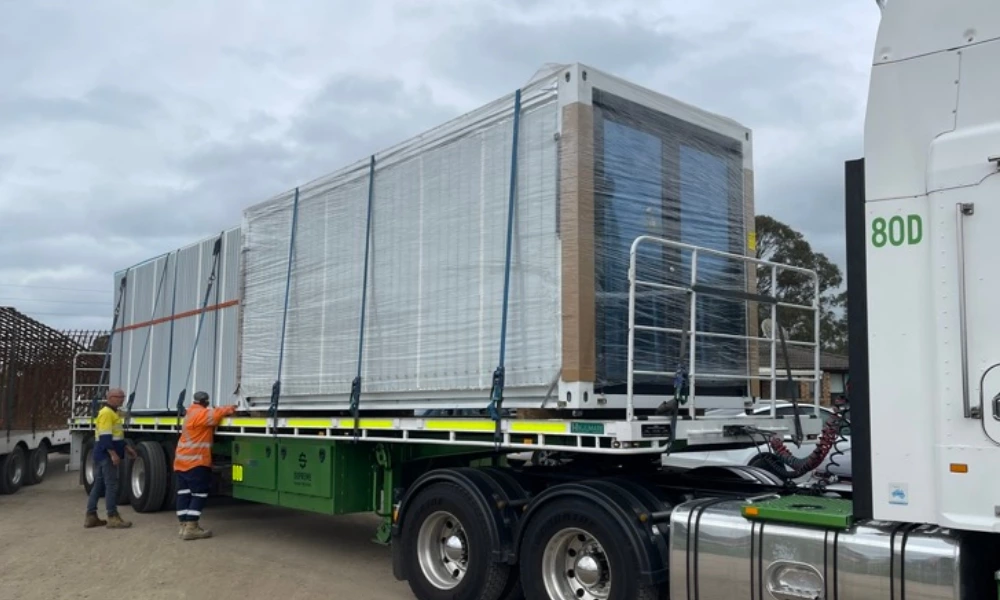
Once cleared at the port, the unit travels to your property by flatbed truck. Costs vary significantly by distance from the port and site accessibility.
| Location Type | Transport Cost (AUD) |
| Metropolitan Perth (from Fremantle) | 2,500–5,000 |
| Metropolitan Adelaide (from Port Adelaide) | 2,500–5,000 |
| Metropolitan Sydney / Melbourne / Brisbane | 3,000–6,000 |
| Regional (within 200km of port) | 5,000–8,000 |
| Remote / rural (200km+ from port) | 8,000–15,000+ |
Site accessibility matters: narrow driveways, overhead power lines, and steep access roads can require a smaller vehicle and additional crane time. UVO's logistics team reviews your site address before quoting to flag any access issues.
6. Crane Hire for Positioning
A crane or telehandler is required to lift the unit from the flatbed and position it on your prepared footing. Crane hire is typically arranged locally and billed separately from freight.
| Crane Type | Typical Cost (AUD) |
| Small telehandler (suburban, good access) | 1,500–2,500 |
| Standard crane (most residential sites) | 2,500–5,000 |
| Large crane (restricted access, long reach) | 5,000–10,000+ |
7. Foundation and Site Preparation
The foundation is frequently the most variable cost item in the entire project — and the most site-dependent.
Option A — Concrete pad (most common for permanent installations)
A reinforced concrete slab or pad footing is the standard permanent foundation for container homes in Australia. Cost depends on slab size, soil classification, and site slope.
- Flat site, stable soil, metropolitan area: AUD 8,000–8,000–15,000
- Sloped site or reactive (clay) soil: AUD 15,000–15,000–25,000
- Remote site with difficult access: AUD 20,000–20,000–35,000
Option B — Helical screw pile (faster, no curing time)
Steel screw piles are drilled into the ground by a small machine — no concrete curing wait, minimal soil disturbance, and effective on reactive or sandy soils common in Perth and coastal Queensland.
- Typical cost: AUD 6,000–6,000–14,000
- Advantage: Installation and unit positioning can happen on the same day
Option C — Trailer/chassis (mobile classification)
For buyers who want mobility or who classify the unit as a Moveable Dwelling under state legislation, a steel trailer chassis removes the need for a site foundation.
- Trailer cost: AUD 9,000–9,000–22,000
- Advantage: No DA required in some states for moveable dwelling classification; can be relocated
Site preparation (earthworks, levelling, access): AUD 2,000–2,000–15,000 depending on site conditions.
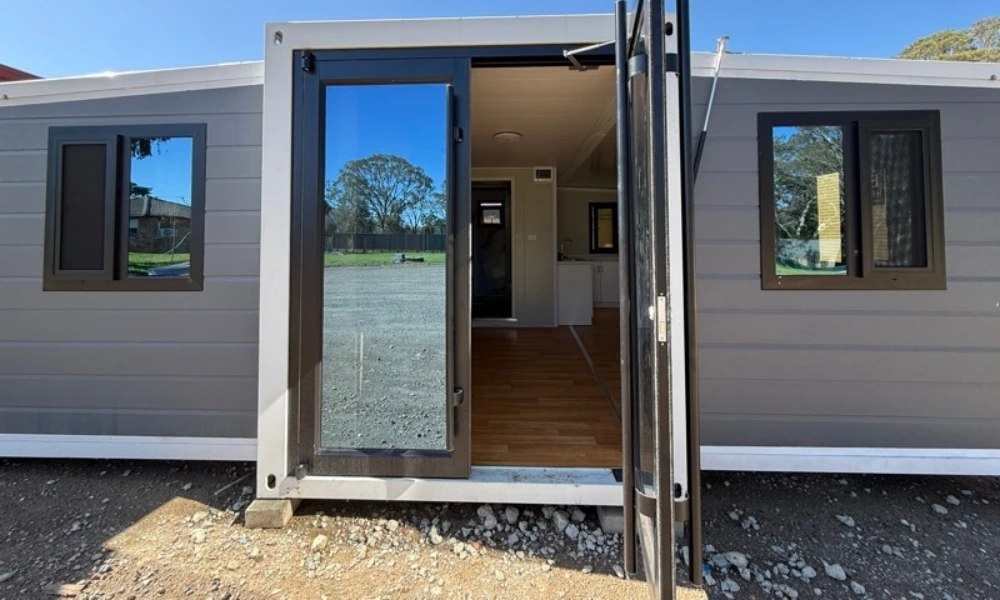
8. Development Approval (DA) and Building Permits
Approval costs vary significantly by state and council. All containers homes used as habitable dwellings require building approval in Australia.
| State | Approval Type | Typical Fee (AUD) |
| NSW | Complying Development Certificate (CDC) or DA | 3,000–8,000 |
| VIC | Building Permit (planning permit not required for granny flats since 2024 reform) | 2,500–6,000 |
| WA | Building Permit (planning approval not required for units ≤70 m² since 2024) | 2,500–6,000 |
| SA | Development Approval (Planning + Building Consent combined) | 3,500–9,000 |
| QLD | Building Approval (+ council DA in some areas) | 3,000–8,000 |
Private certifiers are often faster and similarly priced to council-direct applications in NSW and VIC. UVO's documentation package — structural engineering report, SAA/RCM electrical certification, thermal performance data — is formatted for direct submission to Australian building certifiers.
9. Utility Connections
Connecting the unit to mains water, electricity, and sewage (or installing off-grid systems) is completed by licensed local tradespeople and is one of the most variable cost items in the project.
Grid-connected (standard residential):
| Service | Typical Connection Cost (AUD) |
| Electrical connection (licensed electrician) | 2,000–5,000 |
| Water supply connection (licensed plumber) | 1,500–4,000 |
| Sewage / drainage connection | 2,000–6,000 |
| Total grid connection | 5,500–15,000 |
All electrical work must use SAA/RCM-certified components. All plumbing connections must use WaterMark-certified fittings — both are legal requirements under Australian standards. UVO units are pre-wired and pre-plumbed with these certifications; your local licensed trades complete the final connections using locally sourced certified fittings.
Off-grid (remote or rural):
| System | Typical Cost (AUD) |
| Solar panels + battery (5kWh system) | 8,000–18,000 |
| Rainwater tank + filtration | 3,000–8,000 |
| Septic tank / composting toilet system | 4,000–12,000 |
| Total off-grid setup | 15,000–38,000 |
Off-grid has higher upfront costs but eliminates ongoing utility bills — financially viable for rural and remote sites where grid connection fees can exceed $20,000.
Total Cost Summary: What to Budget
| Budget Level | Scenario | Total AUD Range |
| Entry level | 20ft unit, flat suburban site, grid-connected, standard fit-out | 34,000–55,000 |
| Mid-range | 30ft unit, slight slope, grid-connected, upgraded insulation | 55,000–85,000 |
| Full residential | 40ft two-bedroom, concrete slab, full fit-out, DA approval | 85,000–126,000 |
| Remote/off-grid | 40ft unit, remote site, off-grid systems | 110,000–160,000+ |
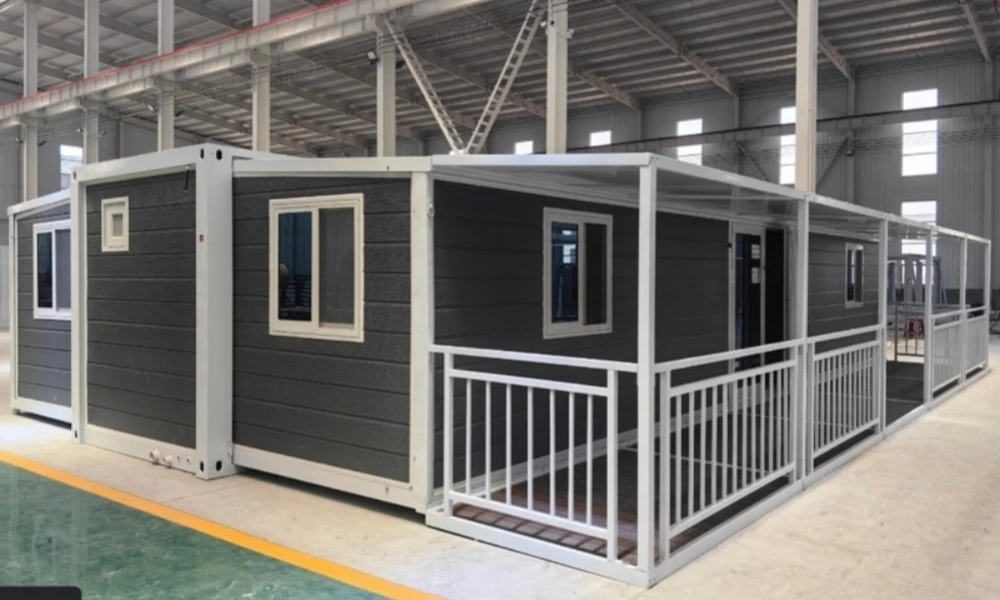
What Affects the Price Most: Five Key Variables
1. Size and layout The 40ft unit at 74 m² uses approximately twice the steel, insulation, windows, and internal fit-out of a 20ft unit. Size is the single biggest driver of factory price.
2. Insulation specification Standard EPS foam panels are cheaper but may not achieve the 7-star NatHERS energy rating required for permanent residential use in Australia. Upgrading to 50mm or 100mm polyurethane foam adds AUD 2,000–6,000 to the factory price but is often required for building approval. All UVO units use 50mm polyurethane foam as standard.
3. Site conditions A flat, accessible suburban block with stable soil is the cheapest scenario. A sloped, remote site with reactive clay soil can add AUD 20,000–30,000 in foundation and earthworks costs alone — costs that are invisible in any factory price quote.
4. Distance from port Metropolitan buyers within 100 km of a major port pay AUD 2,500–6,000 for delivery. Buyers in remote or rural areas can pay AUD 12,000–18,000 in freight and crane costs for the same unit.
5. Off-grid vs. grid-connected Grid connection in urban areas typically costs AUD 5,500–15,000. Remote grid connection can exceed AUD 20,000.Off−gridsolar and water systems cost AUD15,000–$38,000 up front but eliminate ongoing bills.
How to Keep Costs Down: Practical Tips for Australian Buyers
Get a site assessment before ordering. The two most expensive surprises — reactive soil and poor access — are detectable before you commit. A geotechnical report (AUD 500–500–1,500) and a site visit from a local builder can save tens of thousands.
Choose standard specification where possible. Each customisation adds 5–15% to the factory price. A standard layout with a single colour choice and standard window positions is significantly cheaper than a fully bespoke design.
Buy close to a port. If you have flexibility on where to install, proximity to Fremantle, Port Adelaide, Port Botany, or Port of Melbourne cuts your freight and crane bill materially.
Use a private certifier for DA. In NSW and VIC, private certifiers typically process applications faster than councils and at similar cost. In NSW, CDC applications for qualifying granny flats can be approved in 20 business days.
Batch orders reduce unit price. If you are developing multiple units — for a rental investment or a construction camp — pricing per unit decreases at 2+ and reduces significantly at 5+. Contact UVO directly for bulk pricing.
Is a Container Home Cheaper Than Traditional Construction in Australia?
Traditional residential construction in Australia currently costs AUD 2,500–2,500–3,500 per square metre for a standard build. Premium finishes, architect-designed homes, or remote builds can reach 5,000–5,000–7,000/m².
For a 74 m² home (equivalent to a 40ft container unit):
- Traditional build: AUD 185,000–185,000–259,000 at standard rates
- UVO 40ft turnkey: AUD 85,000–85,000–126,000
The factory-built model saves AUD 60,000–60,000–130,000 on a like-for-like comparison — and delivers the home in 50–65 days versus 12–18 months for a traditional build.
The saving is structural, not cosmetic. Factory production eliminates Australian on-site labour rates (AUD 50–50–120/hour for licensed trades), which is the dominant cost driver in traditional residential construction.
Frequently Asked Questions
Q: What is the total cost to import a container home from China to Australia?
The total landed and installed cost ranges from AUD 34,000(20ftentry−level) to AUD34,000(20ftentry−level) to AUD126,000+ (40ft full residential). This includes factory price, ocean freight, GST, customs clearance, inland transport, crane hire, foundation, DA approval, and utility connections.
Q: Do I pay import duty or GST when importing a container home to Australia?
Import duty on container homes (HS Code 9406) is 0% from China. GST of 10% applies on the combined customs value (factory price + freight + insurance). On a typical 20ft unit, this adds AUD 1,500–1,500–2,500 to your costs. GST-registered investors may claim this back as an input tax credit.
Q: What are the hidden costs most buyers miss?
The five most commonly underestimated costs are: (1) foundation and earthworks on sloped or reactive-soil sites; (2) inland freight from port to remote sites; (3) DA/building permit fees, which vary significantly by state and council; (4) utility connection fees, especially for remote grid connection; and (5) crane hire, which depends heavily on site access.
Q: What certifications do I need for my container home to get DA approval in Australia?
For NCC Class 1a (residential) approval, your certifier will typically require: structural engineering calculations, SAA/RCM electrical certification, WaterMark plumbing compliance confirmation, thermal performance data for NatHERS assessment, and waterproofing specifications for wet areas. UVO provides all of these documents as part of the standard Australia delivery package.
Q: How do I make sure my imported container home doesn't contain asbestos?
Require your manufacturer to provide a NATA-approved laboratory test report confirming no asbestos was detected, per Australian Customs Notice 2024/32. UVO provides this report with every Australia-bound delivery. Importing goods containing asbestos carries penalties of up to AUD $275,000 or three times the goods value, whichever is greater.