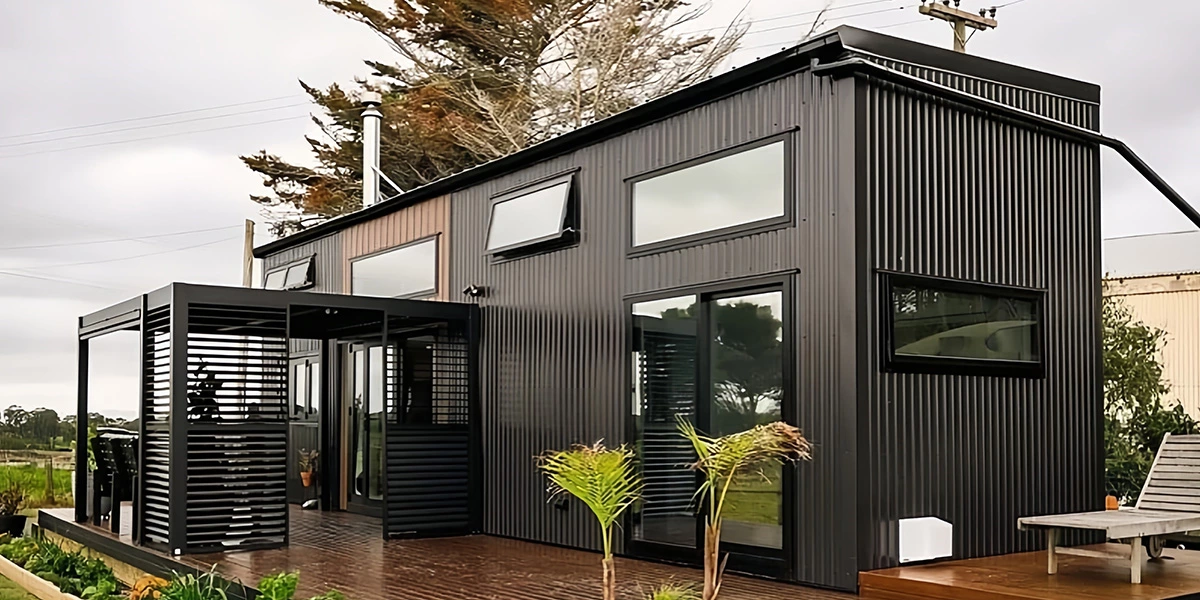
40 FT Expandable Container Home — Australian Certification: Compliance Checklist
When investing in 40ft expandable container homes in Australia, strict adherence to local certification standards is a mandatory requirement. In addition to the indispensable WaterMark certification for plumbing and drainage systems, a series of product-specific certifications must be obtained to guarantee the structural integrity and material safety of the container homes, ensuring full compliance with Australian building codes. This article provides a detailed breakdown of all core mandatory certifications required in Australia—covering dimensions such as plumbing and drainage, building materials, door and window systems, and asbestos-free compliance—serving as a crucial guide for these products to successfully enter the Australian market and operate legally.
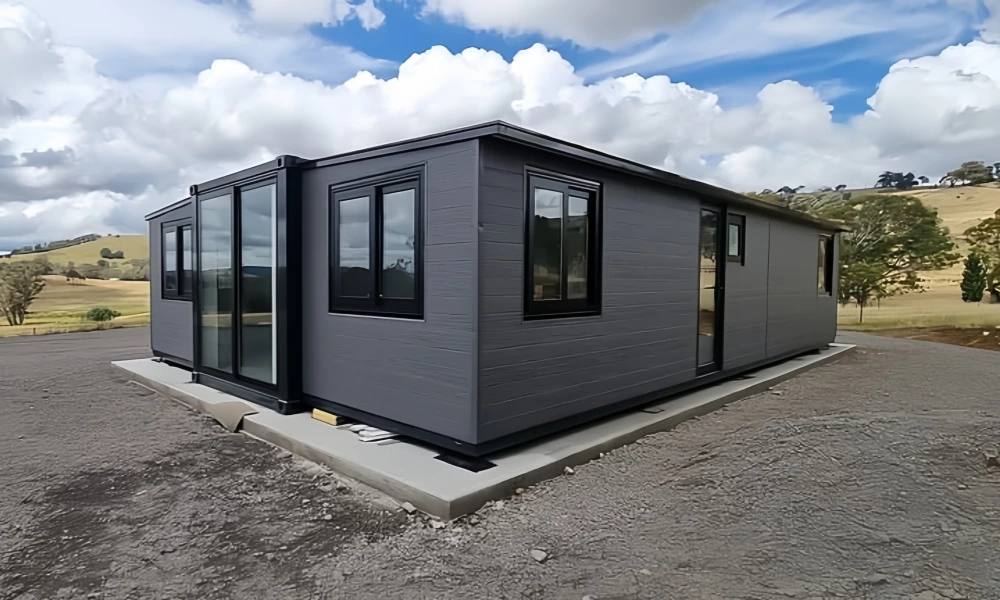
Basic Core: WaterMark Certification for Plumbing and Drainage Systems
WaterMark certification serves as the cornerstone of plumbing and drainage compliance in Australia. It is administered by the Australian Building Codes Board (ABCB) and issued by authoritative certification bodies such as SAI Global. For 40ft expandable container homes, all pressurized PVC pipes and fittings, as well as drainage pipes and fittings, must hold valid WaterMark certification and comply with Australian and New Zealand standards to ensure the plumbing and drainage systems remain leak-proof, durable, and operate safely.
1. WaterMark Certification for Pressurized PVC Pipes and Fittings
This certification complies with the AS/NZS 1477:2017 standard and covers all pressurized PVC plumbing components within the container home. It encompasses a comprehensive range of product categories, including pipes, couplings, reducers, elbows, valves, and end caps. The scope covers nominal diameters ranging from DN15 to DN150, with pressure ratings including PN9, PN12, PN15, and PN18. All fittings utilize a solvent cement joining process and feature a white finish, fully meeting the rigorous operational requirements for the container home's potable water supply and pressurized plumbing systems.
2. WaterMark Certification for PVC Drainage Pipes and Fittings
This certification aligns with the AS/NZS 1260:2017 standard and applies to PVC-U systems used for drainage, waste, and vent (DWV) applications within container homes; it constitutes a core certification for the effective management of wastewater discharge in these structures. Also held by Zhejiang ERA Pipe Co., Ltd., the certification covers drainage pipes ranging from DN40 to DN150 (stiffness classes SN4/SN6/SN8), as well as a comprehensive range of fittings—including elbows, reducers, floor drains, couplings, and dust caps. All drainage components are finished in light gray and utilize a solvent-cementing/tapered-socket joining process, ensuring efficient and compliant sewage discharge for container housing units.
Critical for Material Safety: NATA Asbestos-Free Certification
Australia maintains one of the world's most stringent regulatory frameworks regarding asbestos control; consequently, NATA (National Association of Testing Authorities, Australia) Asbestos-Free Certification is a mandatory requirement for all construction materials used in container housing units. This certification is issued by authoritative laboratories—such as Agon Environmental Pty Ltd—that comply with the ISO/IEC 17025 standard. Testing is conducted in accordance with the Australian Standard AS 4964 (2004), utilizing a practical detection limit as low as 0.01% to ensure that the core structural components and enclosure materials of the container housing units are entirely free of any asbestos content.
Structural and Envelope Compliance: Doors and Windows — AS 2047:2014 Certification
The building envelope system of the 40ft expandable home—specifically its doors, windows, and exterior glazed doors—must comply with the Australian National Standard AS 2047:2014, Windows and external glazed doors in buildings.
AS 2047:2014 certification ensures that the container home's doors and windows meet the following rigorous requirements:
- Wind resistance and structural load-bearing capacity, making them suitable for Australia's diverse climatic environments, including coastal and high-wind regions;
- Glass safety and impact resistance, ensuring user safety;
- Water and air tightness, preventing water ingress and air leakage;
- Thermal performance, enhancing the energy efficiency of the container home.
Note: This certification covers only the product manufacturing stage (excluding installation); to achieve full compliance, the container home's doors and windows must be installed by a professional team in accordance with Australian standards.
The Core of Electrical Safety: LED Driver SAA Certification
As a critical component of the daily electrical infrastructure within container homes, the accompanying LED power supply units must hold the authoritative SAA certification from Australia—a mandatory requirement for the safety compliance of electrical products within the country. The products covered by this certification are constant-current LED drivers; certified by SAA Approvals Pty Ltd, this accreditation comprehensively covers our entire series across multiple specifications and models. The specific compliance advantages are outlined below:
Input Voltage Compatibility: All units are fully adapted to Australia's standard mains voltage of 200–240V. The output current spans the full range of 250–300mA, allowing for direct compatibility with the varying power requirements of different lighting fixtures installed within container homes.
Electrical Safety Compliance: The products meet Australia's core electrical safety requirements. Featuring an input rating of 200–240V~ 50/60Hz 0.15A, the output voltage and current are precisely calibrated to align with Australian electrical standards for lighting applications. Having successfully passed rigorous testing—including electrical safety and electromagnetic compatibility (EMC) assessments—these units ensure the long-term stability and reliability of the indoor lighting systems within container homes.
Backed by Comprehensive Certification, UVO Leads the Australian Container Home Market
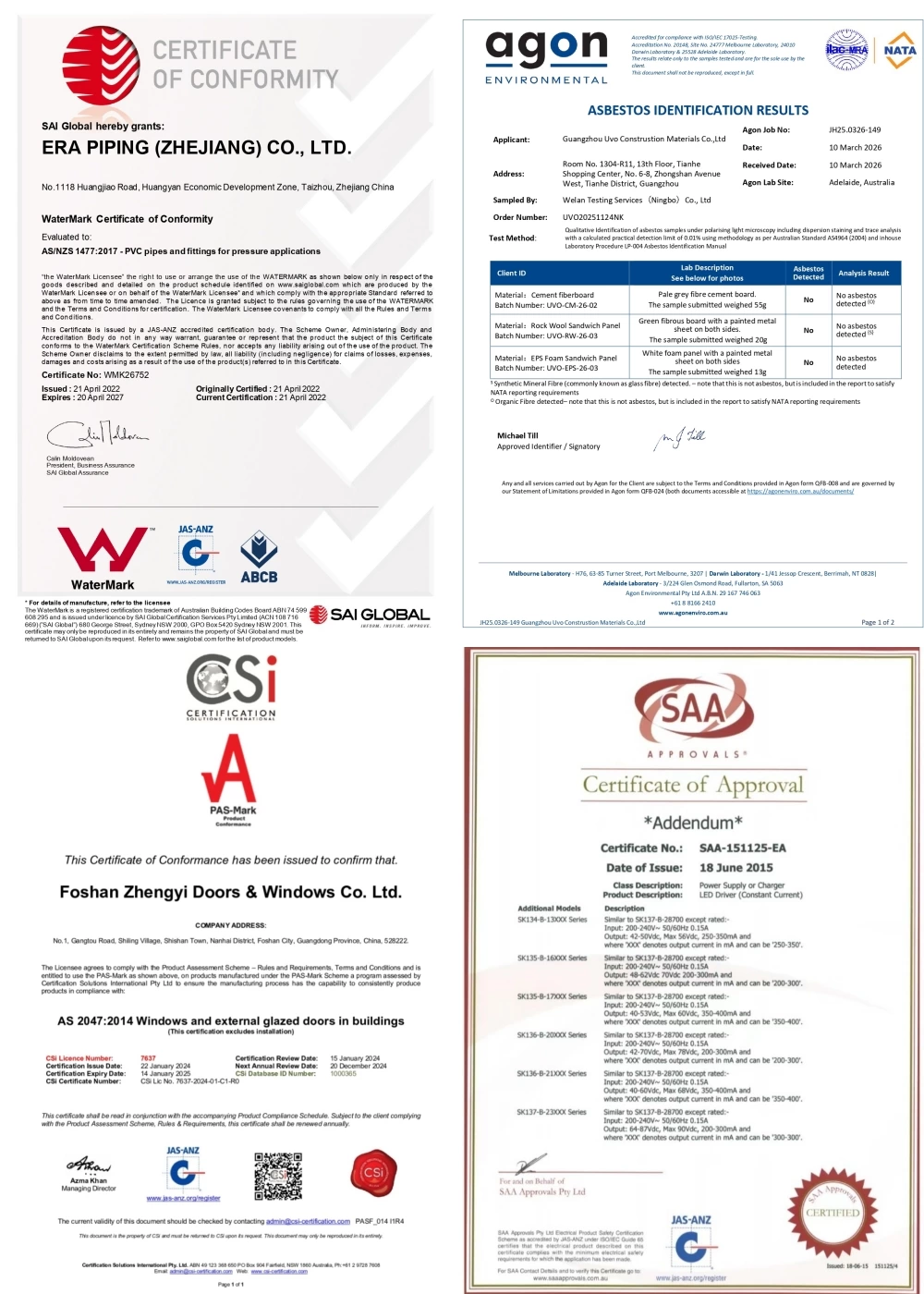
As the benchmark for regulatory compliance in Australia's foldable container home sector, shown in all the verification images above: UVO has successfully secured a complete suite of certifications required for market entry. This achievement establishes UVO as one of the few brands possessing full compliance credentials within the industry. From NATA certification—verifying the absence of asbestos in core building materials—to dual WaterMark certifications (WMK26752 and WMK26753) for plumbing and drainage systems, and finally to AS 2047:2014 certification for door and window systems, UVO has achieved comprehensive, end-to-end certification coverage across all product categories—ranging from basic building materials and plumbing fittings to the building envelope. All UVO products strictly adhere to the latest Australian building codes and industry standards; furthermore, all certifications are issued by authoritative bodies accredited by JAS-ANZ, ensuring that the certificates are authentic, valid, and fully compliant—thereby eliminating the need for customers to undertake any additional certification procedures.
Amidst Australia's rigorous regulatory landscape, UVO's comprehensive certification advantage serves as a core competitive differentiator:
1. It mitigates compliance risks at the source—specifically those arising from missing product certifications—enabling customers to complete project registration and operational launch in a single, seamless step, thereby significantly saving both time and labor costs.
2. This fully certified product ecosystem aligns perfectly with the core demands of local Australian consumers regarding safety, regulatory compliance, and quality. This alignment creates a distinct competitive advantage for UVO in the marketplace, making it easier to gain recognition and acceptance from channel partners, property developers, and end-users alike.
3. UVO's certification scope encompasses all critical materials and components of its container homes—from fiber cement boards and rock wool/EPS sandwich panels to compliant PVC plumbing pipes and certified doors and windows. This ensures the integrated regulatory compliance of the entire product assembly, providing customers with a "one-stop" solution for fully compliant container homes—a key factor that enables UVO to stand out and excel within the local Australian market.
What is the importance of Australian certification compliance for 40ft container homes?
A Prerequisite for Legal Operation: Container homes lacking full certification cannot be officially registered, put into use, or sold in Australia. Non-compliant parties face penalties ranging from fines and mandatory demolition to potential legal liability.
Assurance of Safety and Durability: Australia’s various certification standards are specifically designed to address the country's unique climatic conditions—including extreme heat, heavy rainfall, and strong winds—as well as local health regulations regarding issues such as asbestos and water quality. These standards serve as the fundamental guarantee for the long-term safety and structural integrity of container homes.
Enhancing Market Value and Credibility: Fully certified container homes possess a distinct competitive edge within the Australian market. They instill confidence in buyers and tenants, thereby underscoring the product's superior quality and strict adherence to regulatory standards.
Essential for Insurance and Financing: The vast majority of insurance providers and financial institutions in Australia require comprehensive certification for container homes as a mandatory prerequisite for offering insurance coverage or project financing services.
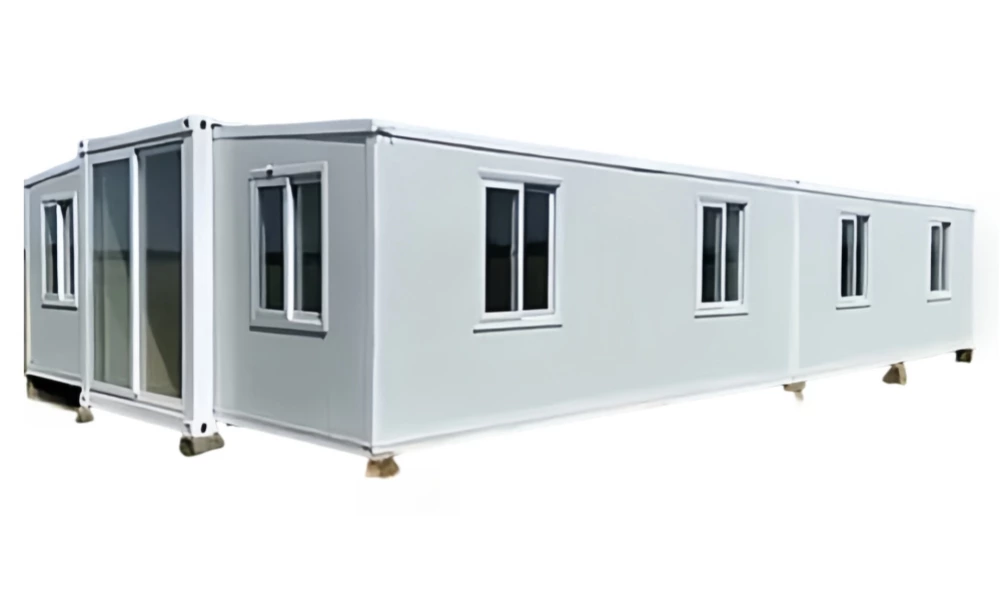
Key Certification Requirements for 40Ft Container Home in Australia
To ensure that a 40ft expandable prefabricated house fully complies with Australian building codes, it is essential to verify the core certifications for every single component and material—no exceptions allowed:
- WaterMark WMK26752 Certification: For PVC pressure pipes and fittings, complying with the AS/NZS 1477:2017 standard, suitable for potable water systems;
- WaterMark WMK26753 Certification: For PVC drainage pipes and fittings, complying with the AS/NZS 1260:2017 standard, suitable for sanitary drainage and ventilation systems;
- NATA Asbestos-Free Certification: Specifically for cement fiberboard, rock wool sandwich panels, and EPS foam sandwich panels; complies with the AS 4964 (2004) standard, with a detection limit of 0.01%;
- Doors and Windows AS 2047:2014 CSi Certification (No. 7637): Specifically for doors, windows, and external glazed door units; falls under the PAS Mark certification scheme and complies with ISO/IEC certification standards.
All certifications must be issued by bodies accredited by JAS-ANZ (Joint Accreditation System of Australia and New Zealand), and the certificates must remain valid (i.e., not expired or revoked). Furthermore, it is imperative to ensure that all test reports and certification documents are complete and unaltered—Australian regulatory bodies enforce a rigorous verification system regarding the authenticity of documentation for building products.
Prioritizing the completion of the aforementioned core certifications not only enables the legal operation of 40ft expandable tiny homes within Australia but also guarantees that the product is suitably adapted to the unique local environmental conditions, thereby ensuring long-term safety for users while maximizing the product's market value.