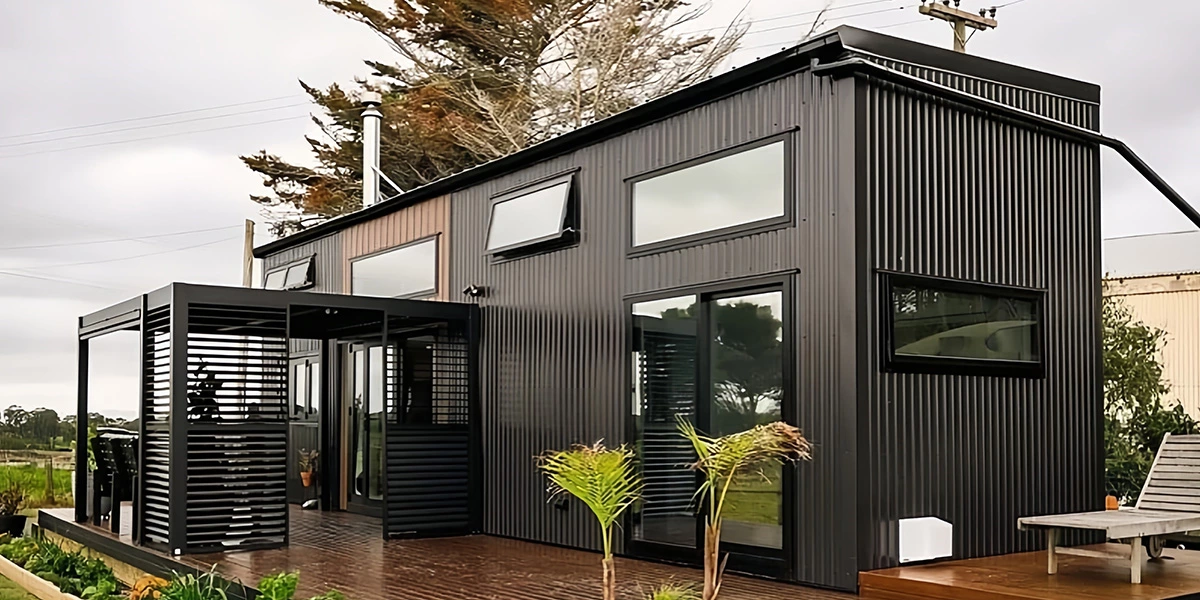
Apple Cabin vs Space Capsule vs Pod House: Which Modular Structure Is Right for Your Project?
Three terms dominate conversations in the glamping, resort development, and modular accommodation space right now: Apple Cabin, Space Capsule house, and pod house. They look different, cost differently, and serve fundamentally different business models. This apple cabin vs pod house vs space capsule comparison breaks down every dimension that actually matters for investors, resort operators, and homeowners — from structure and materials to price, ROI, and long-term operating costs — so you can make the right choice before committing capital.
What Are We Actually Comparing?
Before the apple cabin vs space capsule and apple cabin vs pod house comparisons begin, it helps to define each category clearly.
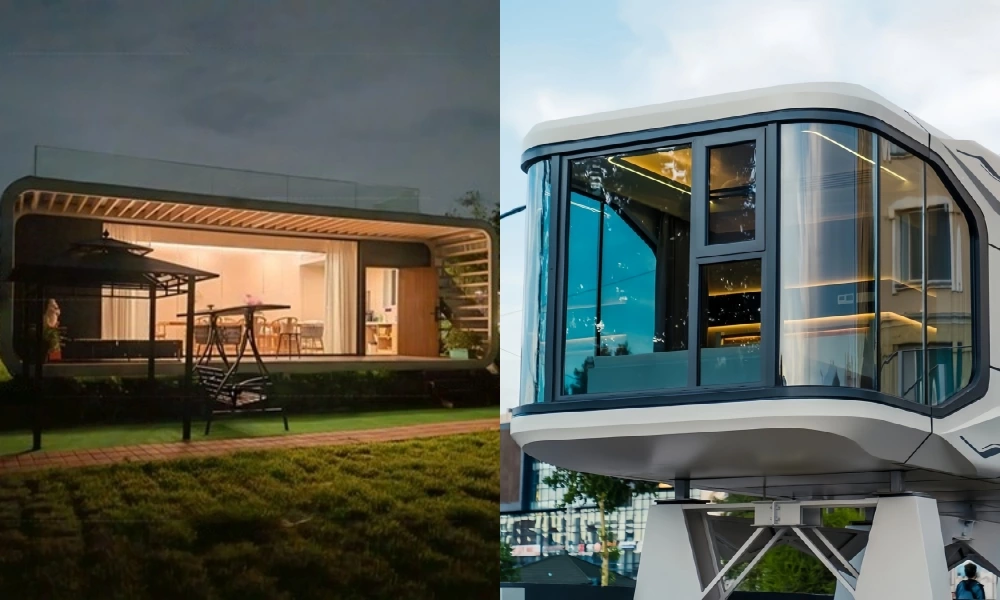
Apple Cabin A factory-built modular unit with a distinctive curved or rounded roof profile, square-to-rectangular floor plan, and full-height panoramic glazing on at least one facade. Built on a high-strength aluminium alloy or light steel frame with composite insulated wall panels. Designed for year-round habitation and long-term commercial operation. Available in 20ft (approx. 13–20㎡) and 40ft (approx. 28–40㎡) configurations.
Space Capsule House A modular structure with a futuristic, oval, or tubular exterior form — typically constructed from fibreglass composite or lightweight shell materials. Prioritises visual distinctiveness and novelty over internal space efficiency. Primarily designed for short-stay, themed accommodation and scenic area marketing. Typically 10–25㎡.
Pod House A broader category covering compact, self-contained prefab structures used for accommodation, offices, or ancillary dwellings. Apple Cabins are a specific type of pod house; other pod houses include glass domes, A-frame pods, barrel saunas with sleeping lofts, and timber eco-cabins. The modular pod house comparison framework applies across all these sub-types.
Apple Cabin vs Space Capsule vs Pod House
Design Philosophy
| Dimension | Apple Cabin | Space Capsule | Standard Pod House |
| Exterior form | Rounded/curved roof, rectangular base, panoramic glass | Oval/tubular, futuristic silhouette | Varies — A-frame, dome, barrel, box |
| Design priority | Space efficiency + long-term liveability | Visual novelty + Instagram appeal | Varies by sub-type |
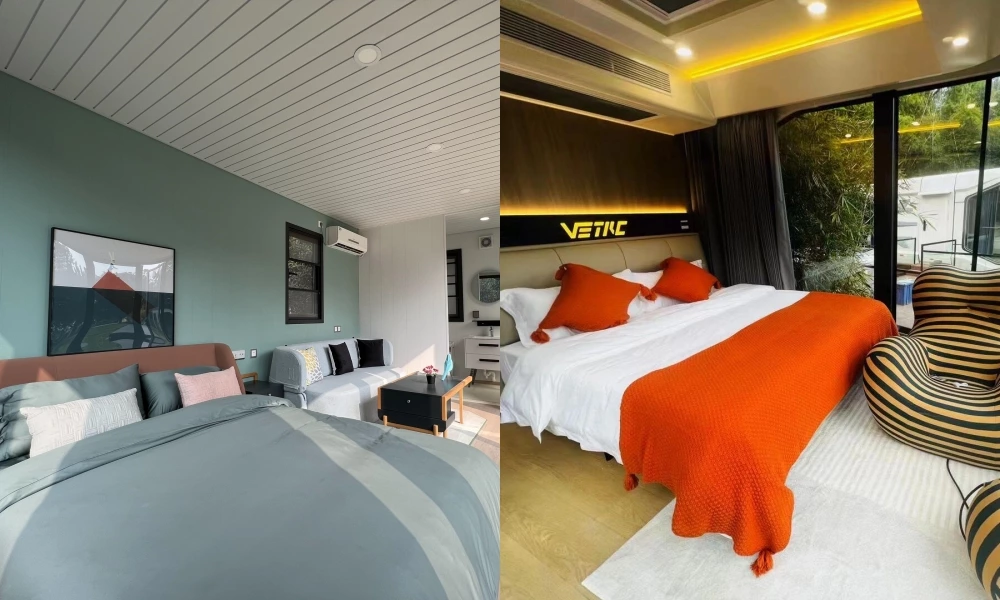
| Interior character | Hotel-standard room — high ceiling, natural light, defined zones | Compact, themed, immersive | Varies widely |
| Customisation | High — cladding, layout, glazing | Low to medium — form is fixed | Medium |
The core design difference in the apple cabin vs pod house and apple cabin vs space capsule comparison: Apple Cabins are engineered as operating assets — designed around the guest experience metrics (ceiling height, natural light, functional zoning) that drive repeat bookings and occupancy. Space Capsule houses are engineered around marketing aesthetics — the exterior photograph is the product, and the interior experience is secondary.
Structure and Materials
| Dimension | Apple Cabin | Space Capsule | Standard Pod House |
| Primary frame | Aluminium alloy or galvanised steel | Fibreglass shell / lightweight composite | Timber, steel, or GFRC depending on type |
| Wall system | Composite insulated sandwich panels (50–100mm) | Fibreglass shell with cavity insulation | Varies widely |
| Roof system | Engineered metal roof with EPDM waterproofing | Moulded composite shell | Varies |
| Corrosion resistance | Excellent — suitable for coastal, humid, alpine | Moderate — fibreglass degrades in UV over time | Varies |
| Wind load rating | Wind Force 11–12 (130–150 mph) | Typically Wind Force 8–10 | Varies |
| Lifespan | 20+ years with standard maintenance | 10–15 years (fibreglass UV degradation) | 15–25 years |
For resort investors comparing capsule house vs tiny house or apple cabin vs space capsule on structural merit: the Apple Cabin's metal composite panel system is both more weather-resistant and more repairable than fibreglass shell construction. Fibreglass oxidises under prolonged UV exposure, leading to chalking, discolouration, and ultimately structural integrity issues — particularly in high-UV environments like coastal Australia, the US Southwest, and Southern Europe.
Spatial Experience and Liveability
| Dimension | Apple Cabin | Space Capsule | Pod House |
| Floor area range | 13–40㎡ | 10–25㎡ | 5–60㎡ (very wide range) |
| Ceiling height | 2.4–2.8m throughout | 1.8–2.2m (tapers with curved walls) | 2.2–4.0m depending on type |
| Full bathroom | Standard | Standard | Varies — some yes, some no |
| Full kitchen | Optional / standard in larger models | Kitchenette only | Varies |
| Living area | Defined separate zone | Integrated with sleeping (studio only) | Varies |
| Natural light | Excellent — panoramic glazing | Moderate — porthole or strip windows | Varies |
| Guest experience score | High — hotel-comparable | Medium — novelty-driven | Medium to high |
The liveability gap is the most significant factor in the apple cabin vs space capsule comparison for long-term rental operations. The Apple Cabin's full ceiling height and defined room zones deliver the guest experience metrics — space, light, privacy — that translate directly into higher review scores on Airbnb and Glamping Hub, and higher repeat booking rates.
Price Comparison
| Product Type | Ex-Factory Price | All-In Landed Cost (AU/US) | Nightly Rate Potential |
| Apple Cabin 20ft | $7,000–$10,000 | $15,000–$20,000 | $120–$250/night |
| Apple Cabin 40ft | $12,000–$20,000 | $25,000–$30,000 | $200–$450/night |
| Space Capsule (standard) | $15,000–$30,000 | $30,000–$50,000 | $150–$350/night |
| Pod House (A-frame type) | $19,800–$25,000 | $30,000–$60,000 | $180–$400/night |
| Pod House (dome type) | $25,000–$60,000+ | $50,000–$100,000+ | $200–$600/night |
Price verdict in the apple cabin vs pod house comparison: Apple Cabins offer one of the lowest entry points in the modular glamping pod market while delivering hotel-grade liveability. Space Capsule houses occupy a similar price band but with a higher long-term replacement cost due to shorter fibreglass lifespan.
ROI Comparison: 5-Year Model
Scenario: 10-unit cluster, scenic rural location, 65% average occupancy
| Metric | Apple Cabin (40ft) | Space Capsule |
| All-in cost per unit | $30,000 | $50,000 |
| Total capital (10 units) | $300,000 | $500,000 |
| Average nightly rate | $200 | $180 |
| Annual gross revenue (10 units) | $473,000 | $426,000 |
| Operating expenses (30%) | $141,900 | $127,800 |
| Annual net income | $331,100 | $298,200 |
| Year 5 cumulative net income | $1,655,500 | $1,491,000 |
| Replacement/major repair cost (Year 8–10) | Low | High (fibreglass degradation) |
| 5-year ROI | ~300% | ~310% (but front-loaded) |
The Space Capsule appears competitive on 5-year ROI — but the maintenance cost divergence from Year 6–10 onwards, as fibreglass shells require specialist repair and repainting, significantly erodes the long-term advantage. Apple Cabin's metal composite system has lower long-term maintenance cost, making it the stronger apple cabin glamping resort investment over a 10-year horizon.
Best Use Case: When to Choose Each
Choose Apple Cabin when:
- Building a multi-unit glamping resort or Airbnb cluster (5–50 units)
- Targeting long-term rental income (12+ months operation per year)
- Installing in coastal, tropical, alpine, or high-UV environments
- Requiring NCC/IBC/CE compliance documentation for building permits
- Prioritising guest comfort and review scores over novelty alone
- Operating in Australia, USA, UK, or Europe where structural standards are enforced
Choose Space Capsule when:
- Creating a single hero unit or flagship "Instagram moment" for a scenic area
- The location already drives massive foot traffic and novelty is the primary draw
- Budget is very tight and visual impact is the only marketing strategy
- Operating in markets with minimal structural compliance requirements
Choose a Different Pod House type (A-frame, dome, etc.) when:
- The landscape calls for a specific architectural form (e.g., A-frame in alpine forest)
- The project is lifestyle/owner-operator rather than investor-led
- Maximum nightly rate is the priority regardless of per-unit cost
Market Suitability by Region
| Region | Best Choice | Key Reason |
| Australia | Apple Cabin | NCC compliance documentation required; coastal corrosion resistance critical |
| USA | Space Capsule or Apple Cabin | IBC-compliant documentation for STR permits; ADU market needs liveability |
| Europe | Apple Cabin | CE certification mandatory; planning authorities prefer proven structures |
| Southeast Asia (Thailand, Bali) | Space Capsule or Apple Cabin | High UV + humidity; Apple Cabin wins on durability |
| Middle East / Desert | Space Capsule | Extreme heat requires proven insulation panel performance |
Frequently Asked Questions
Which is more profitable for Airbnb — Apple Cabin or Space Capsule?
For sustained multi-year Airbnb profitability, the Apple Cabin delivers better results. Its higher ceiling height, defined room zones, and full kitchen deliver the guest experience metrics (comfort, space, functionality) that generate higher review scores and repeat bookings — the foundation of Airbnb algorithm ranking. Space Capsule units generate strong novelty bookings initially but tend to plateau as the novelty effect fades and competitors list similar units.
Is Apple Cabin the same as a pod house?
Apple Cabin is a specific sub-type within the broader modular pod house category. All Apple Cabins are pod houses, but not all pod houses are Apple Cabins. The Apple Cabin's defining characteristics are its curved/rounded roofline, panoramic glazing, and aluminium alloy or light steel frame — distinguishing it from A-frame pods, dome pods, and barrel cabin pods.
How does Apple Cabin compare to Space Capsule on durability in coastal locations?
The Apple Cabin's aluminium alloy frame and composite insulated panels significantly outperform Space Capsule fibreglass shells in coastal salt-air environments. Aluminium alloy is inherently corrosion-resistant; fibreglass requires UV-protective coatings that degrade over 5–10 years in coastal conditions, requiring specialist re-coating. For any coastal glamping resort, Apple Cabin is the more durable and lower long-term maintenance choice.
Can Apple Cabins be permitted as permanent dwellings?
Yes — in Australia (NCC Class 1a), the USA (IBC residential), and Europe (CE certified), Apple Cabins from certified manufacturers like UVO can be permitted as permanent or semi-permanent dwellings with the appropriate DA/building permit. Space Capsule houses face more varied compliance pathways as their non-standard forms are less well-established in building codes.
What is the minimum order quantity for Apple Cabin cluster resort development?
UVO accepts single-unit orders for individual buyers and trial deployments, and offers volume pricing from 5 units for resort development projects. For 10+ unit cluster developments, UVO provides coordinated shipping, batch documentation packages, and dedicated project support.