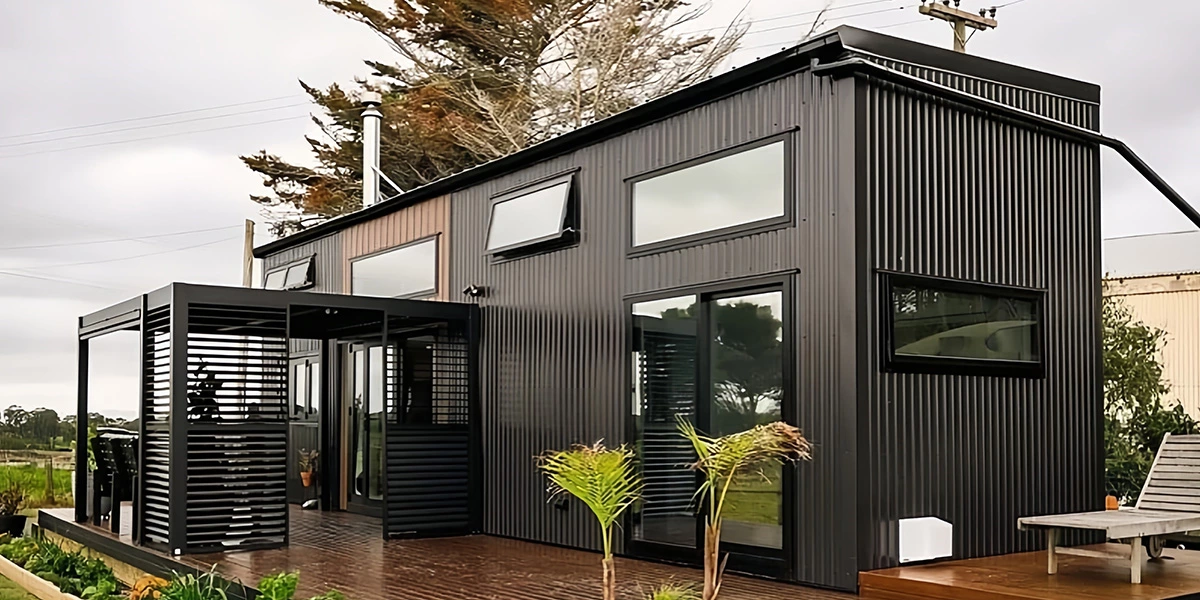
How to get DA approval for an expandable house in Australia in 2026?
Planning to install an Australian standard expandable container house on Australian land? Before placing an order, there's a crucial step you must understand: government approvals. This guide breaks down the Development Application (DA) process in detail for New South Wales (NSW), Queensland (QLD), Western Australia (WA), Victoria (VIC), and South Australia (SA), letting you know clearly what you need to prepare, how long it takes, and what pitfalls to avoid.
What is a Development Application (DA)?
A Development Application (DA) is a formal application submitted to the local council requesting approval to develop your land—specifically, to accommodate and use an expandable house.
In Australia, all residential buildings must comply with the National Building Code (NCC), regardless of whether they are on-site constructed, modular, or expandable. Extensions used as permanent residences, granny homes, or second homes are typically classified as Class 1a buildings under the NCC—the same classification as ordinary residential buildings, meaning they must meet the same standards.
Failure to obtain the correct approval before accommodating may result in the following consequences:
- Forced demolition of the building at your own expense;
- Inability to connect to municipal water, sewers, or electricity;
- Ineffective home insurance;
- legal disputes when selling the property.
The good news is: expandable units can indeed obtain council approval—provided they meet Australian standards and follow the correct procedures.
Two main approval paths
| Path | Description | Timeline |
| Development Application (DA) | Comprehensive assessment of land use, design, and compliance by the council | 6–16 weeks |
| Compliant Development Certificate (CDC) | Fast approval through a private certification body, bypassing the council | 10–20 business days |
The CDC only applies if your project meets statewide, uniformly preset standards. A full Data Area (DA) is typically required if the site has overlapping restrictions related to wildfires, flooding, or heritage conservation, or is located in a rural zoning.
Basic Documents Required in Almost All States
Regardless of the state, please prepare the following materials before applying:
- Site Plan – Indicating the location of the extension, setback distance from the land boundary, and existing buildings.
- Floor Plans and Elevations – Drawn to scale, showing room layout, floor height, and exterior appearance.
- Structural Engineering Certificate – Confirmed by a registered engineer that the frame, folding connections, and roof meet Australian standards.
- Energy Efficiency Report – Proof that the building meets the NatHERS star rating requirements for its climate zone (usually 6–7 stars).
- Supplier NCC/BCA Compliance Declaration – Includes fire safety, waterproofing, and Class 1a readiness documentation.
- Plumbing Plan – Required if connecting to the municipal plumbing network.
Important Note: Before placing an order, ensure the supplier can provide Australian engineering certificates and NCC compliance documents. Imported extensions without these documents are almost impossible to approve.
Detailed Explanation of DA in Each State
New South Wales (NSW)
Approval Authority: Local Council (DA) or Private Certification Authority (CDC)
NSW has two of the clearest approval pathways in Australia:
CDC (Fast Track) — Applicable to standard residential/rural zoning sites that meet the requirements of the State Environmental Planning Policy (Housing):
- Second home (grandmother's room) not exceeding 60 square meters
- Land area of 450 square meters or more
- No flood, bushfire or heritage protection restrictions
DA (Full Council Approval) — Applicable to larger buildings, special zoning, or restricted sites.
Additional NSW Requirements — Section 68 Approval: When an extension is connected to the municipal network but not permanently anchored to the ground, Section 68 approval may be required under the Local Government Act 1993, either concurrently with or as an alternative to DA.
NSW-Specific Documents:
- 10.7 Planning Certificate (Applying to the council is the first step)
- BASIX Certificate (NSW's mandatory energy and water efficiency tool)
- Bushfire Attack Level (BAL) Assessment Report (if located in a bushfire risk area)
Timeframe: CDC: 10–20 business days | DA: 40–80+ business days
Practical Advice: Many NSW councils have approved extensions as granny homes under the CDC pathway—the fastest approval path for second homes. Inland councils are generally more flexible than coastal/metropolitan councils.
Queensland (QLD)
Approval Authority: Local councils under the Planning Act 2016
QLD requirements vary significantly by region. The first step is to contact the planning department of your local council.
Good news: There is a "Mobile Home Exemption" option. According to QLD planning regulations, no planning approval is required if all of the following conditions are met:
- The site area is at least 2,000 square meters (rural/large zoning)
- It is a second home for dependent family members
- It is not connected to the municipal sewer system (using an on-site treatment system)
- The site is not in a flood risk area.
If your situation does not meet all of the above conditions, a complete Planning Authority (DA) is required.
QLD Standard DA Documents:
- Site plan showing setbacks and distances from the main building
- Floor plan and elevations
- Plumbing and drainage application (submitted separately to the council, not with the DA)
- Structural engineering certificate
- Energy efficiency assessment report
Practical advice: QLDs require separate water and drainage applications – please allow for this in your time and cost planning.
Western Australia (WA)
Approval Agencies: Local Council (Planning) + Permitting Authority (Building Permit) – Two Separate Processes
WA has the most complex process in Australia: planning approval and building permits must be applied for separately.
Step 1 – Planning Approval (DA): Submitted to the local council under the Planning and Development Act 2005. The council assesses land use, zoning, and design compliance. Within the R-code (Residential) zoning, extensions are generally treated the same as regular freehold homes.
Step 2 – Building Permit: Issued by a registered building surveyor or the council's building department, confirming NCC compliance. Engineering documentation demonstrating that the building meets Australian standards must be provided.
WA-Specific Requirements:
- Must comply with WA's Residential Design Codes (R-Codes) regarding setbacks, site coverage, and building height. A BAL assessment is required for bushfire risk areas (common in rural WA areas).
- A detailed site drainage and stormwater management plan is required.
- Timeframe: Planning Authority (DA): 60–90 days | Building Permit: 10–25 business days after all documentation is complete.
Practical Advice: Contact a local building certification body with experience in modular/prefabricated construction as early as possible—WA Council is one of the Australian states that is slow to adapt to extended housing developments.
Victoria (VIC)
Approval Agencies: Registered Building Surveyor (Building Permit, almost always required) + Local Council (Planning Permit, sometimes required)
VIC processes planning and building approvals separately. Almost all residential extensions require a building permit, but whether a planning permit is needed depends on zoning and overlay restrictions.
Planning permits are required in the following situations:
- Land is located in a rural conservation area, green wedge, or specific residential zoning.
- The site has bushfire, flood, heritage, or environmental protection overlay restrictions.
- The council's planning scheme requires a planning permit for the second home.
- Building Permit – almost always required for residential use, issued by a Registered Building Surveyor, confirming NCC compliance and structural safety.
VIC Practical Advice:
- Check zoning and stacking restrictions on Planning Maps Online (PMO) before purchasing.
- Inner Melbourne councils have stricter requirements for building appearance; outer and rural councils are more flexible.
- "Dependents units" (for family members) have different planning classifications than second homes, and permit requirements may differ.
Recommendation: VIC's registered building surveyors are key certifiers; contact them as early as possible—they lead the building permit process and will inform you of the required engineering documents.
South Australia (SA)
Approval Authority: SA Planning Portal (PlanSA) – The unified submission platform for all applications
SA modernized its approval system under the Planning, Development and Infrastructure (PDI) Act 2016, using a unified online platform.
Three Approval Categories:
- Accepted Development, Fully Compliant with the Planning and Design Code, No Approval Required (Rarely applicable to residential projects)
- Standard Assessment, Standard Assessment – Most extensions within standard residential zoning fall into this category.
- Impact Assessment, Complex or Controversial Development – Rarely applicable to standard extensions.
Required SA Documents:
- Site plan and environmental background drawings
- Floor plans and elevations
- SA Planning and Design Code Compliance Declaration
- Building Code Consent (Energy Efficiency, Structural Engineering)
- Plumbing and Drainage Plans
Standard Assessment: Statutory maximum 40 working days | Building Code Consent is usually assessed concurrently.
Practical Advice: SA allows temporary residence of mobile homes in many rural zonings for a maximum of 60 days per year without formal approval – Very useful for trial settlements on farms.
Summary of comparison tables of each state
| State | Main Approvals | Fast Track | Typical Timeframe | Key Points to Note |
| NSW | DA or CDC | Private Certification Agency CDC | 2–16 weeks | BASIX Certificate; Wildfire Zoning |
| LD | DA (Council) | Rural Mobile Home Exemption | 4–12 weeks | Various local council variations |
| WA | DA + Building Permit (Two Steps) | None | 10–16 weeks | Two separate approval processes |
| VIC | Building Permit (Required) + Planning Permit (Subject to Circumstances) | - | 4–10 weeks | Overlapping restrictions triggering planning permit |
| SA | Code of Conduct Assessment (PlanSA Portal) | Accepted Development (Rare) | 8–10 weeks | Design Code Compliance |
Pre-Purchase Checklist
Before placing an order, please confirm that the supplier can provide all of the following documents:
- Minimum clear height of 2.4 meters for all living spaces
- Australian structural engineering certificate (stamped by a registered engineer)
- NCC Class 1a compliance declaration from the manufacturer
- Energy efficiency report for the local climate zone (NatHERS 6–7 stars)
- Waterproofing certification for wet areas such as bathrooms and laundry rooms
- Electrical compliance certificate conforming to AS/NZS 3000 wiring specifications
- Smoke detectors installed according to NCC requirements
- Water supply and drainage system conforming to AS/NZS 3500 standards
- Complete drawing package: floor plans, elevations, site plan
- If the site has a BAL rating, bushfire compliance documents are required.
Complete DA Application Process
Step 1 — Before Buying a Home
Investigate the Land and Apply for a Planning Certificate from the legislature (Section 10.7 certificate in NSW, similar in other states). The cost is no more than $200 and will inform you of the land's zoning, overlay restrictions, and applicable approval pathways.
Step 2 — Determine the Approval Pathway
Depending on your state and land type, choose CDC/Fast Track (if eligible) or the full DA.
Step 3 — Contact Professionals Early
- Town Planner/Planning Consultant: Assists with DA requirements and represents you in communication with the legislature.
- Private Building Certifier: Issues CDC or building permits and assesses NCC compliance.
- Structural Engineer: Reviews or provides local endorsement for supplier engineering certificates.
Step 4 — Obtain the Complete Documentation Package from the Supplier
Apply for the engineering certificate, floor plans, elevations, NCC compliance declaration, and energy compliance report.
Step 5 — Submit Application
- NSW: NSW Planning Portal
- QLD: MyDAS2 / Parliamentary Online Submission System
- WA: Parliamentary Online Submission System
- VIC: Parliamentary Planning Portal + Registered Architectural Surveyor
- SA: PlanSA Portal
Step 6 — Respond to Supplemental Information Requests
Parliament may request further clarification. This should be handled by a planning advisor to avoid delays.
Step 7 — Arrange Installation After Approval
Once the DA and building permit are issued, coordinate delivery and installation. Some councils require site inspections during and after installation before issuing the Certificate of Occupancy (OC).
What mistakes can ruin your approval process?
Not checking zoning before buying a property — Not all zoning allows second homes or extensions.
Suppliers without Australian compliance documentation — Imported buildings without NCC-compliant works documentation will be rejected outright by the council.
Assuming rural land doesn't require approval — Most rural zoning still requires council approval for residential buildings.
Forgetting to apply for separate plumbing and drainage permits — In most states, connecting to water and sewage networks requires separate permits.
No energy efficiency report — NatHERS or NCC Section J compliance is a mandatory requirement for any permanent residence.
Frequently Asked Questions
Can an expandable house be used as a permanent residence in Australia?
Yes – provided it meets NCC Class 1a requirements and obtains DA and building permit approval.
How much does the DA application process cost?
Budget estimate:
- Council DA fee: $500–$3,000
- Town planner/consultant fee: $1,500–$5,000
- Building certifier fee: $1,500–$4,000
- Engineer's signature confirmation: $500–$2,000
How long does the entire process take?
Most states take 2–4 months. NSW's CDC can complete it in as little as 3–4 weeks. WA's two-step process typically takes 4–5 months.
Ready to get started?
UVO is a professional expandable house supplier, and obtaining DA (Declaration of Authority) permits for expandable houses in Australia is entirely possible. The key is to be well-prepared: first, check the land zoning, choose a provider that can provide Australian compliance documentation, and then contact the appropriate professionals based on the specific procedures of your state.