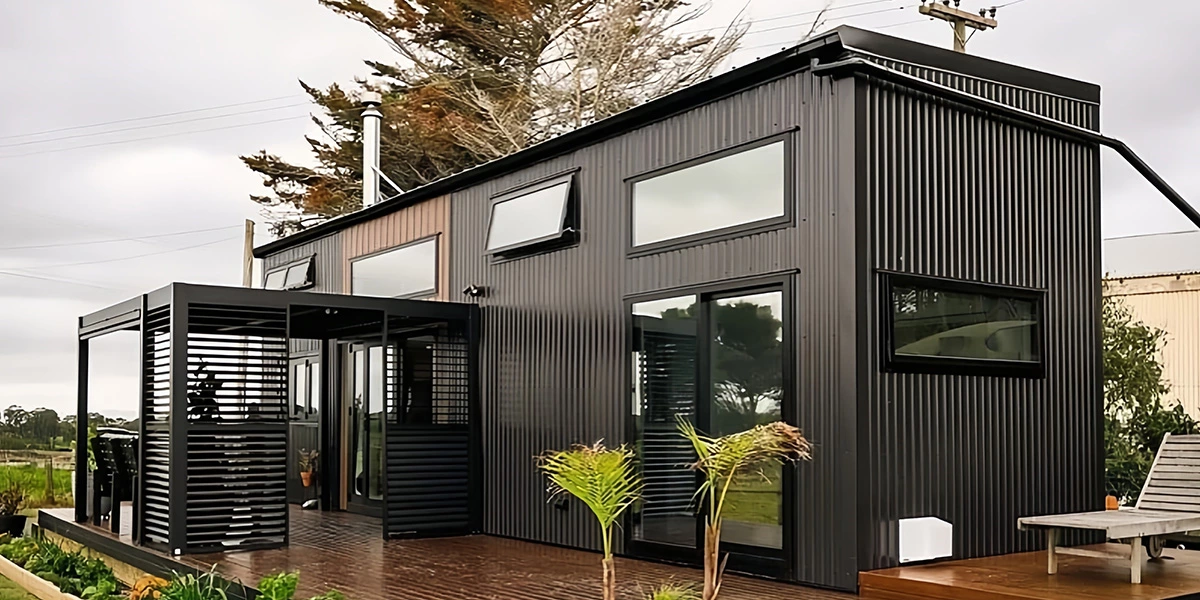
Australian Standard vs. Cheap Imports: 6 Critical Differences in Expandable Container Homes
Scroll through Facebook Marketplace or Gumtree anywhere across New South Wales, Queensland, or Victoria, and you will see tempting advertisements: "Brand new 2-bedroom expandable container home, only $14,000 AUD!"
With Australia’s ongoing rental squeeze and traditional builder quotes hovering above $3,000 per square meter, these ultra-cheap imports look like an absolute bargain.
However, behind those glossy listing photos lies an industry-wide minefield. Every week across Australia, homeowners who bought uncertified bargain pods face devastating financial surprises:
-
A local licensed electrician walks onto the site, inspects the breaker box, and flatly refuses to connect the power.
-
The local council issues a strict non-compliance notice or mandatory demolition order.
-
The Australian Border Force (ABF) detains the shipping container at Port Botany or Port of Melbourne due to suspected asbestos contamination.
Not all expandable houses are created equal. Sourcing a genuine Australian standard expandable container house is not about cosmetic upgrades—it is the legal difference between an insurable, council-approvable secondary residence and a giant, useless steel box sitting in your backyard.
Here are the 6 non-negotiable differences between an engineered, NCC compliant expandable house and the flood of cheap uncertified imports.
1.Statutory Ceiling Height & NCC Class 1a Living Compliance
The primary trap with generic imported expandable homes lies in their internal clearance.
Under the Australian National Construction Code (NCC), any structure intended for full-time residential habitation (a Class 1a building, such as a detached granny flat or secondary dwelling) must provide a minimum statutory ceiling height of 2.4 meters across all habitable spaces (living rooms, bedrooms, and studies).
-
Generic Cheap Imports: Most generic Chinese factories use standard overseas container dimensions. Once their ceiling panels, subfloor framing, and vinyl planks are fitted, the interior clearance drops to 2.1m – 2.25m. A private building certifier or council building surveyor will instantly fail this during inspection. You cannot legally reside in it.
-
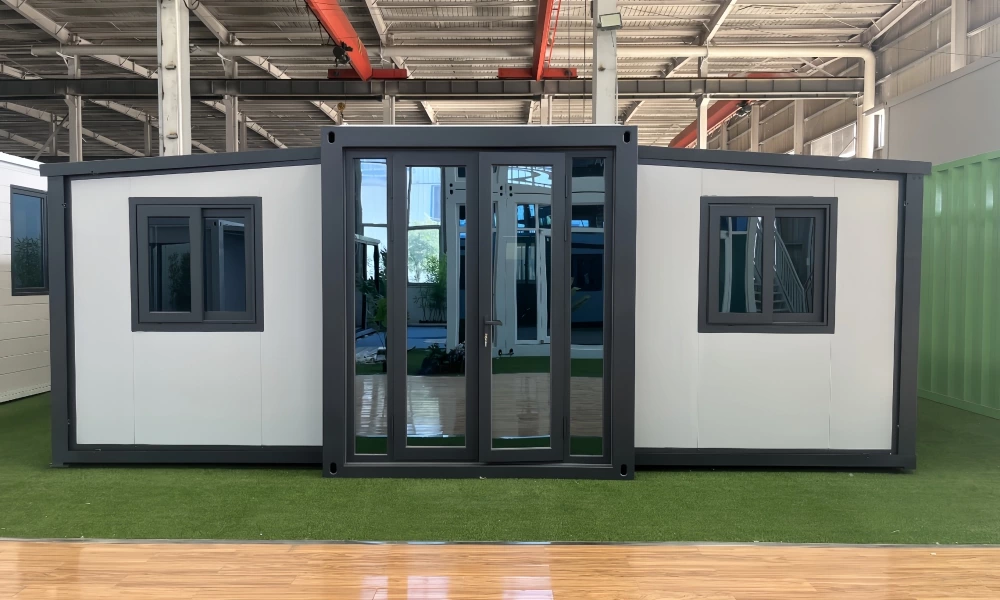
Engineered Australian Standard: At UVO, our Australian-spec line is engineered around an exact NCC Class 1a ceiling height 2.4m internal clearance. We use an extended-height structural perimeter frame, ensuring your finished living room and bedrooms meet the NCC threshold with room to spare for ceiling fans and recessed downlights.
2.Electrical Engineering: AS/NZS 3000 Wiring vs. The Sparky’s Walk-Off
In Australia, electrical safety is enforced by strict criminal liability. A licensed electrician ("Sparky") will not risk their license or face hefty fines by connecting an unsafe, uncertified structure to your main household switchboard.
-
The Cheap Import Trap: Low-cost units arrive wired with lightweight, undersized European or domestic Asian cable runs, non-compliant single-pole switchgear, ungrounded metal chassis joints, and generic power points. When your local sparky opens the subpanel, they will walk off the job—or charge you $4,000 to $7,000 AUD to rip out internal wall linings and completely rewire the home.
-
The Australian Standard: A legitimate Australian-spec unit arrives with a factory-certified SAA AS/NZS 3000 electrical container system. Every circuit breaker is SAA-approved with combined Residual Current Circuit Breakers with Overcurrent protection (RCBOs), heavy-gauge copper wiring runs in concealed fire-rated conduit, and double-pole switched Type I power outlets (AS/NZS 3112) come pre-installed. Your local sparky connects the subpanel and signs off on your electrical compliance certificate with zero resistance.
3.Plumbing & Drainage: WaterMark Certification or Zero Insurance
Plumbing regulations under AS/NZS 3500 exist to protect municipal drinking water and prevent disastrous household sewage leaks.
-
Generic Cheap Imports: Faucets, shower mixers, and toilets sourced from generic supply chains feature metric-threaded fittings incompatible with standard Australian copper/PEX pipe sizes. Worse, none of the plumbing fixtures carry a registered WaterMark license number. If a flexible hose bursts while you are at work and floods the dwelling, your property insurer will assess the claim, identify non-WaterMark fixtures, and deny your insurance payout entirely.
-
The Australian Standard: A certified WaterMark certified container home features high-pressure PEX water lines, standard Australian BSP brass thread adaptors, and WaterMark-stamped toilet suites, basins, and mixer taps. All wet area floors are sealed according to AS 3740 waterproofing standards before the tiles or SPC floors are laid.
4.The Border Hazard: NATA Asbestos-Free Certification
Australia has one of the strictest border-control regimes in the world regarding hazardous materials. Under the Customs (Prohibited Imports) Regulations, there is zero tolerance for asbestos—not even 0.01% is permitted.
-
Generic Cheap Imports: Budget manufacturers often cut corners by sourcing cheap wall gaskets, mastics, interior thermal insulation, or fiber cement boards that secretly contain chrysotile (white asbestos). If the Australian Border Force (ABF) flags your container for random biosecurity sampling and detects trace asbestos, the container will be seized. You will be hit with mandatory storage fees, expensive testing bills, and order-of-destruction fines totaling upwards of $10,000 to $15,000 AUD, with zero compensation.
-
The Australian Standard: Every batch of materials used in UVO’s Australian manufacturing pipeline undergoes comprehensive testing by an independent laboratory accredited by the National Association of Testing Authorities. We provide an official NATA asbestos free certificate matched to your container serial number prior to departure, ensuring fast, hassle-free customs clearance through ABF and Department of Agriculture (DAFF) biosecurity checks.
5.Thermal Performance: NatHERS 7-Star Rating vs. The Backyard Oven
Australia is famous for intense climatic extremes—from scorching 42°C summer heatwaves in inland NSW and Queensland to freezing sub-zero winter nights in the ACT and Victoria. A steel-framed dwelling that lacks an engineered thermal envelope quickly turns into an unlivable metal oven.
-
Generic Cheap Imports: Cheap units use 40mm or 50mm low-density expanded polystyrene (EPS) foam in the walls. They feature single-pane aluminum windows without thermal breaks. In summer, the radiant heat drives indoor temperatures sky-high; in winter, warm interior breath hits the cold exterior steel framing, causing massive condensation, dripping ceilings, and hidden toxic black mold behind the walls.
-
The Australian Standard: To comply with updated building regulations, modern dwellings must target a NatHERS 7 star expandable home standard. UVO builds with continuous high-density polyurethane (PU) or rockwool insulation (75mm to 100mm) delivering verified R-2.5 to R-3.0 thermal performance. All doors and windows feature double-glazed Low-E tempered safety glass (AS 2047 / AS 1288 certified) housed in heavy-duty broken-bridge frames, slashing ongoing split-system air conditioning power consumption.
6.Structural Engineering: G550 Steel vs. Rusting Scrap Metal
How does the structural chassis handle coastal salt air, heavy rain, and high wind gusts?
-
Generic Cheap Imports: Fabricated with thin Q195 or Q235 raw black iron with a superficial spray coat of paint. In coastal regions (like the Gold Coast, Newcastle, or Perth beaches), the undercarriage begins rusting within 12 to 18 months. Fold-out hinges warp under stress, causing the wings to sag and exterior door frames to jam permanently shut.
-
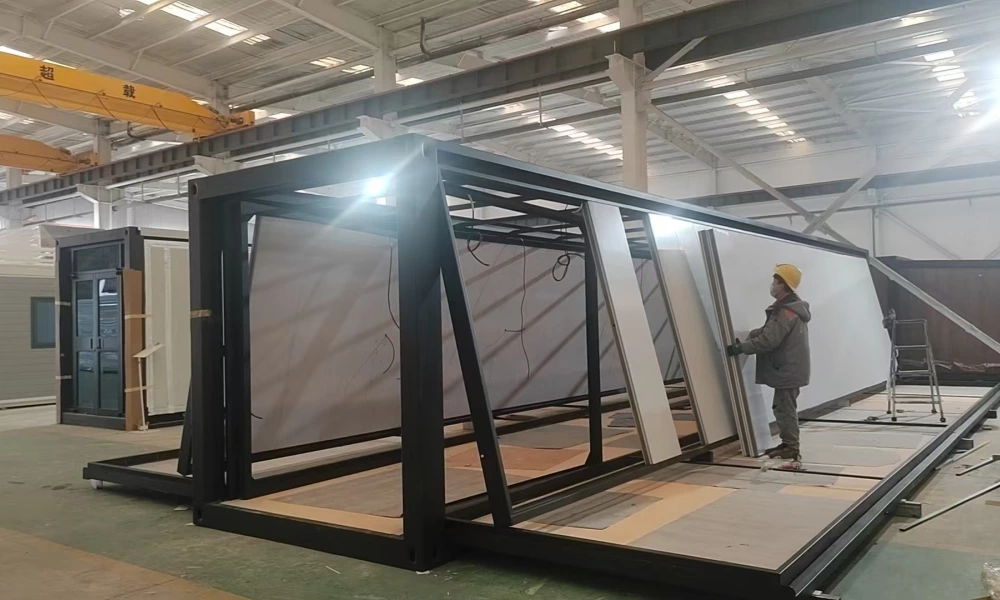
The Australian Standard: Built on structural-grade G550 hot-dip galvanized cold-formed steel with a minimum zinc coating thickness of 120–180 g/m². Designed to comply with AS 4055 Wind Classifications (engineered for N1, N2, and non-cyclonic N3 wind terrain categories), the chassis resists twisting, marine corrosion, and seasonal ground shift for 30+ years.
Direct Comparison: Australian Standard vs. Budget Imports
| Feature / Compliance Item | Generic Low-Cost Import | UVO Australian Standard Spec |
| NCC Class 1a Habitable Height | 2.15m – 2.25m (Fails Compliance) | Statutory 2.40m Clear Height |
| Electrical Safety System | Uncertified European / Asian wiring | AS/NZS 3000 + SAA RCBO Breakers |
| Plumbing & Tapware | Unmarked non-standard brassware | Full WaterMark Certified (AS/NZS 3500) |
| Asbestos Border Clearance | Untested (Risk of seizure/fines) | NATA Laboratory Certified Asbestos-Free |
| Thermal Insulation (Walls/Roof) | 40-50mm EPS (Severe condensation) | 75-100mm PU / Rockwool (R-2.5+ / 7-Star ready) |
| Glazing Standards | Single-pane clear window glass | Double-glazed Low-E AS 2047 Safety Glass |
| Chassis & Wind Rating | Painted scrap steel (Unknown rating) | G550 Hot-Dip Galvanized / AS 4055 N3 Rated |
| Council DA/CDC Feasibility | Near Impossible | Full Engineering Computation Pack Included |
Frequently Asked Questions (FAQ)
Can I get council approval for an uncertified container house after it arrives?
It is extremely difficult and cost-prohibitive. In Australia, private certifiers and council engineers require structural engineering certificates (Form 15), certified energy ratings, and evidence of WaterMark/SAA compliance before issuing a Complying Development Certificate (CDC) or Development Application (DA) approval. Retrofitting an imported unit to meet these standards usually costs more than buying a certified home from day one.
Why do some importers sell expandable homes so cheaply in Australia?
Uncertified sellers act as drop-shippers. They purchase generic accommodation containers designed for temporary domestic mining camps in Asia, where building codes, electrical voltages, and ceiling clearances are substantially lower. They avoid the costs of high-density PU insulation, SAA electrical testing, WaterMark plumbing licensing, and NATA laboratory fees, passing all legal and structural liabilities onto the unsuspecting buyer.
How do I prove to my local electrician and council that the unit is compliant?
When you purchase a certified unit from an Australian spec expandable container house manufacturer like UVO, the unit is delivered alongside a comprehensive compliance documentation folder. This includes our structural engineering statement, electrical SAA certificates, WaterMark license documentation, and NATA asbestos-free clearance forms, which you hand directly to your certifier and trades.
Build with Confidence. Choose Genuine UVO Australian Spec.
Don't let a "bargain" turn into a demolished investment. If you are planning a turnkey expandable granny flat Australia project, invest in an engineered modular dwelling built specifically for Australian laws, Australian trades, and the harsh Australian climate.
UVO Prefab House manufactures fully certified 20ft (38 m²) and 40ft (75 m²) expandable homes delivered directly to major ports in Sydney, Melbourne, Brisbane, and Fremantle.