
Is the combination of skyrocketing construction costs and a maze of local zoning requirements making it nearly impossible to add a legal dwelling unit to your property? For homeowners looking to house a family member nearby, investors aiming to generate consistent rental income from their backyard, or property owners trying to unlock the untapped value sitting on their lot — finding a compliant, move-in-ready ADU solution without blowing the budget or waiting 18 months is one of the most frustrating challenges in today's housing market. Consider UVO's expandable container house ADU solutions.


An ADU (Accessory Dwelling Unit) is a self-contained, independently livable secondary dwelling built on the same lot as an existing primary residence — designed to function as a fully private and functional living space without requiring additional land purchase. ADUs are widely used across the United States for multi-generational family living, in-law accommodation, adult children's independent housing, long-term rental income, and short-term Airbnb investment. They serve homeowners looking to make productive use of underutilised backyard space, families seeking to keep loved ones close while maintaining independence, and property investors aiming to add a cash-flowing asset to their existing lot — all without the cost or complexity of purchasing a second property.
With housing costs at record highs and traditional ADU construction timelines stretching to 12–18 months, more and more American homeowners are looking for faster, more affordable ways to add legal living space to their property. UVO's American expandable container house ADU solutions use a modular factory-built approach, enabling homeowners to establish a fully compliant secondary dwelling through precision factory prefabrication and rapid on-site installation — typically move-in ready within 3–5 months of ordering. Each unit can be flexibly configured to suit your lot size, local zoning requirements, and intended use, with functional zones including bedroom, bathroom, kitchen, and living area thoughtfully designed to meet the demands of daily living, family care, and rental operation.
UVO's expandable container house ADU is engineered to meet American building standards — IRC/IBC structural compliance, NEC-compliant electrical systems, and ADU-specific sizing regulations — ensuring a smooth permitting process across US jurisdictions. The interior can be configured to suit a range of household needs, including a private master bedroom, open-plan kitchen and living area, full bathroom, and dedicated storage. Paired with large sliding glass doors and generous window openings, the space is bright, functional, and immediately liveable — whether deployed as a backyard ADU, in-law suite, or rental cottage.
UVO's expandable container house ADU is designed from the ground up for the American permitting environment — IBC structural engineering certificates, NEC-compliant 120V/240V electrical pre-wiring, UL-listed components, and AFCI/GFCI circuit protection as standard. Whether you are installing a backyard ADU in California, Texas, Florida, or Oregon, UVO's compliant prefab ADU unit gives homeowners the documentation and confidence to proceed through the local building department without regulatory uncertainty.
ADU legislation across the United States has been dramatically liberalized — California's ministerial 60-day approval mandate, Oregon's statewide by-right ADU allowance, and Houston's no-zoning-code environment have collectively opened up millions of residential lots to legal secondary dwelling installation. UVO's expandable container house ADU is sized and documented to slot directly into these frameworks — available in 20ft (~400 sqft), 30ft (~600 sqft), and 40ft (~800 sqft) configurations — making it an immediately deployable solution for American homeowners seeking to add habitable space without traditional construction delays.
Where a site-built ADU in California or Washington typically takes 12–18 months from permit application to move-in, UVO's expandable container house ADU is factory-complete in 25–35 days and installed on-site in a matter of days. The entire project — from order confirmation to a tenanted, income-generating unit — typically completes within 3–5 months. For homeowners who need a solution now rather than next year, that speed differential is decisive.
In high-demand US markets such as Los Angeles, Seattle, and Austin, a permitted ADU can generate monthly rental income of USD$1,500–3,500 and increase property value by USD$100,000–200,000. UVO's expandable container house ADU — with a total all-in landed and installed cost typically ranging from USD$30,000–70,000 depending on size and state — delivers a payback period of 12–30 months in most major US metros, making it one of the most capital-efficient residential improvements available to American homeowners in 2026.
California has become the most permissive ADU market in the United States. Under SB 9 and SB 10, homeowners can add a secondary dwelling on a single-family lot as a matter of right — no discretionary approval, no neighborhood vote. Local councils are legally required to issue a permit decision within 60 days, and ministerial approval means your project cannot be blocked on design or aesthetic grounds. For homeowners in Los Angeles, San Jose, or San Diego, an expandable container house ADU slots directly into this framework: compact footprint, pre-engineered structural documents, and IRC/IBC-compliant drawings that satisfy California building departments without custom engineering. In a state where site-built ADUs routinely cost $150,000–$300,000, UVO's all-in landed cost from $30,000–$70,000 makes the numbers undeniable.
Texas doesn't have a statewide zoning code — and Houston, the fourth-largest city in the United States, has no municipal zoning ordinance at all. That means Houston homeowners can install an expandable container house ADU on their property without navigating land-use hearings, conditional use permits, or overlay district restrictions that complicate ADU projects in other states. Even in zoned Texas cities like Austin, Dallas, and San Antonio, ADU-friendly amendments have progressively removed owner-occupancy requirements and setback barriers. With Texas's population growing by over 400,000 residents per year and rental vacancy rates in Austin and Dallas sitting below 5%, a backyard ADU is both legally straightforward and financially compelling. A permitted secondary dwelling in Austin's 78704 zip code currently generates $2,000–$2,800/month in long-term rental income.
Florida combines high year-round rental demand with some of the most ADU-progressive municipal reforms outside California. Miami, Orlando, and Tampa have all updated their zoning codes to permit accessory dwelling units on single-family lots, and Florida's warm climate means no cold-weather foundation complexity — a standard concrete slab or helical pier system works year-round. For investors, Florida's short-term rental market is a particular draw: an expandable container house ADU positioned near Orlando's theme park corridor or Miami Beach can generate $2,500–$4,500/month on Airbnb during peak season. Florida's relatively low property tax rate (no state income tax) means rental yield flows more directly to the owner. UVO's 20ft and 30ft configurations fit comfortably on typical Florida lots with side and rear setbacks, making them an immediately deployable solution for the state's booming investment property market.
Seattle has undergone one of the most dramatic ADU policy transformations in the country. Since 2019, the city has removed owner-occupancy requirements, eliminated off-street parking mandates for ADUs, and increased allowable ADU size to 1,000 sqft — changes that have driven a multi-year surge in ADU permit applications. The result: Seattle homeowners now routinely add backyard ADUs to capture the city's consistently tight rental market, where a 1-bedroom ADU generates $1,800–$2,500/month in the Capitol Hill, Fremont, and Ballard neighborhoods. Washington State's broader ADU reforms extend these benefits beyond Seattle to Bellevue, Tacoma, and Spokane. An expandable container house ADU in Washington State benefits from the state's mild maritime climate, which reduces weatherproofing complexity and keeps foundation costs low compared to freeze-thaw states. UVO's factory-complete units, arriving with stamped structural drawings and NEC-compliant pre-wiring, move through Washington's building permit process efficiently and without costly re-engineering.
Oregon is the only US state to mandate by-right ADU approval statewide — meaning every city and county must allow accessory dwelling units on residential lots as a permitted use, with no discretionary review. For Portland homeowners, this eliminates one of the biggest ADU obstacles: neighborhood opposition during the approval process. Oregon's legislation also prohibits cities from requiring owner-occupancy as a condition of ADU approval, allowing investors to own and rent both the primary home and the ADU simultaneously. Portland's rental market — with a median 2-bedroom rent above $1,800/month — makes an Oregon expandable container house ADU a strong passive income asset. UVO's pre-engineered documentation package aligns with Oregon's streamlined building permit process, allowing most buyers to move from order confirmation to permit application without additional engineering costs.
| Comparison | Expandable Container House ADU (UVO) | Traditional Site-Built ADU |
|---|---|---|
| Total Cost | $30K–$70K | $150K–$400K |
| Build Timeline | 3–5 months | 12–18 months |
| Factory Completion | 90%+ | 0% |
| Compliance Documentation | Included with delivery | Must be commissioned separately |
| Relocatability | ✅ Fully removable & relocatable | ❌ Permanent structure |
| Best For | Fast deployment & investment returns | High customisation requirements |
If you're planning a space-saving, quick-to-deploy, and fully self-contained accessory dwelling unit, UVO's expandable container house ADU solutions are engineered to fit your lot size and living requirements — helping homeowners and investors unlock backyard potential with minimal construction time and maximum efficiency.
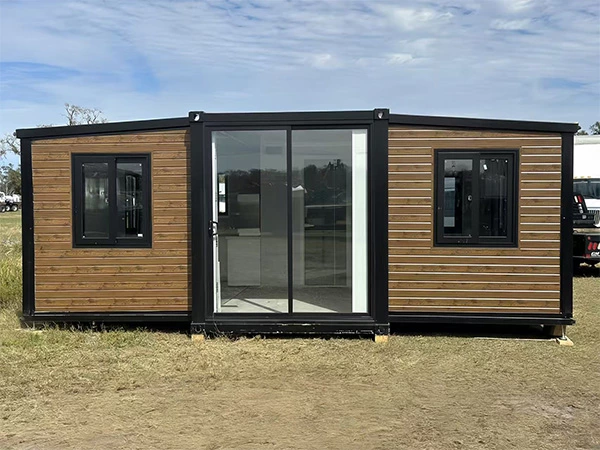
A Texas family installed a UVO 20ft expandable container home in their backyard — compliant, installed in 2 days, liveable the same week. See specs, Texas ADU permit rules by city, and heat performance data.

UVO 20ft expandable container house delivered to Melbourne's outer suburbs as a 2-bedroom granny flat — trailer-mounted, PU insulation, factory-fitted L-shaped kitchen. Includes Victorian permit guide, NCC compliance documents, and all-in cost breakdown.

A UVO 40ft expandable container house deployed as a hunting lodge in remote Nuevo León, Mexico. Off-grid power via 4km cable run, concrete slab foundation, full fit-out. See how it was built — and what it costs.

UVO 40ft expandable container house delivered to Lithuania as a 3-bedroom rental investment. CE certified, 72㎡ fully fitted, crane-installed in hours. Full specs, Lithuanian permit guide, EU cost breakdown, logistics and installation details.
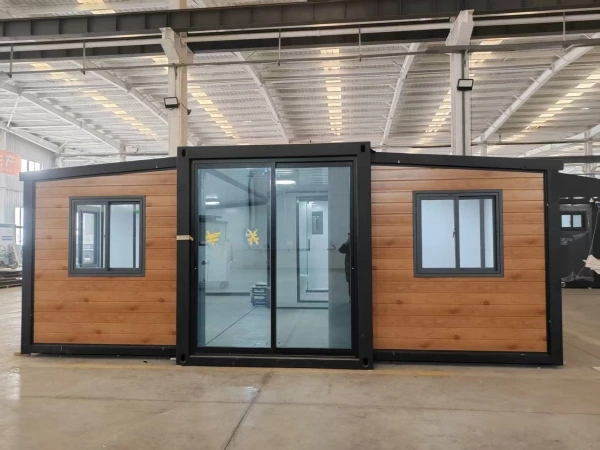
Discover the ultimate 2026 guide to expandable container houses in Portugal, featuring a real 20ft Lisbon project case study, detailed 2026 cost breakdowns, technical specifications, and a step-by-step building permit roadmap for European buyers.
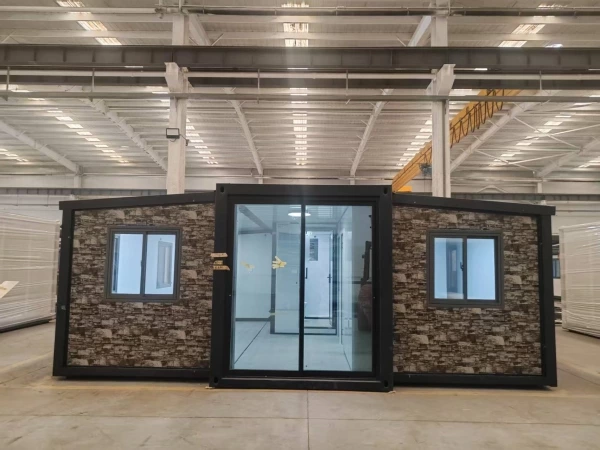
UVO factory direct supply of 20ft two-bedroom US standard expandable container houses – IBC structural certificate, NEC electrical compliance (UL certification), total cost to land in the US, complete specifications sheet, supports ADU, Airbnb and permanent residence use.
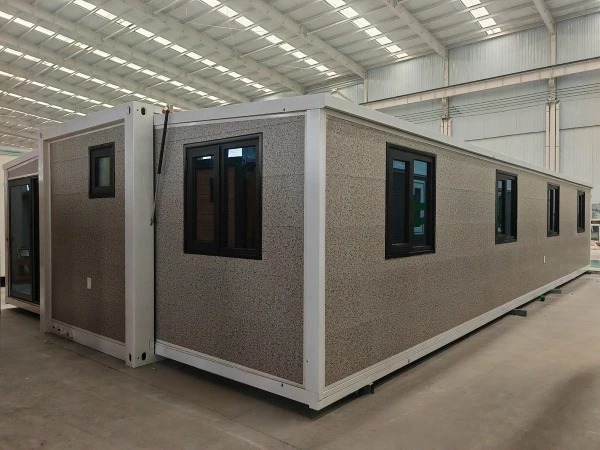
UVO delivered a fully ICC-ES certified 40ft 3-bedroom expandable container home to California. Custom-built for US code compliance — IBC, NEC, CARB — with factory-direct pricing and on-site installation in days.
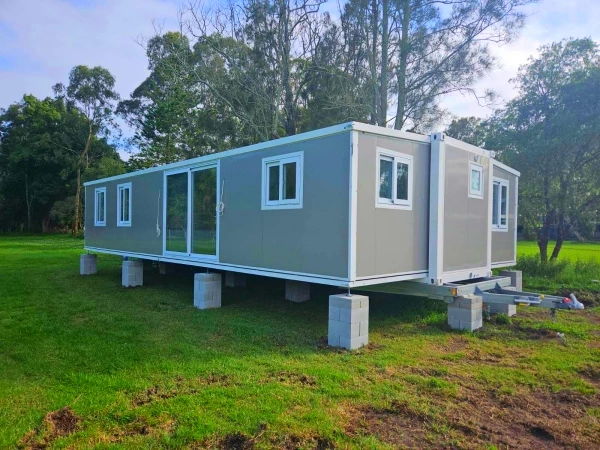
Discover UVO's 40ft expandable container house project in North Auckland, New Zealand — a fully fitted 2-bedroom prefab home, trailer-based and move-in ready. Explore how this expandable container home NZ solution delivers comfort, flexibility, and fast delivery for Kiwi homeowners.
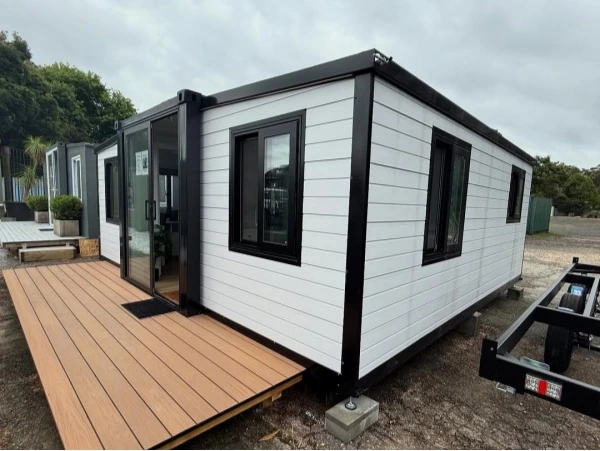
Two 20ft expandable container houses in Minnesota used for Airbnb short-term rentals—cold climate technical specifications, building permit application guidelines, complete cost breakdown, etc.—are a prime example of an honest investment case study.

UVO delivered two 40ft expandable container homes to a client in Kansas, USA, with a layout of 3 bedrooms, 1 bathroom, 1 kitchen, and 1 living room, quickly meeting the local climate requirements and the needs of a homestay operation.

UVO delivered two 20ft double-unit expandable container homes for a client in Nairobi, Kenya, providing a one-stop service from design and customization to installation and furniture configuration, helping the client launch a homestay investment project.
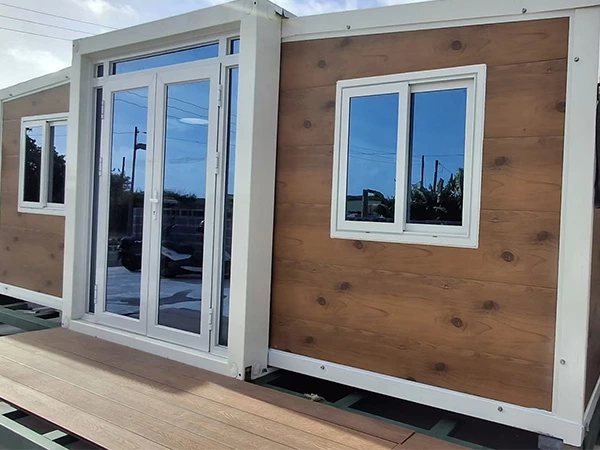
Ireland customer chose UVO 20ft expandable house and completed the integrated construction from transportation and installation to furniture and appliances within 3 days, creating a complete family home with 2 bedrooms, 1 living room and 1 kitchen.

UVO customized a custom outdoor living solution for a camping enthusiast in New Zealand, combining 30ft and 40ft expandable container houses.
Yes — all habitable ADUs in the United States require a building permit. However, the process has become significantly faster in most states. California now mandates ministerial (non-discretionary) approval within 60 days, and Oregon allows ADUs by-right statewide. UVO provides a full documentation package — IBC structural engineering certificates, NEC-compliant electrical schematics, and stamped drawings — specifically prepared to support your local permit application and minimize back-and-forth with the building department.
UVO's expandable container house ADUs typically cost between $30,000–$70,000 all-in, depending on size (20ft / 30ft / 40ft), finish level, site conditions, and your state. This includes factory fabrication, ocean freight, and on-site installation. It does not include site preparation (foundation, utility connections), which varies by location but typically adds $5,000–$20,000. For a detailed quote tailored to your lot and state, contact our team with your zip code and preferred configuration.
The full timeline from order confirmation to a move-in-ready ADU is typically 3–5 months:
This is significantly faster than a site-built ADU, which typically takes 12–18 months in states like California or Washington.
In most jurisdictions, yes — a permitted ADU can be rented as a long-term residential unit with no restrictions. Short-term rental (Airbnb/VRBO) rules vary by city and county: some cities require a short-term rental permit or impose a minimum stay requirement. UVO recommends verifying your local STR (short-term rental) ordinance before listing. In high-demand metros like Los Angeles, Austin, and Seattle, a backyard ADU can generate $1,500–$3,500/month in long-term rent, with a typical payback period of 12–30 months.
Yes. Unlike park model RVs or tiny homes on wheels (THOWs), UVO's expandable container house ADU is a factory-built permanent structure placed on a fixed foundation and connected to standard utilities — meeting the definition of a permitted ADU under the IRC (International Residential Code) and most state ADU statutes. It is not classified as a manufactured home under HUD standards, and does not require a VIN or vehicle registration. This distinction is important: only permanent ADUs qualify for standard residential permits, property value addition, and long-term or short-term rental operation.
A permitted ADU adds assessable value to your property. In most states, your property taxes will increase modestly to reflect the added square footage and assessed value — typically $500–$2,000/year depending on your local tax rate and the ADU's assessed value. However, in markets like Los Angeles and San Jose, a permitted ADU can increase overall property value by $100,000–$200,000, making the tax increase a highly favorable trade-off. Some California counties also offer a limited reassessment exclusion for ADUs occupied by qualifying family members.
UVO's expandable container house ADU is pre-wired for standard US utility connection: 120V/240V electrical panel (NEC-compliant), PEX plumbing pre-routed for water supply and drain, and HVAC rough-in. For grid-connected installations, the ADU ties into your existing service or runs a sub-panel from the main dwelling. For off-grid or remote deployments, UVO can configure the unit with a solar-ready roof load rating, battery storage pre-wiring, and a composting toilet or septic-compatible drain system — making it suitable for rural lots, agricultural parcels, and off-grid lifestyle projects.
Feel free to fill out our contact form below and our support team will get back to you within 24 hours.
We use cookies to collect information about how you use this site. We use this information to make the website work as well as possible and improve our services.more details


