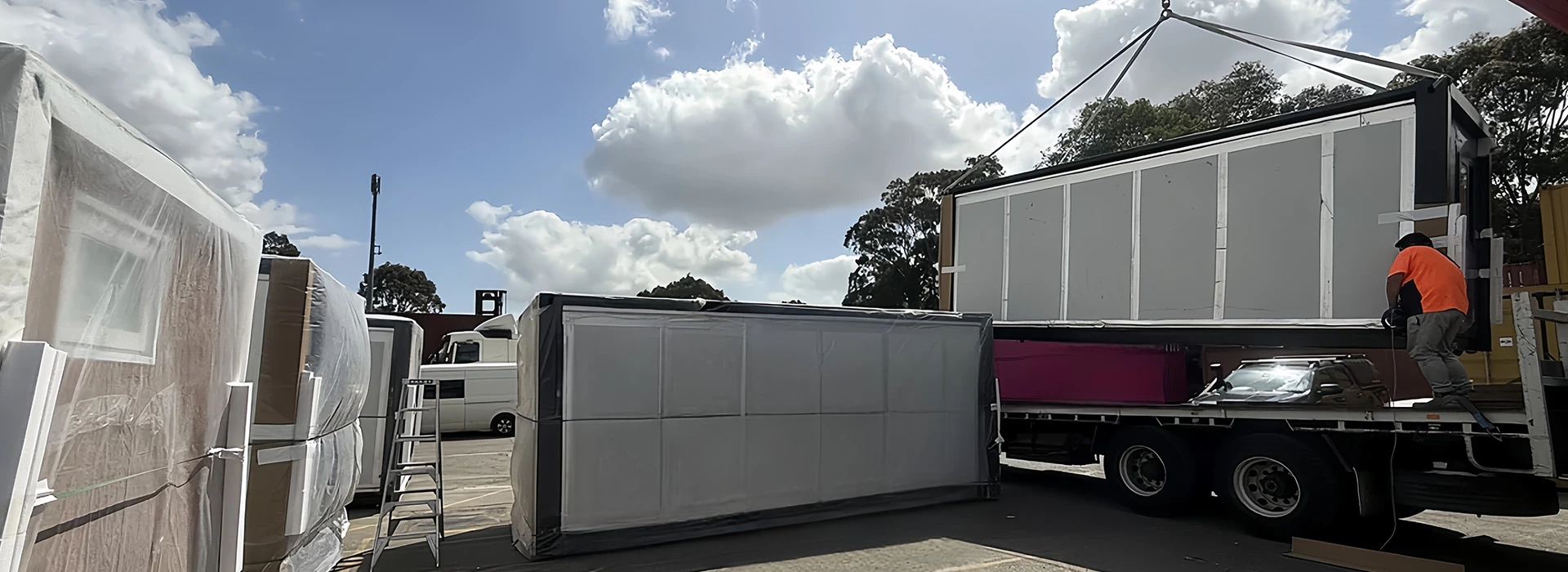
20ft Expandable Container House in Newcastle, NSW | Granny Flat & Prefab Home
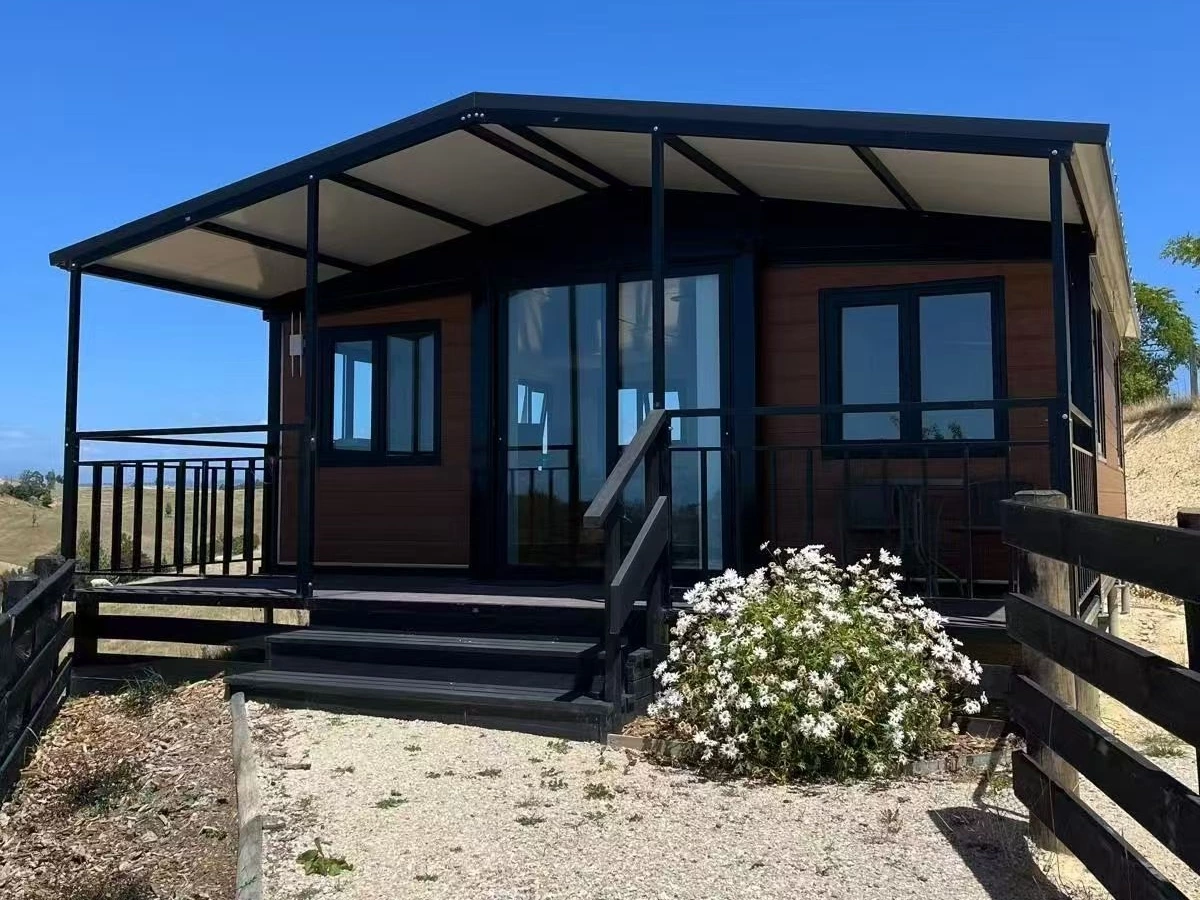
A Fully Fitted 20ft Expandable Home, Built for Australian Life
Australia's housing affordability crisis is reshaping how homeowners think about property. With the national median house price surpassing AUD 922,838 in early2026—and Sydney′s medianreaching AUD922,838 in early 2026—and Sydney′s media nreaching AUD1,292,157 — adding a traditional granny flat or secondary dwelling now costs AUD 120,000–120,000–200,000+ through a local builder, with timelines stretching 6–18 months.
This project is located in Newcastle, NSW — one of Australia's fastest-growing regional cities, sitting approximately 160km north of Sydney on the Hunter River coast. Newcastle's property market has experienced consistent price growth as buyers priced out of Sydney seek affordable alternatives with strong rental yields and lifestyle appeal. For this Newcastle homeowner, the brief was clear: a fully functional, permanently installed secondary dwelling, built to specification and approved under NSW planning rules — without the cost or timeline of a traditional site build.
UVO's 20ft expandable container house delivered exactly that: a custom-configured prefab home complete with pitched roof, embossed metal facade, outdoor balcony, and a fully upgraded bathroom — permanently installed and occupied in Newcastle, NSW.
More importantly: this unit is engineered to NCC standards and documented for Class 1a building approval — the compliance benchmark that separates a liveable, approved Australian home from an unapproved structure that can't be rented, sold with, or insured.
Why Newcastle, NSW Homeowners Are Turning to Expandable Container Houses
Newcastle is one of the strongest markets in Australia expandable container house for granny flats and secondary dwellings. Here's why:
- Land lot sizes: Newcastle's established suburbs — Jesmond, Hamilton, Mayfield, Merewether, Adamstown — typically sit on lots of 500–800 m², comfortably meeting NSW's ≥450 m² CDC requirement for granny flat approval
- Rental demand: Newcastle's rental vacancy rate has been consistently below 1.5%, making a granny flat or secondary dwelling one of the fastest ways to generate passive income from an existing block
- Rental income: Newcastle granny flats are currently achieving AUD 350–350–550/week — generating annual gross yields of AUD 18,000–18,000–28,600+
- Property uplift: Adding an approved secondary dwelling in Newcastle can add AUD 80,000–80,000–150,000 to property value
- Planning reform: Under NSW's CDC pathway, a granny flat on a qualifying lot can be approved in approximately 20 business days — no full DA required
An expandable container house granny flat in Newcastle, NSW combines all these advantages with the speed and cost efficiency of factory-direct prefab construction.
Project Overview: 20ft Expandable Container Home, Australia
| Parameter | Detail |
|---|---|
| Product | UVO 20ft Expandable Container House |
| Usable Area (expanded) | Approx. 37 m² (398 sq ft) |
| Layout | Living zone / bedroom / kitchen / full bathroom |
| Exterior Wall | Metal embossed panel, UV-rated |
| Roof | Custom pitched with thermal cavity |
| Windows & Doors | Double-glazed Low-E glass, thermally broken aluminium frames |
| Insulation | 75mm polyurethane foam sandwich panel |
| Balcony | Outdoor balcony (custom addition) |
| Certifications | SAA · WaterMark · CE · ISO |
| NCC Classification | Engineered and documented for Class 1a |
| Factory-to-Site Timeline | 50–65 days from order confirmation |
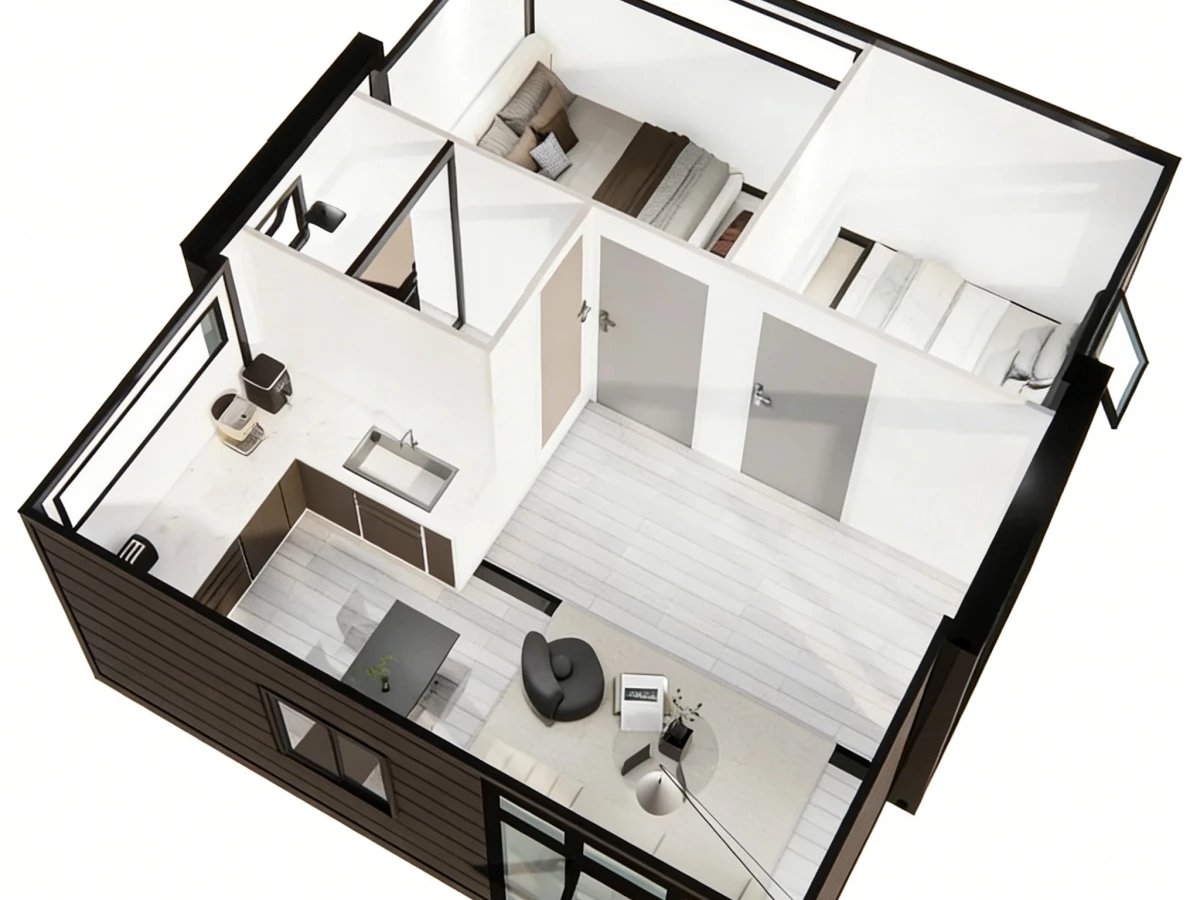
Four Custom Upgrades for the Australian Market
1. Metal Embossed Panel Facade
The standard exterior was upgraded to UV-rated metal embossed panels — a critical specification for Australia's climate:
- UV resistance: Rated for Australia's extreme UV exposure across all climate zones (1–8); no fading, peeling, or surface degradation over time
- Weather resistance: Engineered for coastal salt air (QLD, NSW coast, WA), tropical cyclone-season rainfall (QLD, NT), and hot dry inland conditions (WA, SA, inland NSW)
- Bushfire performance: Non-combustible metal cladding meets BAL 12.5–BAL 29 structural requirements without additional treatment
- Architectural finish: The embossed surface texture adds visual depth — a noticeable upgrade from flat-panel alternatives that helps the unit read as a permanent dwelling rather than a temporary structure
2. Custom Pitched Roof
The flat-roof standard configuration was replaced with a custom pitched roof — one of the most impactful upgrades available for Australian conditions:
- Drainage: Directs rainfall off the structure rapidly, eliminating pooling risk at expansion joints during Queensland summer storm events (up to 300mm rainfall in 24 hours)
- Thermal performance: The roof cavity creates a secondary insulation buffer — reducing ceiling-level heat gain in climate zones 1–4, where summer ceiling temperatures in flat-roof structures can exceed 55°C
- Solar geometry: Roof pitch and overhang angle are calibrated for Australian latitude — blocking high summer sun while admitting lower-angle winter sun, reducing both cooling and heating loads
- NCC compliance support: A pitched roof with cavity insulation meaningfully improves NatHERS modelling outcomes toward the mandatory 7-star minimum
3. Outdoor Balcony
The addition of an outdoor balcony reflects a fundamental aspect of Australian residential culture — the indoor/outdoor connection:
- Usable space extension: Adds functional outdoor living area without increasing the enclosed footprint (important for granny flat size calculations under state planning rules)
- Cross-ventilation: Creates a transition zone that promotes natural airflow through the dwelling — reducing reliance on mechanical cooling in temperate climates (VIC, SA, southern NSW)
- Lifestyle alignment: Australian buyers consistently cite outdoor entertaining space as a non-negotiable requirement; the balcony addresses this directly
4. Bathroom: Full Upgrade Package
The bathroom was fully upgraded to Australian residential standards:
- High-quality fixtures throughout — no budget fittings
- Wet/dry separation: Full glass partition separating the shower cubicle from toilet and vanity, conforming to standard Australian bathroom design expectations
- Smart fixtures: Sensor tap, heated towel rail, LED mirror
- Instant hot water system pre-installed
- Full waterproofing to AS 3740 requirements — applied to all wet area surfaces at the factory before shipment
NCC Class 1a Compliance: What NSW Buyers Need to Know
The single most important question for any Australian buyer considering an expandable container house is: can it get building approval in NSW?
The answer for this UVO unit is: yes — when properly documented and site-installed. Here is how.
Structural Performance (NCC Section B)
UVO's hot-dip galvanised welded steel frame is tested across Australian wind classifications N1 through N4. Newcastle sits in wind region B — the unit's structural specification covers this classification. UVO provides:
- Structural calculation report (ready for NSW private certifier or council submission)
- Tie-down and anchor point specifications for certified footing design
- Material test reports for all structural steel and cladding components
Energy Efficiency: 7-Star NatHERS (Mandatory from May 2024)
All new NCC Class 1a dwellings in NSW must achieve a minimum 7-star NatHERS rating. Newcastle falls within NatHERS Climate Zone 14 (Hunter coast). The UVO 20ft unit addresses this through:
- 75mm PU foam wall and floor panels (R-2.5 to R-3.0 base thermal performance)
- Pitched roof with cavity insulation — adds R-value above the ceiling plane
- Double-glazed Low-E glass — reduces solar heat gain in Newcastle's summer, heat loss in winter
- Thermally broken aluminium frames — eliminates cold bridging at window perimeters
Achieving 7 stars in NatHERS Climate Zone 14 (Newcastle) is feasible with this unit, with correct north-facing orientation on site.
Waterproofing: The Expansion Joint
The fold-out expansion joint is the most common compliance failure point for expandable container houses in Australia. UVO's system addresses this through:
- Continuous EPDM rubber gasket seal at the roof-level junction
- Stepped flashing detail at the wall junction
- Floor-level membrane treatment at the expansion threshold
- The custom pitched roof further reduces water exposure at the joint — particularly important given Newcastle's annual rainfall
Plumbing: WaterMark Compliance
Australian plumbing law requires all tapware and fittings connected to mains supply to carry WaterMark certification. The unit ships with plumbing rough-in completed; tapware and final connections are installed on-site by your local licensed NSW plumber using WaterMark-certified fittings.
Electrical: SAA / RCM Certification
All electrical components carry SAA / RCM (Regulatory Compliance Mark) certification. The pre-wired system is connected to mains supply by your local licensed NSW electrician.
NSW Granny Flat Approval: The CDC Pathway for Newcastle
For Newcastle homeowners, the NSW Complying Development Certificate (CDC) pathway is the fastest route to an approved granny flat:
| Requirement | Detail |
|---|---|
| Minimum lot size | ≥450 m² |
| Maximum floor area | 60 m² enclosed (this unit: 37 m² ) |
| Minimum setbacks | 3m rear, 0.9m side (check specific street) |
| Height limit | ≤ 8.5m (this unit: well within) |
| Approval body | Private certifier (not council) |
| Approval timeline | ~20 business days |
| Planning permit | Not required under CDC |
Factory to Newcastle: How Delivery Works
Weeks 1–4 — Factory Production Built to confirmed specification. Roof type, exterior panel, bathroom grade, and balcony configuration locked in week one. Full QC inspection before folding for shipment.
Weeks 4–7 — Ocean Freight to Port Botany, Sydney The nearest major port to Newcastle is Port Botany (Sydney) — approximately 160km south. Transit time from UVO's factory: approximately 18–22 days.
Week 7–8 — Customs Clearance & Inland Delivery to Newcastle Australian customs cleared at Port Botany. Flatbed truck delivery from Port Botany to Newcastle: approximately 2 hours via the M1 Pacific Motorway. Most Newcastle suburbs are reachable within 1 day of port clearance.
Days 1–2 On-Site — Installation Unit positioned on certified footing, wings unfolded, locked, levelled, and sealed. Licensed NSW electrician and plumber complete utility connections: 1–2 additional days.
Total: 50–65 days from order confirmation to move-in.
Why Choose UVO as Your Expandable Container House Manufacturer?
Australian-Market Documentation
UVO provides a complete documentation package for NSW building approval: structural report, SAA electrical certification, NatHERS thermal data, AS 3740 waterproofing specification, and material compliance statements — formatted for NSW private certifier submission.
Factory-Direct, No Intermediary
As a direct manufacturer, UVO offers competitive factory pricing with no intermediary margin. Australian buyers deal directly with the production team, with full visibility over specification and quality control.
Proven Australia Export Experience
UVO has managed multiple shipments to Port Botany (Sydney), Port of Melbourne, Port of Brisbane, and Fremantle — with experience in Australian customs documentation, fumigation certification, and freight forwarding coordination.
Full Customisation
Layout, exterior finish, roof configuration, balcony, bathroom grade, solar pre-wiring, and rainwater connection points can all be specified. Standard sizes: 20ft (approx. 37 m²) and 40ft (approx. 60 m²).
Frequently Asked Questions
Q: Can I use a UVO expandable container house as a granny flat in Newcastle, NSW?
Yes. At 37 m², the 20ft unit qualifies for NSW CDC approval on lots ≥450 m² — the approval pathway takes approximately 20 business days and does not require a full DA. Newcastle's R2 and R3 residential zones are generally CDC-eligible.
Q: Does the unit meet NCC Class 1a and 7-star NatHERS requirements for NSW?
The unit is engineered to NCC performance standards and specified to support 7-star NatHERS outcomes in Climate Zone 14 (Newcastle / Hunter coast). A NatHERS certificate is issued by a local accredited assessor using site-specific data; UVO provides the full specification data pack required for the assessment.
Q: How does the unit arrive in Newcastle?
The unit ships to Port Botany (Sydney) — approximately 18–22 days transit from UVO's factory — then travels by flatbed truck to Newcastle, approximately 2 hours via the M1. Total factory-to-site timeline: 50–65 days.
Q: Is the plumbing WaterMark certified?
The unit ships with pre-routed plumbing rough-in. Final tapware and connections are installed on-site by your local licensed NSW plumber using WaterMark-certified products.
Q: Can it be installed in a bushfire-prone area in the Newcastle region?
The non-combustible steel frame and metal cladding meet BAL 12.5 to BAL 29 with appropriate detailing. For properties in bushfire-prone land on Newcastle's western fringe (Cessnock, Maitland areas), specify your BAL rating at the design stage.
Q: What sizes are available?
UVO offers 20ft (approx. 37 m²) and 40ft (approx. 60 m²) expandable units. The 40ft model suits a two-bedroom granny flat within NSW's 60 m² CDC limit.