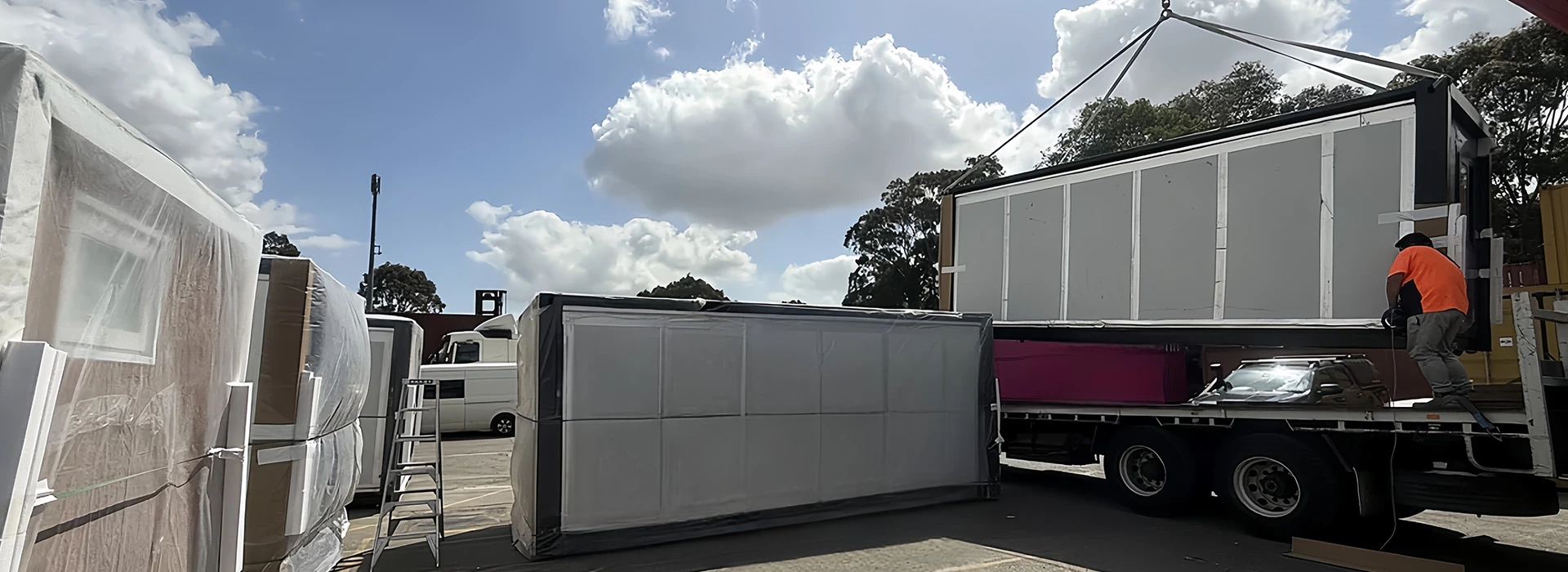
Folding Container Worker Dormitories Delivered to South Africa —20 Units in 7 Days
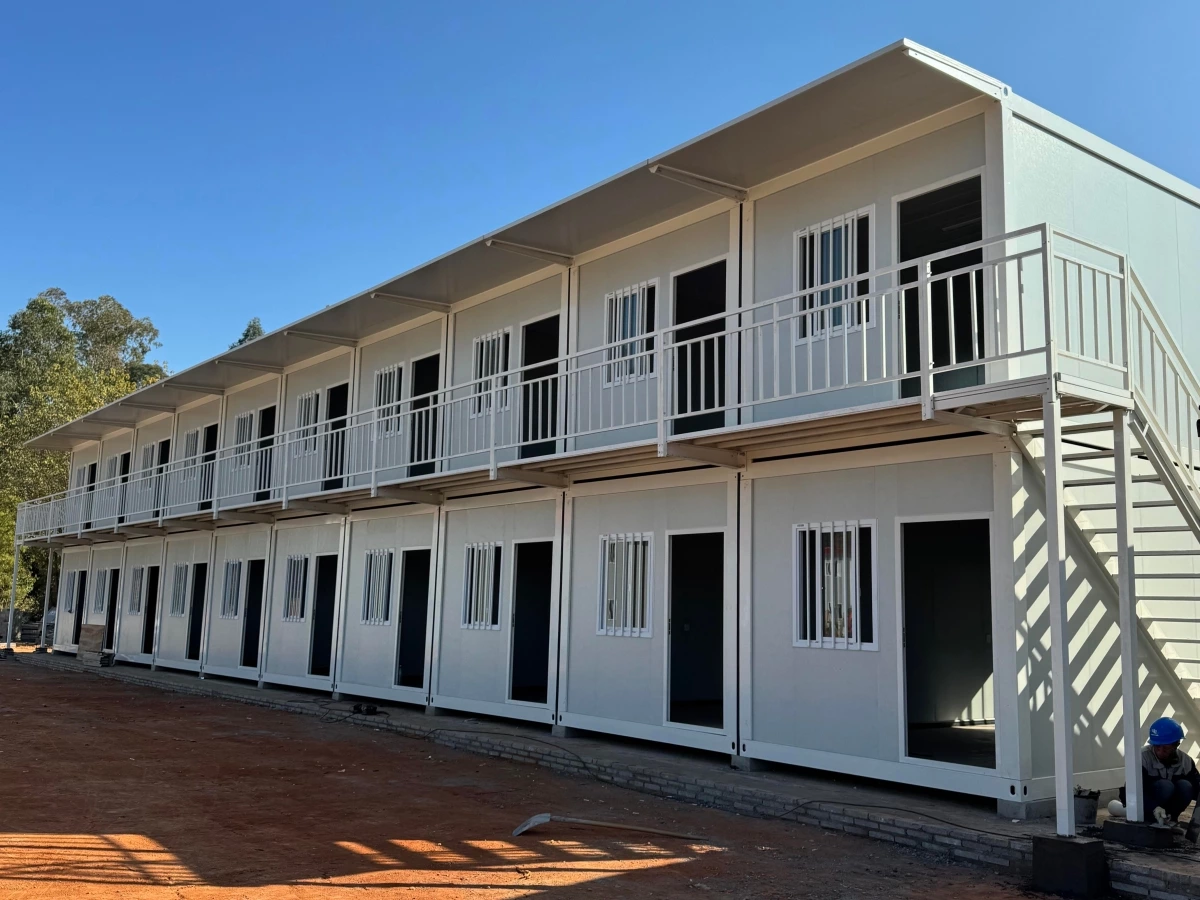
20 Worker Dormitories Deployed in 7 Days: South Africa Construction Camp Case Study
South Africa's construction market is on track to reach ZAR 160.65 billion in 2025, growing at 4.8% annually through to 2030. Behind that number are thousands of large-scale infrastructure, mining, and energy projects — each requiring one critical resource before a single brick can be laid: compliant, liveable accommodation for the workforce.
Getting worker accommodation wrong in South Africa carries real consequences. SANS 10400 building regulations and SIZA accommodation audit standards set legally enforceable minimums for fire resistance, occupancy density, sanitation, and ventilation. Projects that fail inspections face stop-work orders. Accommodation that falls below SIZA standards can trigger supply chain audits, contract terminations, and reputational damage with international buyers.
When a South Africa-based infrastructure project client came to UVO, they had a non-negotiable requirement: 20 fully equipped, regulation-compliant worker dormitories, deployed and operational in 7 days. This is how we delivered it.
The Project: What Was Required
Scope: 20 folding container dormitory units
Location: South Africa — large-scale infrastructure project site
Deployment timeline: 7 days from arrival on-site to full occupancy
Key requirements:
- Fire resistance meeting South African SANS 10400-T standards
- Adequate per-person floor area per SIZA accommodation guidelines
- Private bathroom in every unit
- Custom external staircase and corridor system to suit the site layout
- Redeployable at project end — not a permanent structure
The client had evaluated traditional temporary brick-and-mortar construction. The timeline was incompatible: traditional construction for 20 units would have required 8–12 weeks minimum, delaying the project start and triggering contractual penalties. UVO's folding container system delivered the same habitable standard in 7 days.
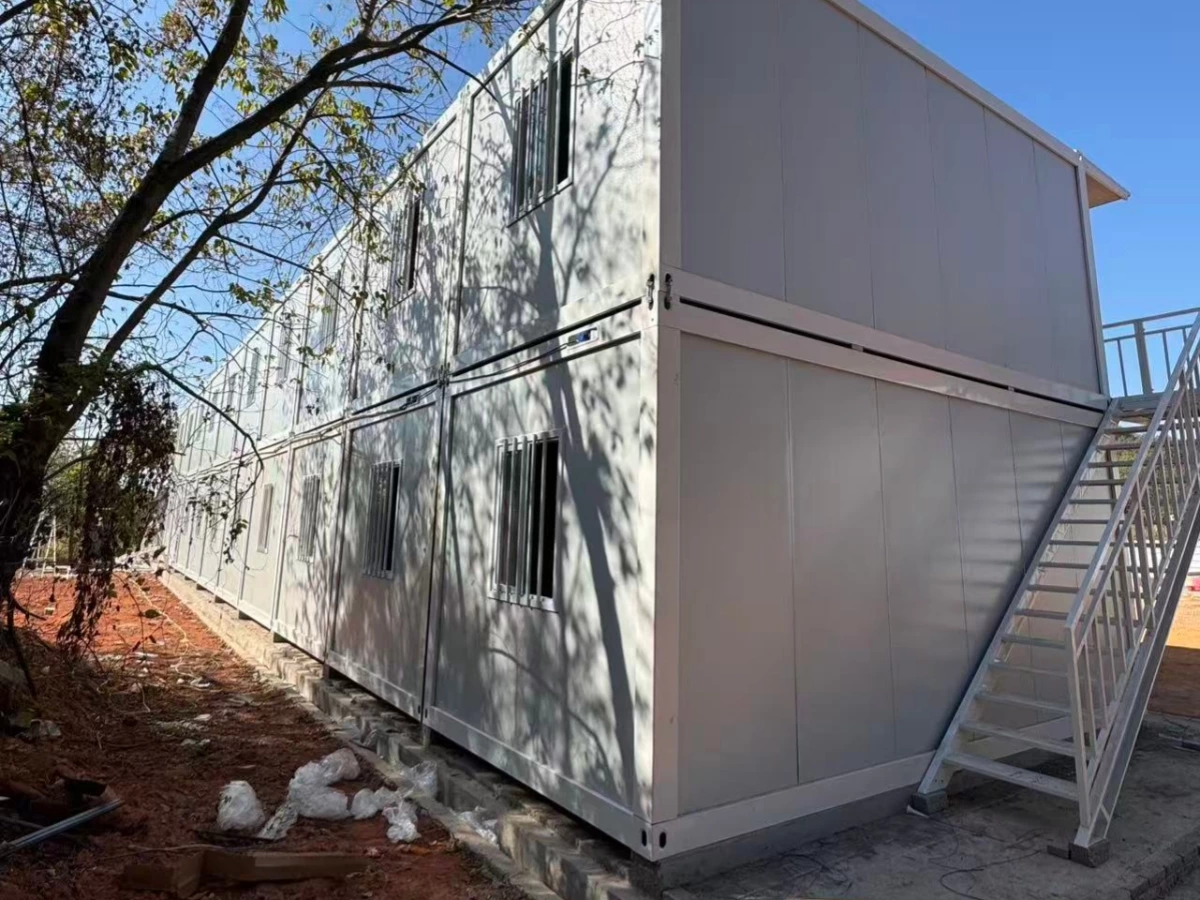
Unit Specifications
| Parameter | Configuration |
| Usable floor area per unit | Approx. 15 m² (161 sq ft) |
| Recommended occupancy | 2–3 persons per unit (5–7.5 m² per person, meeting SIZA minimum of 5 m²) |
| Wall system | 50mm rock wool sandwich panel |
| Fire resistance rating | Rock wool core: Class A1 non-combustible (SANS 10400-T compliant) |
| Ceiling insulation | Rock wool lined — acoustic and thermal performance |
| Electrical | 220V, South Africa Type M/N compatible pre-wiring |
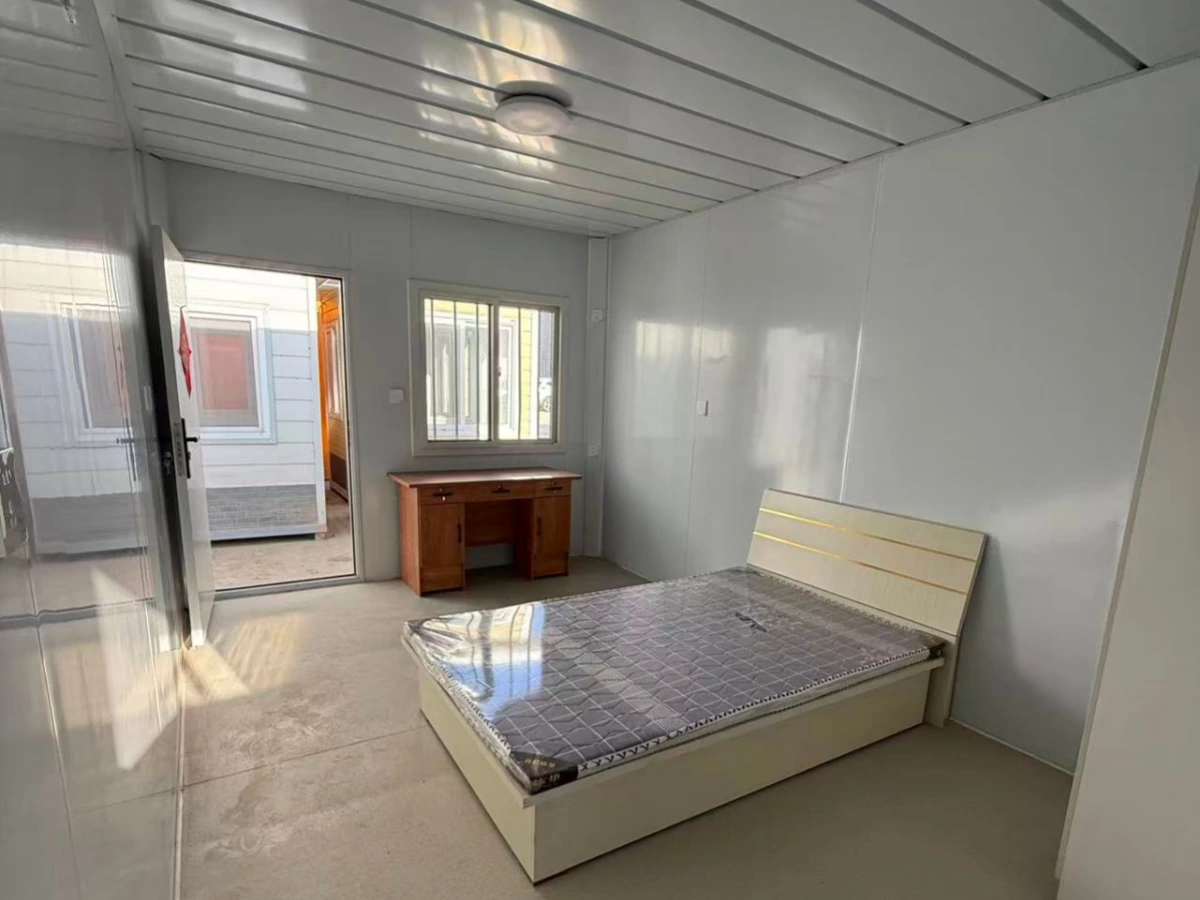
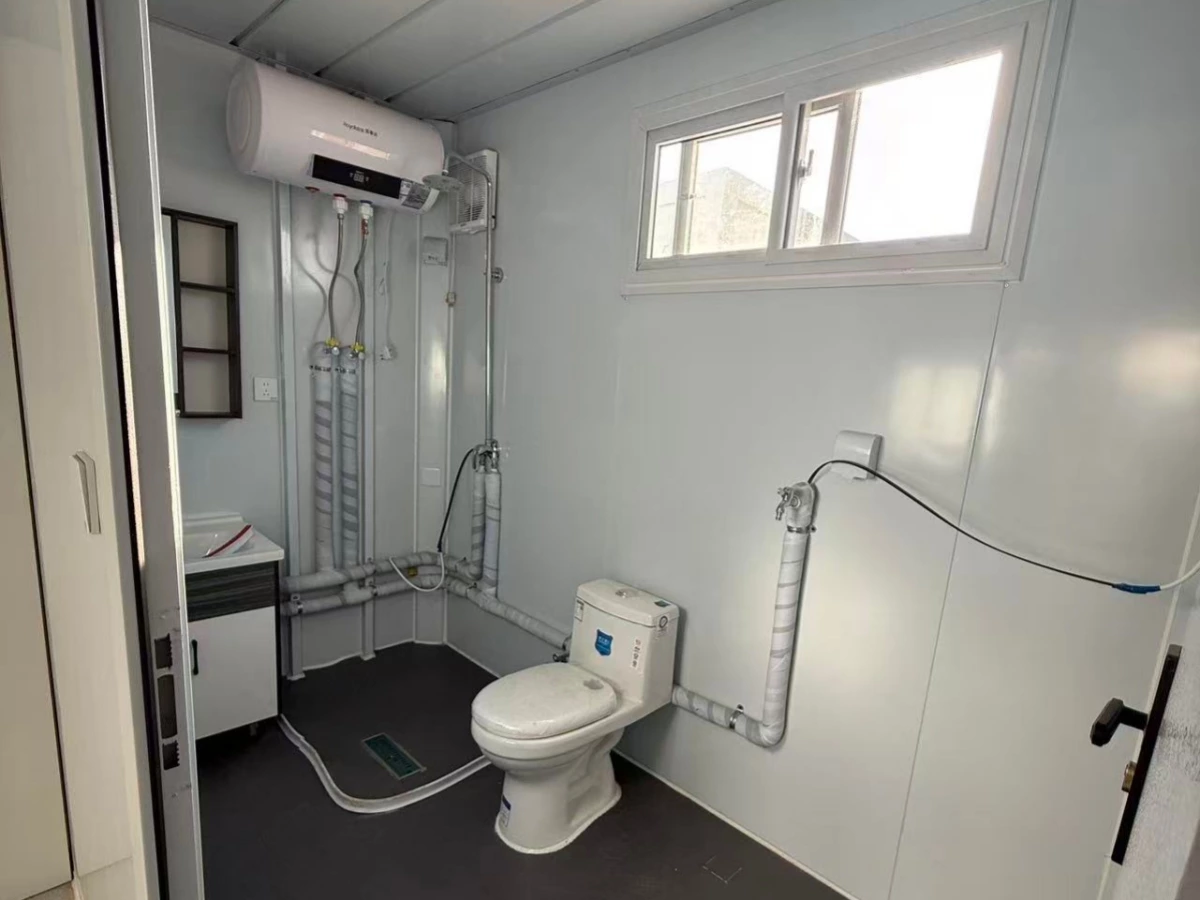
| Bathroom | Independent — washbasin, toilet, instant water heater |
| Beds | Pre-installed bunk beds with individual wardrobe storage per occupant |
| Lighting | LED throughout — bedroom, bathroom, corridor |
| Customisation | External steel staircase (anti-slip) + inter-unit connecting corridors |
What UVO Solved: Project-Specific Challenges
Challenge 1 — Timeline: 20 Units Operational in 7 Days
The project's construction schedule allowed no buffer for accommodation delays. Traditional site-built temporary housing — even with pre-ordered materials — would have required 8 to 12 weeks for 20 units.
UVO's mining camp accommodation solutions is factory-complete before it leaves China. Every unit arrives with walls, roof, floor, bathroom, beds, wiring, and fixtures pre-installed. On-site work is limited to:
- Positioning each unit on the prepared concrete pad footing
- Unfolding and locking the expansion wings
- Connecting water supply and drainage
- Connecting to the site's electrical distribution board
- Installing the inter-unit staircase and corridor system
Result: 20 units fully commissioned and occupied on day 7. The project broke ground on schedule.
Challenge 2 — Fire Safety: SANS 10400-T Compliance
South Africa's National Building Regulations (NBR) Part T, governed by SANS 10400-T, sets the fire resistance requirements for all buildings, including temporary worker accommodation.
Key SANS 10400-T requirements for dormitory-class occupancy (Group A — residential):
- Division walls between sleeping units must achieve a minimum 60-minute fire resistance rating
- Non-combustible materials required for structural elements in multi-unit configurations
- Emergency egress routes must be unobstructed and meet minimum width requirements
- Smoke detection must be provided in sleeping areas
Challenge 3 — Site Adaptation: Custom Staircases and Corridors
No two project sites in South Africa are identical. This site's layout — a multi-row dormitory compound — required a circulation system that connected all 20 units without creating bottlenecks at shift changes and that met safety requirements for emergency egress.
UVO designed and fabricated:
- External steel staircases with hot-dip galvanised anti-slip grating treads — rated for continuous heavy use, resistant to corrosion in high-humidity and coastal South African conditions
- Inter-unit connecting corridors spanning the full length of each dormitory row — creating a covered walkway system that protects workers from rainfall during shift transitions and connects all emergency exits into a coherent egress network
- Modular connection points on each unit — meaning the staircase and corridor system can be reconfigured when the units are redeployed to a different site layout
South African Compliance: Documentation Package
Every South Africa delivery includes:
- Rock wool panel A1 fire resistance test certificate (SANS 10400-T support)
- Structural calculation report (SANS 10400-B support)
- Floor plan and elevation drawings (building permit submission)
- Electrical wiring diagram (220V, Type M/N — for SANS 10400-S compliance)
- Bathroom specification sheet (SIZA audit support)
- Anti-slip staircase certification
Delivery: From Factory to South African Project Site
Weeks 1–3: Factory production Each unit is manufactured, fitted, and quality-inspected at UVO's factory. Customisation — staircase design, corridor configuration, electrical specification — confirmed in week one.
Weeks 3–6: Ocean freight Units ship to Port of Durban (Africa's busiest container port, handling over 2.8 million TEUs annually) or Port Elizabeth (Gqeberha) for Eastern Cape deployments. Ocean transit from China: approximately 18–22 days.
Week 6–7: Customs clearance and inland delivery South African customs clearance handled by your appointed clearing agent. Inland delivery by flatbed truck — South Africa's N-road network provides access to all major mining provinces and project sites. Limpopo, Mpumalanga, North West, and Northern Cape are all accessible within 1–2 days of Durban port.
Days 1–7 on-site: Installation
- Days 1–2: Units positioned on prepared concrete pad footings by crane or telehandler
- Days 2–5: Units unfolded, levelled, locked; water and electrical connections made
- Days 5–7: External staircase and corridor system installed and commissioned
Frequently Asked Questions
Do UVO folding container dormitories comply with SANS 10400 building regulations in South Africa?
Yes. The rock wool sandwich panel achieves Class A1 non-combustible rating, satisfying SANS 10400-T fire resistance requirements for dormitory-class occupancy. The steel structure meets SANS 10400-B structural requirements. UVO provides a full documentation package — fire test certificates, structural calculations, and building plans — for submission to the local authority having jurisdiction.
Do the units meet SIZA worker accommodation audit standards?
The units are configured to meet SIZA Third Edition requirements: minimum 5 m² per occupant at standard 2–3 person occupancy, independent bathroom, natural light in sleeping areas, lockable storage per occupant, and hot water provision. UVO provides pre-audit documentation including floor plans and bathroom specification sheets.
How many workers can each unit accommodate?
The standard 15 m² unit accommodates 2–3 workers at 5–7.5 m² per person — above the SIZA minimum of 5 m² per occupant. Higher-density configurations are not recommended as they would fall below SIZA minimums and create audit risk.
How long does delivery from China to South Africa take?
Ocean freight to the Port of Durban takes approximately 18–22 days. Combined with production time, most clients receive their units on-site within 50–60 days of order confirmation.
What fire resistance documentation is provided?
UVO provides a rock wool panel Class A1 fire resistance test certificate, structural calculation report, and compliance drawings — all formatted for SANS 10400 submission to South African building authorities.
What foundation is required?
A concrete pad footing per unit is standard. UVO provides anchor point load specifications and footing dimensions to your local civil contractor. No deep foundation work is required — the light steel frame distributes loads over the footing area.